Why Don't I Sweat? What Reduced Sweating Really Means

You probably don't give sweating much thought until you notice you're not doing it. Maybe you're at the gym watching everyone else drip while you stay oddly dry. Or you've realized you haven't needed deodorant in months. Perhaps you've felt overheated in situations where you should be cooling down.
Here's what catches most people off guard: not sweating isn't always obvious. You might sweat normally in some areas but not others. Or you might have gradually lost the ability over years without realizing it. The medical term is anhidrosis when you can't sweat at all, or hypohidrosis when sweating is reduced. Both deserve attention because sweating isn't just about comfort—it's your body's primary cooling system.
Key Takeaways
- Reduced or absent sweating can affect your whole body or just specific areas, and it often develops gradually enough that you don't notice until you overheat.
- Common causes range from skin conditions and medications to nerve damage and genetic factors—some treatable, others requiring lifestyle adaptation.
- The real danger isn't the lack of sweat itself but heat-related illness, since sweating is how your body prevents overheating during exercise or hot weather.
- See a doctor if you've noticed a change in your sweating patterns, especially if you're experiencing dizziness, weakness, or flushing when you should be sweating.
What People Usually Think About Not Sweating
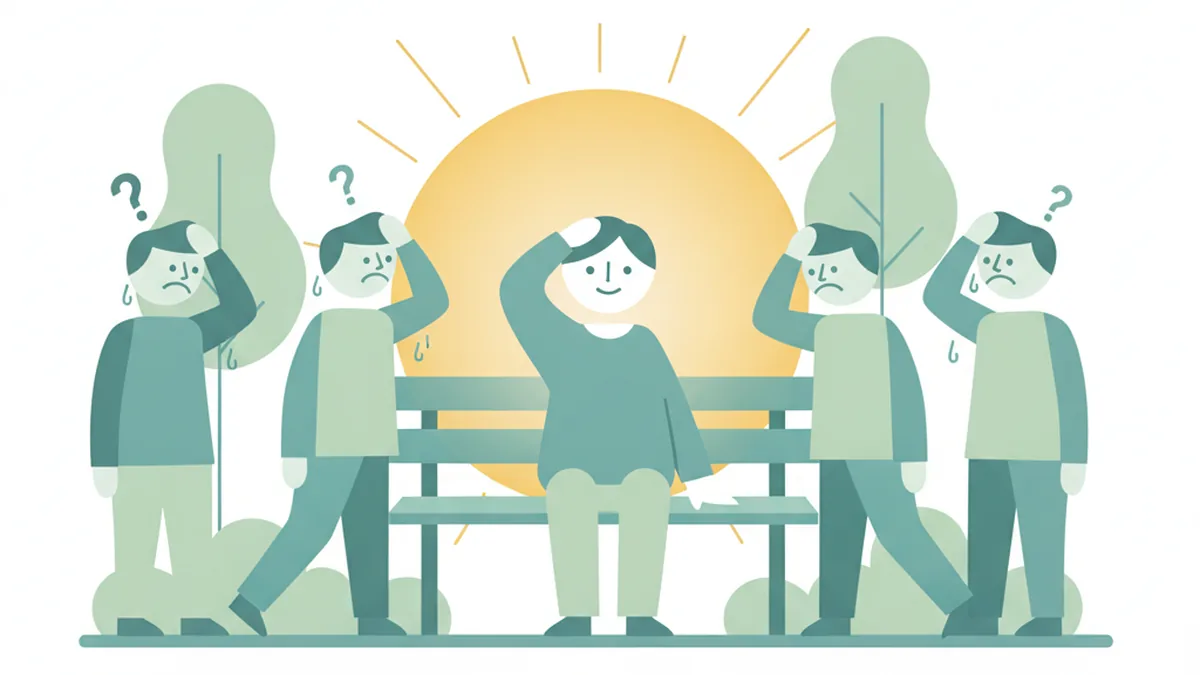
Most people assume not sweating is somehow lucky. No pit stains, no need to shower twice a day, no worrying about odor. I've heard people joke about wanting this "problem."
The cultural narrative around sweat doesn't help. We treat it as socially embarrassing rather than physiologically essential. Entire industries exist to suppress, hide, or eliminate sweat. So when someone genuinely can't sweat, they often don't recognize it as a medical concern until something goes wrong.
There's also confusion about what "not sweating" actually means. Some people think they don't sweat because they don't soak through shirts during meetings. But normal sweating varies wildly between people. Someone who barely glistens during a 5K might be sweating perfectly adequately for their body.
The problem is when your body should sweat but doesn't—when you're exercising hard in heat and stay completely dry, or when everyone around you is dripping and you're bone-dry but feeling awful. That's when the absence becomes medically significant.
What Research Shows About Sweat Disorders

Anhidrosis isn't rare, but it's significantly underdiagnosed. Part of the challenge is that complete, whole-body anhidrosis is uncommon. Partial reduction—affecting your torso but not your head, or one side of your body but not the other—is far more typical and easier to miss.
Your sweat glands are controlled by your autonomic nervous system, the same network managing heart rate and digestion. They're concentrated most densely on your palms, soles, forehead, and underarms, with a total count of two to four million spread across your body. When these glands malfunction, it's usually because something has disrupted either the glands themselves, the nerves signaling them, or both.
The causes break into several categories. Skin-level problems include conditions where the sweat gland openings get blocked—certain rashes, burns, or psoriasis covering large areas. Radiation therapy for cancer can permanently damage sweat glands in the treatment field. Some people are born with absent or malformed glands, though this is uncommon.
Nerve-related issues are more frequent. Diabetes is a major culprit here. Chronic high blood sugar damages small nerve fibers over time, and the autonomic nerves controlling sweat glands are particularly vulnerable. Someone with longstanding diabetes might notice they no longer sweat normally in their feet and lower legs—the same areas where diabetic neuropathy causes numbness.
Other nerve damage sources include alcoholism (which causes its own pattern of neuropathy), autoimmune conditions like Sjögren's syndrome, and injuries to specific nerves. Ross syndrome, a rare neurological condition, causes progressive loss of sweating on one side of the body.
Medications suppress sweating more often than most people realize. Anticholinergic drugs—used for overactive bladder, motion sickness, certain psychiatric conditions, and Parkinson's disease—directly block the chemical signals that activate sweat glands. Some blood pressure medications, particularly older classes, can reduce sweating. Even topical treatments for excessive sweating, if applied too broadly, can tip someone into problematic undersweating.
Genetic conditions sometimes include anhidrosis as part of a broader syndrome. Hypohidrotic ectodermal dysplasia, for instance, causes reduced sweat glands, distinctive facial features, and dental abnormalities. These typically get identified in childhood.
What makes this tricky is that multiple factors often combine. Someone might have mild genetic reduction in sweat gland density, then develop diabetes, then start a medication that further suppresses sweating—each alone might be manageable, but together they cross into dangerous territory.
The body tries to compensate. If you can't sweat from your torso, you might sweat excessively from your face and neck, the areas still functioning. This compensatory sweating can be so pronounced that it masks the underlying problem. You think you sweat plenty because your forehead pours during workouts, not realizing your entire back stays dry.
Why This Actually Matters
Sweating exists for one critical reason: evaporative cooling. When sweat evaporates from your skin, it removes heat from your body. This is not optional physiology—it's how humans survive exertion and heat.
Without adequate sweating, your core temperature rises during activity or warm weather. Initially you might just feel uncomfortable. You flush. You feel sluggish. Your heart races, trying to pump more blood to your skin to radiate heat away—a far less efficient cooling method than sweating.
Push further and you're into heat exhaustion territory: weakness, nausea, headache, dizziness. Your body is legitimately struggling to maintain safe internal temperature. Keep going and heat stroke becomes a risk—confusion, loss of consciousness, organ damage. This is a medical emergency.
The danger isn't always dramatic. Someone with reduced sweating might simply find they can't exercise as hard as they used to. They tire faster in summer. They feel terrible after hot yoga classes that others handle fine. Over time, they might avoid situations that trigger overheating without fully understanding why.
Children with anhidrosis face particular risks because they're less able to recognize and communicate their overheating symptoms. They might be labeled as "not athletic" or "heat-sensitive" when actually they have a sweating disorder no one's identified.
Even in climate-controlled environments, reduced sweating matters. A fever becomes more dangerous when your body can't sweat to help regulate temperature. Physical work that wouldn't normally pose risks—moving furniture, yard work—can trigger heat illness if you can't sweat adequately.
The psychological impact deserves mention too. Once someone realizes they can't cool themselves normally, anxiety about heat exposure often follows. They worry about summertime events, travel to warm climates, whether they're safe to exercise. This isn't hypochondria—it's a reasonable response to losing a fundamental physiological function.
When to Seek Professional Help and What to Expect

Get evaluated if you've noticed a definite change in your sweating pattern, especially if it's accompanied by overheating symptoms. "I used to sweat through shirts at the gym and now I barely glisten" is worth investigating. So is "one side of my body sweats normally but the other doesn't" or "I overheat doing things that never bothered me before."
Definitely contact a doctor immediately if you experience confusion, severe headache, weakness, or loss of consciousness in situations where you should be sweating—during exercise, in heat, with a fever.
Your regular physician can start the workup, though you might eventually see a dermatologist or neurologist depending on what's suspected. The evaluation typically includes reviewing your medical history and medications, since drug-induced sweating problems are common and reversible.
Testing for anhidrosis ranges from simple to elaborate. The thermoregulatory sweat test involves coating your skin with a powder that changes color when it gets wet, then raising your body temperature in a controlled chamber to see where you sweat. It maps your sweating pattern precisely. The quantitative sudomotor axon reflex test (QSART) measures sweat output in response to chemical stimulation—useful for detecting nerve problems.
Sometimes the testing is more straightforward. If you take three anticholinergic medications and you've stopped sweating since starting them, the diagnosis is fairly clear. If you have known diabetes with other neuropathy symptoms, reduced sweating fits that picture.
Skin biopsy can reveal whether sweat glands are present and normal structurally. Blood work might check for diabetes, thyroid problems, or autoimmune markers.
Treatment depends entirely on the cause. Medication-induced anhidrosis usually resolves when you stop the offending drug, though finding alternatives isn't always simple. Skin conditions blocking sweat glands might improve with appropriate dermatologic treatment.
Nerve damage is harder. If diabetes has damaged the nerves controlling sweat glands, better glucose control going forward might prevent further loss but rarely restores what's gone. The focus shifts to managing the consequences—avoiding heat stress, recognizing overheating early, cooling strategies.
For genetic or idiopathic (unknown cause) anhidrosis, there's no cure. Management becomes the only option.
Practical Adaptations
If your sweating won't improve or can't be restored, you learn to work around it. This isn't about living in fear—it's about realistic precautions.
Stay aware of your core temperature. Many people with anhidrosis develop a keen sense of when they're overheating, but wearable temperature monitors exist if you want objective data. Early warning signs matter: flushing, increased heart rate, feeling unusually tired or irritable in heat.
Pre-cooling helps. If you know you're heading into a situation that might overheat you—a workout, outdoor event—cooling your body beforehand buys you time. Cold shower, cold drinks, even cooling vests designed for this purpose.
During activity, cool aggressively. Wet towels on your neck, ice packs, fans, shade breaks, cold water consumption. You're manually doing what sweat would do automatically. For serious athletes with anhidrosis, this might mean ice vests between periods, misting systems during workouts, indoor climate-controlled training when possible.
Timing matters too. Exercise in early morning or evening. Run errands during cooler parts of the day. This sounds simple but often requires real schedule changes.
Clothing choices shift. Light colors, loose fits, moisture-wicking fabrics. You're not trying to absorb sweat anymore—you're trying to not trap heat in the first place. Some people with anhidrosis wear specialized cooling clothing with phase-change materials or refrigerant inserts.
Know your limits and actually respect them. Someone with normal sweating can usually push through discomfort. With anhidrosis, pushing through overheating can land you in the emergency department. Learn what overheating feels like for you and stop before you reach that point, even if it means cutting activities short.
Travel requires planning. Research climate and indoor temperature norms for destinations. Bring portable cooling supplies. Know where medical care is if you need it. Some people with severe anhidrosis avoid certain climates entirely, which is a legitimate limitation.
Creating a heat emergency plan makes sense if your anhidrosis is significant. Your household should know the signs that you're overheating and what to do—get you to air conditioning, apply ice, call for help if you're confused or unable to cool down. This feels dramatic until you need it.
The mental adjustment is real. You're not fragile, but you do have a specific vulnerability. Finding the line between reasonable caution and excessive restriction takes time. Many people benefit from talking with others who have similar conditions—online communities for anhidrosis exist and can be remarkably practical.
Frequently Asked Questions
Can dehydration cause you to stop sweating?
Severe dehydration can reduce sweating because your body doesn't have enough fluid to produce sweat, but this is typically a late sign of serious dehydration alongside other symptoms like extreme thirst, dark urine, dizziness, and confusion. Mild to moderate dehydration usually doesn't stop sweating entirely. If you're well-hydrated and still not sweating normally, dehydration isn't the issue.
Is it possible to sweat too little in just one area?
Absolutely. Localized anhidrosis is actually more common than whole-body sweating loss. You might sweat normally from your head and underarms but not your torso, or lose sweating on one side of your body. This pattern often points to nerve damage in specific areas rather than a systemic problem. It's still worth medical evaluation since progressive nerve conditions can start locally and spread.
Do you need to sweat to be getting a good workout?
Not necessarily. Sweating is your body's cooling response, not a measure of workout intensity or calorie burn. Some people naturally sweat very little even during hard exercise, especially in cool, dry environments. However, if you used to sweat during workouts and suddenly don't, or if you're exercising hard in heat and staying completely dry while feeling awful, that suggests a sweating problem rather than just natural variation.
Can anhidrosis develop suddenly?
It can, though gradual onset is more typical. Sudden loss of sweating might follow certain infections, acute nerve injuries, or starting a new medication. If you notice abrupt changes in your sweating ability, particularly alongside other new symptoms, get evaluated relatively quickly—sudden onset sometimes points to more treatable causes than gradual development.
Is there any way to make yourself sweat more if you have anhidrosis?
Unfortunately, no reliable method exists to restore sweating if the glands or nerves are damaged. Some people try saunas or medications that stimulate sweating (like cholinergic drugs), but these rarely work with true anhidrosis and can be dangerous, potentially causing overheating without actually producing sweat. The focus needs to be on alternative cooling methods and avoiding situations that require heavy sweating, not trying to force non-functional sweat glands to work.
This article is for informational purposes only and isn't a substitute for medical advice. Talk to a qualified healthcare provider about your specific situation.
Sources & further reading
This article draws on guidance from recognized health authorities:


Comments
Post a Comment