Should You Wear a Glucose Monitor If You Don't Have Diabetes?
The health-influencer in my feed strapped on a continuous glucose monitor last month and hasn't stopped posting about it. She doesn't have diabetes. Neither does my neighbor, who now checks her phone after every meal to see her "glucose spike." When I asked my doctor about it at my last physical, she sighed—the third time that day someone had brought it up.
CGMs have jumped from medical necessity to wellness trend faster than almost any device I've covered. Walk into any biohacking forum or longevity-focused community, and you'll find people earnestly debating whether their morning oatmeal caused an "unacceptable" rise in blood sugar. But here's what's strange: most of these folks have perfectly normal glucose regulation. Their pancreas works fine. So what's actually happening here?
Let's separate the genuine clinical applications from the expensive placebo effect.
The Myth: Everyone Benefits From Tracking Their Glucose in Real Time
The wellness version of the story goes like this: your blood sugar spikes and crashes throughout the day, causing energy slumps, weight gain, brain fog, and premature aging. A CGM reveals these hidden patterns, letting you optimize every meal and snack. You'll lose weight effortlessly, think more clearly, and potentially add years to your life—all from watching a line graph on your phone.
It sounds compelling. I'd want that too.
The reality: For people without diabetes or prediabetes, glucose fluctuations throughout the day are completely normal and usually nothing to worry about. Your body is designed to handle them. You eat something, your blood sugar rises, your pancreas releases insulin, your cells absorb the glucose, levels return to baseline. This happens dozens of times daily in healthy people, and it's not causing the problems the CGM marketing suggests.
Research does show that extremely large, frequent glucose spikes—like what happens in uncontrolled diabetes—contribute to vascular damage and metabolic dysfunction over time. But the moderate rises healthy people experience after eating are physiologically appropriate. Your body expects them. Trying to eliminate all glucose variability isn't just unnecessary; it might make you anxious about normal biological processes.
The real question isn't whether glucose fluctuates. Of course it does. The question is whether those fluctuations, in a metabolically healthy person, actually predict anything meaningful about health outcomes. And whether acting on CGM data changes those outcomes. For most people, we don't have evidence that it does.
Who Actually Benefits From a CGM
Here's where it gets more interesting. There are people without diagnosed diabetes who might have legitimate reasons to track glucose continuously—but the list is shorter and more specific than wellness marketing suggests.
Prediabetes with aggressive intervention: If you have an A1C between 5.7% and 6.4% and you're actively trying to reverse course through diet and exercise changes, a CGM can provide useful feedback. You'll see directly how different foods and activities affect your levels. This isn't about achieving perfect flatness—it's about identifying which specific meals send you into ranges that reinforce insulin resistance.
Some endocrinologists will prescribe CGMs for motivated prediabetic patients for this reason. The immediate feedback loop—eat the pasta, watch the spike, feel the connection—sometimes creates behavior change that abstract A1C numbers don't. But this works best as a short-term educational tool, maybe three months, not a permanent fixture.
Reactive hypoglycemia: A smaller group experiences genuine drops in blood sugar a few hours after eating, particularly after high-carbohydrate meals. This isn't the vague "I feel tired after lunch" most people describe. It's shakiness, sweating, confusion, and intense hunger—symptoms that resolve immediately with food. If you suspect this pattern but can't catch it with fingerstick testing, a CGM worn for a week or two can confirm whether it's actually happening and at what threshold.
Worth noting: true reactive hypoglycemia is less common than people think. Most post-meal fatigue has other causes—poor sleep, stress, dehydration, the normal postprandial dip in alertness. A CGM will quickly rule out glucose as the culprit, which has value. But you might be disappointed to find your levels never drop below 70 mg/dL.
Polycystic ovary syndrome (PCOS): Some women with PCOS have insulin resistance even with normal fasting glucose and A1C. For them, CGM data can reveal postprandial patterns that suggest the body is struggling to clear glucose efficiently—a preview of potential prediabetes years down the road. This might justify earlier lifestyle intervention. But again, the clinical guidance here is evolving. Not all endocrinologists agree that CGM data changes management in PCOS without concurrent glucose abnormalities on standard testing.
Athletes optimizing fueling: Endurance athletes sometimes use CGMs to dial in their mid-race nutrition strategy. If you're running ultramarathons or doing century bike rides, knowing exactly when your glucose dips can prevent bonking. But this is performance optimization, not health monitoring. Your average gym-goer doesn't need this level of precision, and the data might actually create unnecessary anxiety about normal exercise-induced glucose fluctuations.
Why the Data Might Just Confuse You
Here's what nobody tells you before you drop $100–300 a month on sensors: interpreting CGM data as a non-diabetic is genuinely difficult, and you might make worse decisions with it than without it.
Continuous glucose monitors were designed to help people avoid dangerous highs and lows in the context of diabetes management. The target ranges and alarm thresholds reflect those clinical needs. When you're metabolically healthy, you'll constantly see readings that look "abnormal" by diabetic standards but are perfectly fine for you.
Example: You eat a bowl of berries and your glucose rises from 85 to 140 mg/dL over 30 minutes, then drops back to 95 within two hours. Your CGM graph shows a sharp peak. Is this bad? Should you stop eating berries?
No. This is textbook normal glucose regulation. Your pancreas detected the rise, released exactly the right amount of insulin, and brought you back to baseline efficiently. But the graph looks dramatic, and if you've internalized the idea that spikes are dangerous, you might restrict nutritious foods unnecessarily.
We've seen people eliminate fruit, sweet potatoes, and whole grains based on CGM data, replacing them with more fat and protein to "flatten the curve." Sometimes this leads to actually feeling worse—lower energy, digestive issues, nutrient gaps—but they interpret any negative sensation as withdrawal from their "sugar addiction" and push through. The CGM data becomes a sophisticated form of orthorexia, where the numbers replace hunger cues and sensible eating patterns.
The other issue: CGMs occasionally give wonky readings, especially in the first 24 hours after insertion or when you're dehydrated. You might see a false low of 60 mg/dL, panic, and eat something sugary you didn't need. Or a false high that makes you skip a meal. Without the clinical context of diabetes—where you're cross-checking against symptoms and fingerstick confirmation—you're just reacting to noise.
The Cost-Benefit Equation
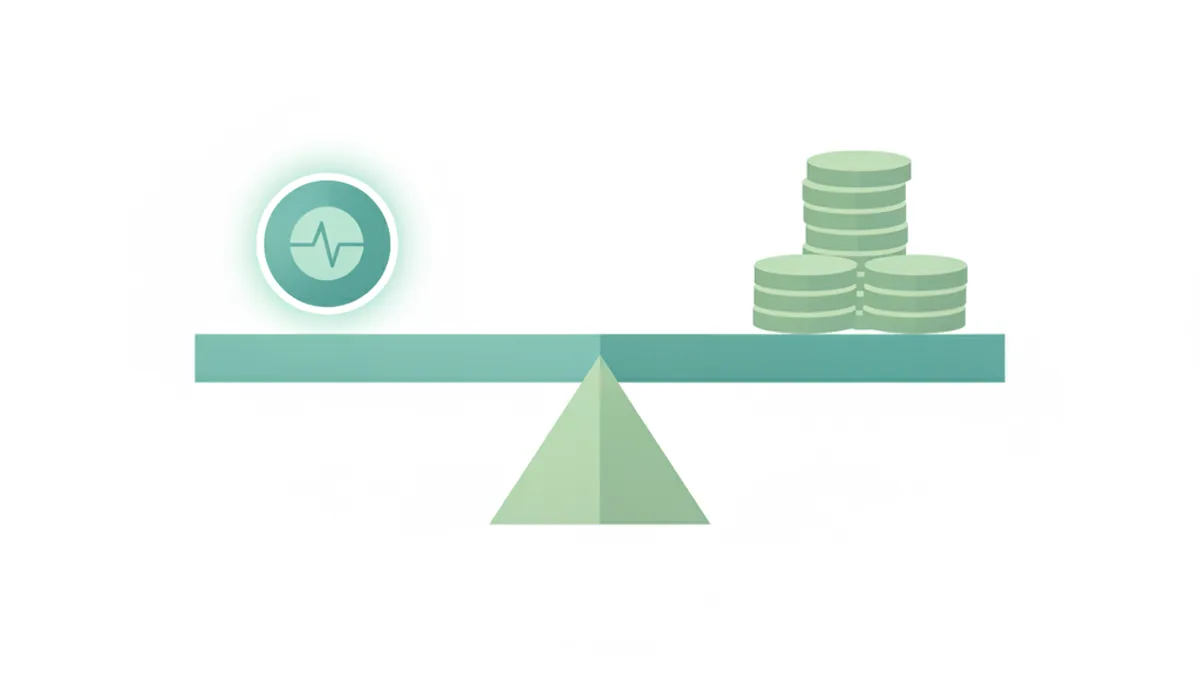
Let's talk money. A month's supply of CGM sensors runs $100–300, depending on the brand and whether you use an official prescription version or a direct-to-consumer wellness product. That's $1,200–3,600 annually to track something your body already regulates automatically if you're healthy.
Compare this to what that money could buy instead:
- A year of quality produce from a farmers market
- A gym membership or fitness classes you'd actually enjoy
- Three sessions with a registered dietitian who could personalize advice
- Time with a therapist if anxiety about health is driving the monitoring impulse
None of those alternatives give you minute-by-minute data. But they might actually improve your health outcomes more than watching glucose numbers that were fine to begin with.
The direct-to-consumer CGM companies have gotten savvy about this objection. They position their products as "metabolic awareness" tools, not medical devices. You'll pay less than prescription CGMs, get an app with prettier graphs, and receive AI-generated insights about your "metabolic fitness score." It feels scientific. But ask yourself: what are you going to do with that score? If it's low, will you obsess over flattening every meal's curve? If it's high, will you just feel smug? Neither seems worth thousands of dollars a year.
When It Might Be Worth Trying
I'm not entirely anti-CGM for non-diabetics. There are scenarios where I'd consider the experiment worthwhile, but with clear parameters.
Short-term diagnostic curiosity: Wear one for two weeks to see if there's any correlation between your symptoms and glucose patterns. If you suspect reactive hypoglycemia, persistent brain fog after meals, or you're genuinely confused about why you feel terrible some days and fine others, the data might reveal a pattern you'd never catch otherwise. Set a firm end date. Review the data with a clinician who can interpret it properly. Then stop.
Structured behavior change: If you're overhauling your diet and exercise routine to address prediabetes, metabolic syndrome, or significant weight loss goals, a CGM can provide concrete feedback for three months. The key is having a plan for what you'll do when the CGM comes off. Did you learn which foods work for your body? Can you maintain those habits without the device? Or are you just dependent on the external monitor to make every food decision?
Research participation: Some studies are looking at glucose variability in non-diabetic populations to understand metabolic health better. If you can access a CGM through a trial, you'll contribute useful data and might learn something about yourself at no cost. Worth exploring if you're near a university medical center.
But if your main motivation is general wellness optimization—you feel fine, your labs are normal, you just want to "do everything possible" for longevity—I'd pump the brakes. You're likely to generate more anxiety than insight. Start with the fundamentals: enough sleep, regular movement, a diet built around whole foods, stress management. Those interventions have massive evidence behind them and don't require expensive monitoring.
What to Do Instead
For the vast majority of people reading this, you don't need a CGM. Your body is already doing a remarkable job of regulating glucose without your conscious input. But if you're concerned about metabolic health, here are more useful steps:
Get your A1C checked. This single blood test averages your glucose levels over three months and costs a fraction of continuous monitoring. If it's under 5.7%, your glucose regulation is fine. Above 5.7%, you're in prediabetic territory and should talk to your doctor about lifestyle changes—with or without a CGM.
Track energy and symptoms instead of glucose. Keep a simple log for a week: what you ate, how you felt two hours later, energy levels throughout the day, sleep quality. You might spot patterns—feeling sluggish after big lunches, sleeping poorly when you eat late—that have nothing to do with glucose but everything to do with overall health. This costs nothing and provides actionable insights.
Work with a dietitian if you're confused about food. Many insurance plans cover this. You'll get personalized guidance based on your health history, preferences, and actual lab values—not just an algorithm reacting to glucose curves.
Focus on glucose-stabilizing habits without monitoring. Eat protein and fiber with each meal. Move after eating—a 10-minute walk does wonders for postprandial glucose. Get seven-plus hours of sleep, which affects insulin sensitivity more than most people realize. These habits improve metabolic health whether or not you're watching the numbers.
If you've already been using a CGM and find it genuinely helpful—you feel better, you've made sustainable changes, you're not anxious about the data—then great. Keep going. But if you're considering one because everyone else seems to have one, because you're vaguely worried about your health, or because optimization culture makes you feel like you're missing out, save your money.
Your glucose is probably fine. And even if it isn't, the CGM is just one tool among many for addressing it—and not necessarily the most effective one.
This article is for informational purposes only and isn't a substitute for medical advice. Talk to a qualified healthcare provider about your specific situation.
Sources & further reading
This article draws on guidance from recognized health authorities:
- CDC — Continuous Glucose Monitors
- NIH — Continuous Glucose Monitoring Profiles in Healthy Nondiabetic Participants


Comments
Post a Comment