What Your Resting Heart Rate Really Reveals
Most of us check our heart rate occasionally—maybe after a workout, or when we're anxious about something. But the number that matters most? The one you're probably not thinking about: your resting heart rate, measured when you're completely calm and haven't moved in several minutes.
I've spent years writing about cardiovascular health, and this single metric keeps coming up in research as a remarkably telling health indicator. Not because it diagnoses anything by itself, but because it reflects the cumulative effect of your fitness level, stress patterns, sleep quality, and underlying physiology. It's like a daily weather report for your cardiovascular system.
Here's what most people believe: a heart rate between 60 and 100 beats per minute is "normal," so anywhere in that range means you're fine. That's technically true according to clinical definitions, but the research paints a more nuanced picture. Where you fall within that range—and how it changes over time—matters more than most people realize.
What the Research Actually Shows
The medical community has known for decades that athletes tend to have lower resting heart rates, often in the 40s or 50s. That much is obvious. What's less obvious is how consistently research links higher resting heart rates to cardiovascular risk, even within the "normal" range.
Studies tracking large populations over many years have found that people with resting heart rates toward the higher end of normal face elevated risk for conditions like heart disease and early mortality. The relationship isn't simple cause-and-effect—a higher heart rate doesn't directly damage your heart. Rather, it often reflects underlying factors: reduced cardiovascular fitness, chronic stress, poor sleep, or early metabolic dysfunction that hasn't yet shown up in other tests.
The pattern holds across different populations. Research consistently shows that adults with resting heart rates above 80 beats per minute tend to have worse long-term cardiovascular outcomes than those closer to 60, even after accounting for other risk factors like blood pressure and cholesterol levels (according to cardiovascular epidemiology data). This doesn't mean everyone above 80 is doomed—plenty of people live long, healthy lives with heart rates in the 80s or 90s. But it does suggest the metric deserves more attention than we typically give it.
What surprised me most when reviewing the research was how responsive resting heart rate is to lifestyle changes. Unlike genetic markers or fixed anatomical features, this number moves. Regular aerobic exercise lowers it. Better sleep lowers it. Stress reduction lowers it. Weight loss often lowers it. It's one of the few health metrics that gives relatively quick feedback about whether your lifestyle changes are working.
Your resting heart rate drops with fitness for straightforward mechanical reasons. As your heart becomes stronger and more efficient, it pumps more blood with each beat—a measurement called stroke volume. When each beat moves more blood, fewer beats are needed to circulate the same amount. An untrained heart might need to beat 80 times per minute to deliver adequate oxygen. A well-trained heart might accomplish the same task in 55 beats. Less work, same result.
Why This Matters Beyond Fitness
But cardiovascular fitness isn't the only factor in play here.
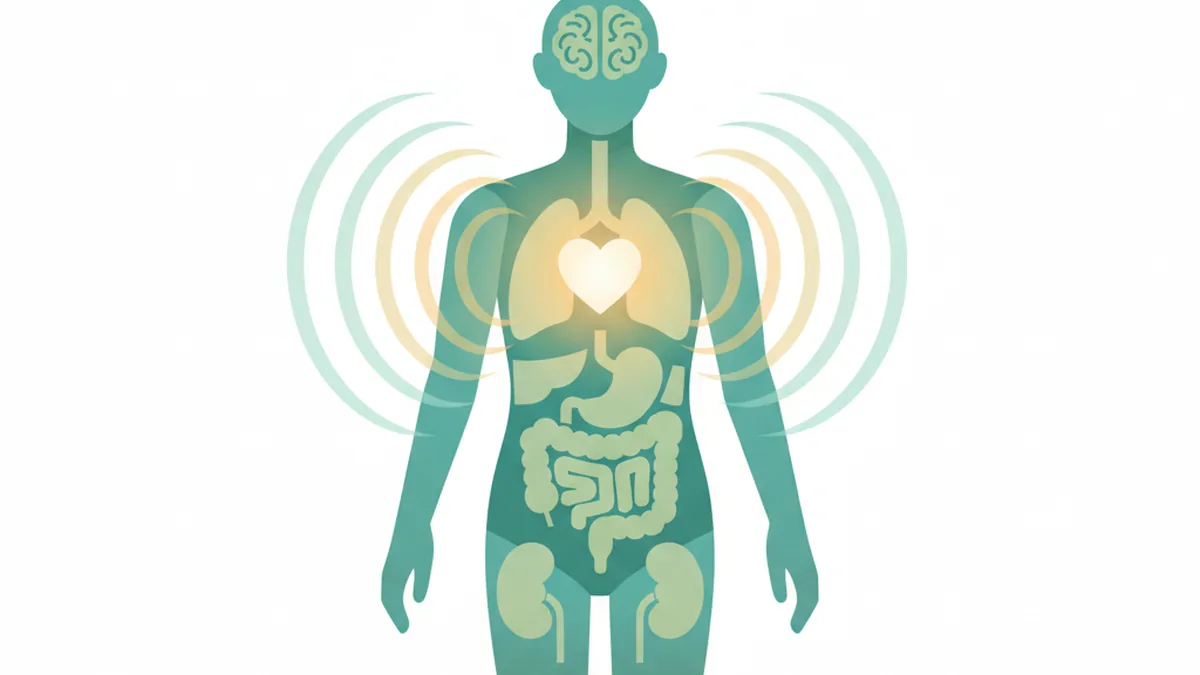
Your autonomic nervous system—the part that runs automatically without conscious thought—directly controls your resting heart rate through a constant balance between two branches. The sympathetic nervous system speeds your heart up, preparing you for action. The parasympathetic nervous system slows it down, promoting rest and recovery. Your resting heart rate reflects which system is winning that tug-of-war when you're at rest.
Chronic stress, poor sleep, or underlying inflammation can shift the balance toward sympathetic dominance. Your body stays partially revved up even when you're sitting still. The heart rate stays elevated. Over time, this creates wear and tear on the cardiovascular system—not dramatically, but consistently, like running an engine at higher RPMs than necessary.
Certain medical conditions reveal themselves through changes in resting heart rate long before other symptoms appear. An overactive thyroid accelerates metabolism and heart rate together. Anemia forces the heart to beat faster to compensate for reduced oxygen-carrying capacity. Developing heart failure may show up as a gradually climbing resting heart rate as the heart struggles to maintain adequate circulation.
Medications affect it too. Beta-blockers specifically lower heart rate as part of their mechanism. If you're on one of these drugs, your resting heart rate will be artificially lowered—that's intentional, not a problem. Stimulants, decongestants, and some asthma medications push it higher. Even caffeine can add 5-10 beats per minute for several hours after consumption.
The number also changes with age, though not always in the direction people expect. Children have faster resting heart rates—often 70-100 even when perfectly healthy. The rate typically settles into the 60s or 70s by early adulthood. From there, it may climb slightly with aging, though this probably reflects declining fitness more than aging itself. Well-trained older athletes often maintain resting heart rates indistinguishable from younger people.
What to Actually Do With This Information

So you've measured your resting heart rate properly—first thing in the morning, still lying in bed, after several minutes of calm breathing—and now you have a number. What next?
If you're consistently below 60 and you exercise regularly, that's almost certainly a sign of good cardiovascular fitness. Athletes in endurance sports sometimes dip into the 40s or even high 30s. This isn't dangerous unless accompanied by dizziness, fatigue, or fainting. If you feel fine, a low heart rate from fitness is beneficial, not concerning.
If you're below 60 without regular exercise, or if you're experiencing symptoms like lightheadedness, extreme fatigue, or episodes where your heart seems to pause, that warrants medical evaluation. Certain heart rhythm problems can cause inappropriately slow heart rates that need treatment. A healthcare provider can distinguish between athletic fitness and pathological bradycardia through examination and simple tests like an ECG.
For those in the 60-80 range: you're in a good spot, especially if you exercise moderately. This reflects reasonable cardiovascular fitness without obvious red flags. If you want to optimize further, consistent aerobic exercise will gradually shift you lower in this range. Even brisk walking for 30 minutes most days makes a measurable difference over weeks to months.
For those consistently above 80, the question is why. If you're deconditioned—sedentary lifestyle, haven't exercised regularly in years—that's probably the explanation. Your heart simply isn't trained efficiently. The solution is gradual aerobic conditioning: walking, cycling, swimming, anything that elevates your heart rate moderately for sustained periods. Start conservatively and build slowly. Most people see their resting heart rate drop 5-15 beats within 8-12 weeks of regular training.
But sometimes the explanation isn't just fitness. If you're exercising regularly and your resting heart rate remains stubbornly high, or if it's been climbing over recent months despite stable habits, mention it to your doctor. They'll likely check thyroid function, screen for anemia, review your medications, and assess for other metabolic or cardiac issues. Sometimes a persistently elevated resting heart rate is the first sign of a treatable problem.
Worth noting: fever raises your resting heart rate substantially—roughly 10 beats per minute for every degree Fahrenheit above normal (per established clinical observations). If you're sick, your heart rate will be higher than usual. That's expected. The numbers we're discussing apply to your baseline when you're healthy.
Anxiety disorders can keep resting heart rate chronically elevated too. If you struggle with persistent anxiety or panic attacks, addressing the underlying condition often brings the heart rate down as a secondary benefit. This is another situation where the elevated number isn't dangerous itself, but it signals something that deserves attention.
When Numbers Demand Immediate Attention
Some heart rate situations require urgent evaluation rather than gradual monitoring.
If your heart rate at rest suddenly jumps above 100 and stays there—what doctors call tachycardia—especially if accompanied by chest pain, severe shortness of breath, or dizziness, seek emergency care. This could indicate anything from a transient arrhythmia to acute heart problems requiring immediate intervention. Don't wait to see if it settles on its own.
Similarly, if your resting heart rate drops acutely below 50 (assuming you're not a trained athlete) and you feel weak, confused, or like you might faint, that's a medical emergency. Severe bradycardia can compromise blood flow to the brain and other vital organs.
Even without dramatic symptoms, a resting heart rate that's changed significantly—say, gone from consistently 70 to consistently 95 over a few weeks—deserves medical evaluation. Gradual increases from lifestyle changes (weight gain, decreased activity, increased stress) happen slowly. Rapid changes suggest something specific has shifted physiologically.
The Bigger Picture
Your resting heart rate works best as a trend, not a snapshot. A single measurement tells you less than watching the number over weeks and months. I recommend measuring it the same way at the same time—ideally first thing each morning before getting out of bed—and tracking it somewhere simple, even just notes on your phone.
What you're looking for are patterns. Is it stable? Gradually declining as you get fitter? Climbing despite your best efforts? Wildly variable day to day? Each pattern tells a different story about what's happening with your cardiovascular system, autonomic balance, recovery status, and overall health.
Athletes use resting heart rate as a recovery metric. If it's elevated 5-10 beats above baseline, that often signals incomplete recovery from previous training, inadequate sleep, or oncoming illness—a sign to ease back rather than push hard that day. The same principle applies to everyone else. If your resting heart rate is elevated from your normal baseline, your body is telling you it's under some kind of stress. Worth listening.
The practical advantage of this metric over others is its accessibility. You don't need lab work, appointments, or special equipment—just your fingers and a clock, or any of dozens of devices that measure heart rate automatically. It's immediate, free, and surprisingly informative if you know how to interpret it.
That said, keep perspective. Resting heart rate is one piece of a much larger puzzle. Someone with a heart rate of 85 who exercises regularly, maintains healthy weight, doesn't smoke, and has normal blood pressure and cholesterol faces far lower cardiovascular risk than someone with a heart rate of 65 who's sedentary, overweight, and has multiple other risk factors. Context always matters more than any single number.
This article is for informational purposes only and isn't a substitute for medical advice. Talk to a qualified healthcare provider about your specific situation.
Sources & further reading
This article draws on guidance from recognized health authorities:


Comments
Post a Comment