Your Heart Rate Variability Number Isn't What You Think It Means
Most people glance at their smartwatch, see "HRV: 42 ms," and wonder if that's good or terrible. The answer? It's complicated in ways that make this metric both more useful and more confusing than your device suggests.
Heart rate variability has become one of the most tracked biometrics among athletes, biohackers, and anyone trying to optimize their health. But what many people believe about their HRV number often conflicts with what the science actually shows.
What People Think HRV Measures
The common understanding goes like this: higher HRV means you're healthy and recovered. Lower HRV means you're stressed or sick. Your number should be as high as possible, and if it drops, something's wrong.
Fitness trackers reinforce this view with color-coded readiness scores. Green means go hard. Red means rest. Simple.
Except the biology underneath is far stranger than that.
Your heart doesn't beat like a metronome. Even when you're sitting still, the time between beats varies by milliseconds. One beat might come 950 milliseconds after the last. The next might arrive 1,020 milliseconds later. That 70-millisecond difference represents your heart rate variability.
This irregularity isn't a flaw. It's your autonomic nervous system doing exactly what it should — constantly adjusting your heart rate based on breathing, blood pressure, temperature, and hundreds of other inputs. High variability suggests your nervous system is responsive and adaptable. Low variability can indicate that your system is locked into a rigid pattern, often from chronic stress or poor health.
So far, the conventional wisdom holds up. But here's where it gets messy.
What Research Actually Shows About HRV

The relationship between HRV and health isn't as straightforward as "higher equals better."
Your HRV depends heavily on factors you can't control. Age dramatically affects the number. A 25-year-old athlete might have an HRV around 65 milliseconds. A healthy 60-year-old might sit at 25. Both are normal for their age. Comparing raw numbers across decades is meaningless.
Genetics matter too. Some people naturally run higher or lower, regardless of fitness. One study tracking identical twins found that heredity accounted for a substantial portion of HRV differences, even when the twins had different exercise habits.
Time of day shifts your number. HRV typically peaks during deep sleep when your parasympathetic nervous system dominates. It drops during the day as you move, think, and respond to demands. Morning measurements capture a different physiological state than evening readings.
The measurement method itself creates confusion. Different algorithms calculate HRV differently. The most common metric, RMSSD (root mean square of successive differences), emphasizes short-term variability. Another measure, SDNN (standard deviation of intervals), captures longer patterns. These numbers don't correlate perfectly. You can have high RMSSD but moderate SDNN.
Wearable devices compound the problem. Research comparing consumer trackers to medical-grade equipment found accuracy varied wildly across brands and even between firmware versions of the same device. Some overestimate HRV by 20% or more. Others underreport it.
But here's what research consistently demonstrates: trends matter more than absolute values.
Studies following athletes through training cycles show that a declining HRV pattern over several days often precedes overtraining symptoms, injury, or illness. The drop doesn't predict the exact day you'll get sick, but it signals that your system is struggling to recover from accumulated stress.
The reverse holds too. When people reduce chronic stress through meditation, improved sleep, or cutting back on training volume, their HRV typically rises over weeks or months. Not every day, but the overall trajectory shifts upward.
One large observational study found that people whose HRV declined over a decade showed higher rates of cardiovascular events compared to those whose HRV stayed stable or increased, even after adjusting for traditional risk factors like blood pressure and cholesterol. The pattern across time revealed something that single measurements couldn't.
Why This Actually Matters for Your Daily Life
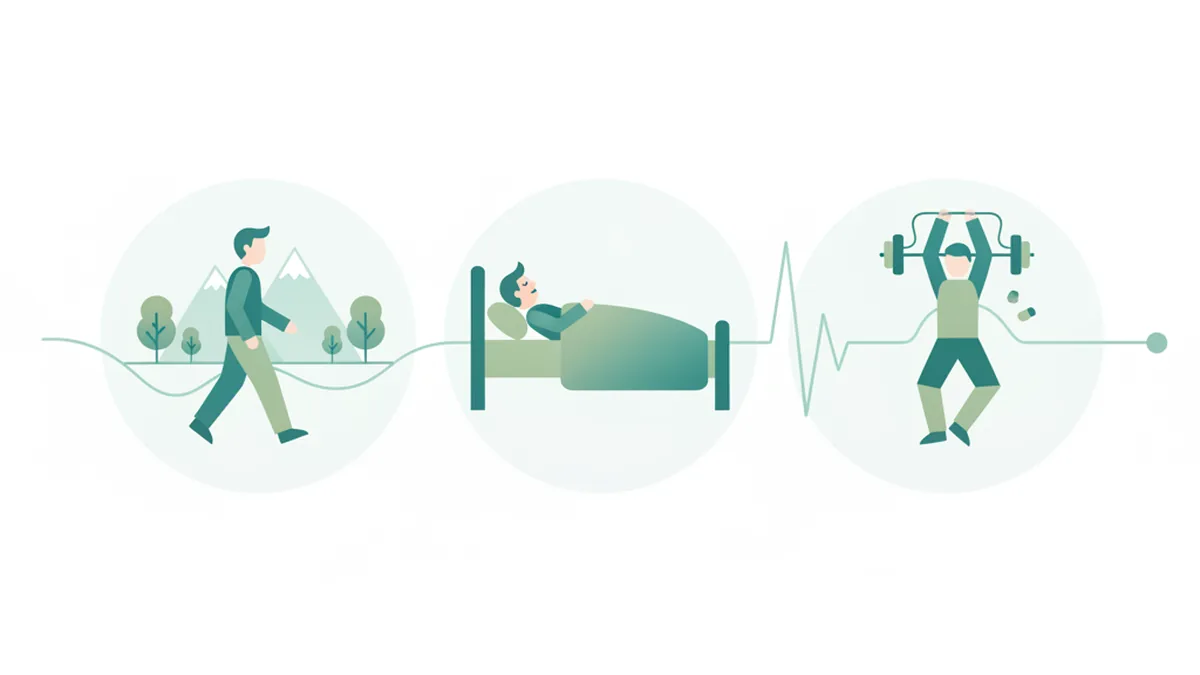
Understanding HRV helps most when you stop obsessing over the daily number and start watching for patterns that tell a bigger story.
A single low reading means almost nothing. You might have slept poorly, had alcohol the night before, or be fighting off a cold your immune system hasn't announced yet. Your HRV will drop. That's not a catastrophe. It's information.
But if your seven-day average drops 15% below your baseline and stays there for a week? That suggests something systematic. Your training load might exceed your recovery capacity. Work stress might be compounding in ways you haven't acknowledged. An illness could be brewing.
Athletes use this pattern recognition to adjust training. If HRV stays elevated, they might push harder than planned. If it drops, they swap an intense interval session for easy recovery miles. This approach doesn't guarantee perfect performance, but it reduces the risk of pushing into injury or burnout.
People managing chronic stress use it differently. They track whether changes in sleep schedule, meditation practice, or caffeine intake actually move the needle. Did switching to decaf after noon improve your HRV over two weeks? That's more reliable feedback than asking if you "feel" less stressed.
The metric works best as a conversation between your body and your choices, not as a daily report card.
Worth noting: HRV can't tell you why it's changing. A drop could mean physical overtraining, emotional stress, poor sleep, infection, dehydration, or a dozen other factors. The number prompts questions rather than answering them. You still have to investigate.
Some patterns warrant more attention than others. A gradually declining baseline over months, despite adequate rest and reasonable lifestyle habits, might indicate an underlying health issue worth discussing with a doctor. Cardiovascular disease, thyroid disorders, and autonomic dysfunction can all suppress HRV long before they cause obvious symptoms.
And while low HRV correlates with stress, extremely high HRV isn't always ideal either. In rare cases, unusually elevated readings can accompany certain cardiac arrhythmias or reflect an overactive parasympathetic response. Context always matters.
The practical question most people should ask isn't "Is my HRV good?" It's "What happens to my HRV when I do X, and does that pattern make sense given how I feel?"
What to Actually Do With Your Number
Start by establishing your personal baseline. Track HRV for at least two weeks under relatively normal conditions. Don't start during a marathon taper or a crisis at work. You want typical, not exceptional.
Most consumer devices make this easy. Take your measurement at the same time each day — first thing in the morning works well because it's consistent and reflects overnight recovery. Use the same body position (sitting or lying down) each time.
Watch for your normal range. If your readings typically cluster between 45 and 60, that's your current baseline. A reading of 43 might not mean much. A reading of 32 deserves attention.
Track trends, not isolated points. Calculate your seven-day rolling average. When that average drops significantly below your baseline, consider it a yellow flag. Not a mandate to panic, but a signal to evaluate your recovery strategies.
Ask what changed. Did you sleep five hours instead of eight? Travel across time zones? Increase training volume? Have a stressful week at work? Skip rest days? Drink more alcohol than usual? The HRV drop makes more sense when you connect it to specific behaviors.
Adjust based on the pattern. If your HRV is consistently suppressed, the most common culprits are insufficient sleep, chronic stress, excessive training load, or inadequate recovery between hard efforts. Address the most obvious factor first.
This might mean scaling back training intensity for a few days. It might mean prioritizing an extra hour of sleep. It might mean examining whether work stress has become unsustainable. HRV doesn't tell you which lever to pull, but it confirms when the adjustment works.
Some people find their HRV barely budges despite significant lifestyle changes. That's less common but not abnormal, especially in older adults or people with naturally low variability. For them, HRV isn't a useful biometric. No tool works for everyone.
What about trying to increase your HRV actively? Research suggests a few interventions show consistent effects over time. Regular aerobic exercise, particularly when it improves cardiovascular fitness, tends to raise HRV gradually over months. Meditation and slow breathing practices can boost it, though the effect varies by person. Reducing alcohol intake often helps, especially if you typically drink daily. Improving sleep quality — longer duration, fewer interruptions — frequently moves the number up.
These changes take weeks to show up in your average HRV. This isn't a next-day biofeedback loop. It's a slow recalibration of your autonomic nervous system.
How to Tell If Your HRV Drop Is Actually a Problem
You wake up, check your tracker, and your HRV sits fifteen points below normal. Now what?
Most people either panic and cancel their workout or ignore it entirely. Both responses miss the point. The real question isn't whether your HRV dropped — it's whether the drop fits a pattern that demands action.
Start by checking the basics. Did you drink alcohol last night? Even moderate drinking suppresses HRV for 12 to 24 hours as your body metabolizes ethanol and manages the inflammatory response. A single low reading the morning after a couple of drinks tells you nothing except that alcohol affects your nervous system. You already knew that.
Look at your sleep data if your device tracks it. Less than six hours of sleep, frequent wake-ups, or a late bedtime all tank HRV. So does sleeping in an overheated room — your body struggles to thermoregulate, and that stress shows up in reduced variability. If you slept poorly and your HRV dropped, the two are probably connected. The fix is obvious.
Check your recent training load. Did you run your longest distance ever yesterday? Lift heavier than usual? Stack hard workouts on consecutive days? Intense exercise triggers an acute stress response that temporarily lowers HRV. That's normal. Your body is adapting. The problem emerges when you keep piling on stress before you've recovered from the last session.
Here's a practical decision tree many athletes use: If your HRV is down but you slept well, feel good, and have energy, proceed with your planned workout but stay alert. If you feel off and your HRV confirms it, scale back intensity or duration. If your HRV has been suppressed for three or more consecutive days and you feel tired, take a full rest day or do very light activity only.
The combination of subjective feeling and objective data gives you better guidance than either alone. A low HRV when you feel great might mean your body is managing stress well despite the number. A low HRV when you feel terrible suggests your system is genuinely overwhelmed.
What about when nothing obvious explains the drop? You slept fine, didn't drink, haven't changed your routine, yet your HRV stays suppressed for a week. This is when the metric earns its value. Your body might be fighting an infection before symptoms appear. Research shows HRV often declines 24 to 48 hours before people develop cold or flu symptoms, as the immune response ramps up.
Chronic stress you haven't fully acknowledged can also drive persistent suppression. Work pressure, relationship tension, financial worry — these don't always feel acute in the moment, but they activate your sympathetic nervous system continuously. Your HRV reflects that activation even when you've mentally adapted to the stressor.
When a pattern persists without clear cause, treat it as useful information rather than a diagnosis. You might need more recovery time than you thought. You might benefit from stress-reduction practices you've been putting off. You might be overestimating how well you're managing competing demands.
One pattern that definitely warrants medical attention: a steadily declining baseline over months despite adequate rest, reasonable training, and good sleep. If your typical range was 50 to 65 six months ago and now sits at 35 to 45 without obvious explanation, discuss it with a doctor. Thyroid dysfunction, developing cardiovascular issues, and autonomic disorders can all suppress HRV gradually. The metric won't diagnose these conditions, but it can prompt the conversation that leads to proper testing.
When Higher Isn't Actually Better
The fitness industry sells HRV optimization as an unqualified good. Boost your number, boost your health. But the relationship isn't that clean.
Extremely high HRV can occasionally signal problems rather than superior fitness. Some cardiac arrhythmias produce unusually large variations between beats. Certain medications, particularly those affecting the autonomic nervous system, can artificially elevate HRV. If your number suddenly jumps 40% above your normal range and stays there, especially if you notice palpitations, dizziness, or other symptoms, that's worth investigating.
More commonly, people chase higher HRV through methods that don't actually improve health. Overemphasizing parasympathetic activation — through excessive meditation, extremely low training intensity, or complete stress avoidance — can produce a high HRV number without building genuine resilience. Your nervous system needs to practice responding to challenges, not just relaxing.
Think of HRV as reflecting your system's range of motion, not just its resting state. A healthy nervous system can ramp up when you need intensity and calm down when you need recovery. It's adaptable. Chronically elevated HRV with poor stress tolerance suggests your system is stuck in one mode, just as chronically suppressed HRV does.
This matters for how you interpret interventions. If you add a meditation practice and your HRV increases while you also notice better sleep, improved focus, and more stable energy, the higher number probably reflects genuine benefit. If your HRV climbs but you feel flat, unmotivated, or notice your performance declining, you might be overdoing recovery at the expense of productive stress.
Context determines whether a change in HRV means what you hope it means. The number is a clue, not a conclusion. What you do with it depends on everything else you know about how your body is functioning.
Some people find that their HRV responds dramatically to small changes — a single poor night tanks it, one good workout elevates it. Others have rock-stable numbers that barely move regardless of what they do. Neither pattern is inherently better. Responsiveness tells you the metric will be useful for tracking your state. Stability suggests you'll need to watch longer-term trends or rely more heavily on subjective assessment.
The goal isn't to maximize your HRV. It's to understand what your particular pattern tells you about whether your current approach to training, stress, and recovery is sustainable. For some people, that means their number becomes a daily checkpoint. For others, it's background data they glance at weekly. Both uses are valid if they help you make better decisions about your health.
If your HRV trends downward despite reasonable lifestyle habits, or if you notice other concerning symptoms — persistent fatigue, chest discomfort, dizziness, unusual shortness of breath — contact a healthcare provider. HRV can detect problems it can't diagnose. A physician can rule out cardiac issues, metabolic disorders, or other conditions that suppress variability.
One more note: don't let HRV override how you actually feel. If your number says you're recovered but you feel exhausted, trust your body first. The metric informs decisions; it doesn't make them for you.
The most useful way to think about heart rate variability is as one signal among many — resting heart rate, sleep quality, subjective energy, mood, motivation. When several signals point the same direction, you have clearer guidance. When HRV conflicts with everything else you're experiencing, it's probably the outlier.
Your HRV number means something. Just not what your smartwatch notification implies.
This article is for informational purposes only and isn't a substitute for medical advice. Talk to a qualified healthcare provider about your specific situation.
Sources & further reading
This article draws on guidance from recognized health authorities:
- Cleveland Clinic — Heart Rate Variability (HRV)
- NIH — An Overview of Heart Rate Variability Metrics and Norms


Comments
Post a Comment