Heart Palpitations: When They Are Harmless and When to Get Checked

That sudden awareness of your own heartbeat — the flutter, the skip, the pound — stops you mid-sentence. Your hand moves to your chest. Is this normal?
Most of us will feel heart palpitations at some point. They're incredibly common, often harmless, and frequently terrifying in equal measure. The problem is that the sensation itself tells you almost nothing about what's causing it. A skipped heartbeat from too much coffee feels remarkably similar to one caused by an arrhythmia worth investigating.
Here's what actually matters: not the single moment you feel it, but what happens next.
The First Hour: What Your Body Is Actually Doing
When you first notice that fluttering sensation, your heart is doing one of several things. It might be throwing in an extra beat (premature contraction). It might be skipping a beat entirely. Or it might simply be beating harder or faster than usual, making you suddenly conscious of something that normally happens 100,000 times a day without your awareness.
These premature beats are usually premature ventricular contractions (PVCs) or premature atrial contractions (PACs). Think of them as your heart's hiccups — an electrical signal fires slightly off-rhythm, and you get that distinctive thump-pause-thump pattern that people describe as "my heart skipped a beat." Research suggests that healthy people commonly have thousands of these per day without ever noticing them.
The key question in that first hour isn't really "why did this happen?" but rather "what else is happening?"
If the palpitation is isolated — a single flutter, maybe a few seconds of awareness, then nothing — your immediate concern should be low. Note what you were doing: drinking coffee, stressing about a deadline, recovering from exercise. Write it down if the sensation worried you enough to want to track patterns.
If the palpitations continue — repeating every few minutes, or if your heart rate feels genuinely irregular rather than occasionally jumpy — start paying closer attention. Count your pulse. Note whether it's fast (above 100 beats per minute while you're resting), slow, or just chaotic.
Watch for accompanying symptoms. Chest pressure? Shortness of breath that seems disproportionate to what you're doing? Dizziness or lightheadedness? These change the picture significantly.
Here's what happens too often: someone feels a palpitation, googles it, reads about atrial fibrillation or worse, and sits there marinating in anxiety for an hour. The anxiety itself then triggers more palpitations. Adrenaline from stress causes the exact same skipped-beat sensation as the thing you're worried about. You've created a feedback loop.
So in that first hour, if the sensation was brief and you feel otherwise fine, the most useful thing you can do is this: breathe slowly, note the circumstances, and carry on. Monitor, but don't spiral.
If, however, your heart rate is above 120 while you're sitting still, or below 50 with dizziness, or if you're experiencing chest pain — don't wait out the hour. Seek medical attention.
The First Day: When a Pattern Starts to Emerge

By the end of day one, you'll know whether this was a one-off or something that's repeating. That distinction matters more than almost anything else.
Occasional palpitations — a few episodes spread throughout the day, especially tied to identifiable triggers — fit the pattern of benign PACs or PVCs. Caffeine is an obvious culprit, but so is dehydration, lack of sleep, stress, and alcohol. The American Heart Association notes that these triggers can make a structurally normal heart suddenly much more noticeable to its owner.
Some people discover their palpitations cluster around certain activities. Bending over after a large meal. Lying down on their left side at night. Standing up quickly. These patterns often point to benign causes — pressure on the heart from your stomach, positional changes that briefly affect blood flow, or normal variations in autonomic nervous system activity.
But here's what makes day one genuinely useful: you can run some informal tests that will help any doctor you eventually see.
Try standing up and counting your pulse for 15 seconds, then multiply by four. Do it again an hour later. Then again. Are you getting wildly different numbers each time — like 68, then 112, then 54 — or is it relatively stable with the palpitations happening as extra beats superimposed on a steady rhythm? A chaotic, truly irregular pulse that changes drastically over short periods deserves quicker evaluation than occasional extra beats.
Notice whether specific substances make it worse. The second coffee of the day might do what the first one didn't. Some people discover that energy drinks, certain cold medications with pseudoephedrine, or even excessive dark chocolate set off their symptoms. If you can identify and eliminate a trigger that makes palpitations stop, you've learned something valuable.
For women, track where you are in your menstrual cycle. Hormonal fluctuations, particularly around ovulation and menstruation, can make palpitations more noticeable even when nothing cardiac has changed.
The symptoms you don't have matter as much as the ones you do. No chest pain? No fainting or near-fainting? No sudden severe shortness of breath? No feeling that your heart is beating so fast you can't count the beats? Those absences are actually good data. They don't mean "ignore this forever," but they do mean "probably not an emergency."
Conversely, if you feel like you might pass out, or if you do pass out — even briefly — that's a same-day medical visit. Syncope (fainting) in the context of palpitations can indicate arrhythmias that need treatment.
Some people experience their first day of palpitations and they're intense: frequent, anxiety-provoking, impossible to ignore. If that's your experience and it's affecting your ability to function, don't tough it out for weeks. A clinician can order an ECG and bloodwork that may provide quick reassurance or identify something fixable.
The First Week: Deciding What Needs Investigation
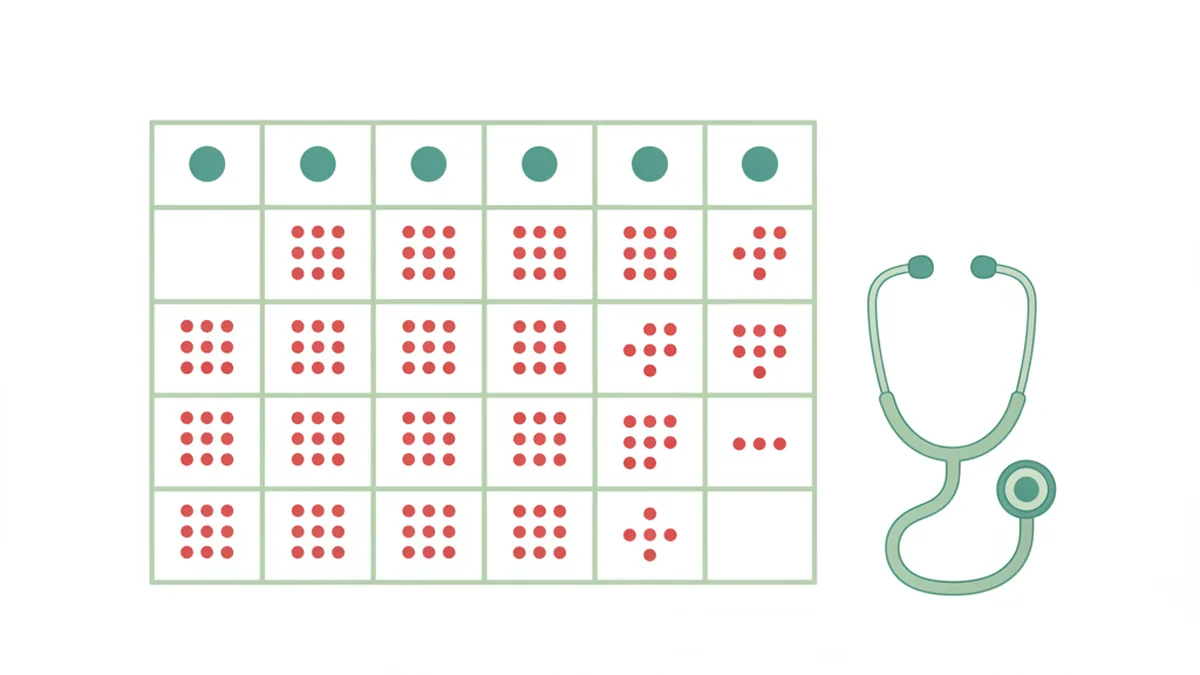
A week gives you enough data to see real patterns. It's also long enough that you need to make a decision about whether to seek evaluation.
If the palpitations have decreased or disappeared — especially after eliminating an obvious trigger — you're likely dealing with benign ectopic beats. Many people have a couple of bad days, change their coffee intake or sleep habits, and never feel it again.
If they're persistent but mild — occurring daily but not accompanied by other symptoms — you're in the category where clinical judgment varies. Some healthcare providers would want to see you after a week of daily symptoms. Others would suggest monitoring for a month if you feel otherwise well. The tiebreaker is usually how much it's bothering you and whether you have cardiac risk factors (family history of sudden cardiac death, personal history of heart disease, high blood pressure, diabetes).
If they're getting worse or more frequent, don't wait out the week. Escalating symptoms deserve evaluation even if they're not emergency-level yet.
Here's what a week of tracking should include if you're preparing to see a doctor:
Record the time of day palpitations occur. Morning episodes might suggest issues with blood sugar, medication timing, or caffeine. Nighttime palpitations can point to sleep apnea, reflux, or positional factors.
Note duration. "A split-second flutter" is different from "ten minutes of rapid irregular beating."
Quantify frequency. "Twice a day" is different from "dozens of times an hour."
Document what stops them. Do they resolve when you sit down? When you breathe deeply? On their own after a set period?
This information transforms a vague complaint ("I get palpitations sometimes") into actionable data ("I've had three episodes of rapid heartbeat lasting 5-10 minutes each, always in the evening, that resolve when I perform a Valsalva maneuver"). That second description gets you better medical care.
By the end of week one, you should know which category you're in:
Category 1: Resolved or minimal — The palpitations were stress-related, caffeine-related, or idiopathic (no clear cause) and they've essentially stopped. You can monitor and return to normal life, with a mental note to mention it at your next routine checkup.
Category 2: Persistent but not alarming — You're getting daily palpitations, but they're brief, not associated with concerning symptoms, and you feel otherwise well. Schedule a non-urgent appointment with your primary care doctor. They'll likely start with basic tests: an ECG, bloodwork to check thyroid function and electrolytes, maybe a Holter monitor if the pattern seems worth capturing.
Category 3: Concerning pattern — Palpitations that last more than a few minutes, that make you dizzy, that occur with chest discomfort or severe shortness of breath, or that happen with exertion. Get evaluated within days, not weeks.
Category 4: Emergency — Chest pain that radiates to your arm or jaw, palpitations with loss of consciousness, heart rate over 150 that doesn't come down, or a sense that something is seriously wrong. Emergency department, not your doctor's office.
Beyond the First Week: What Testing Actually Looks For
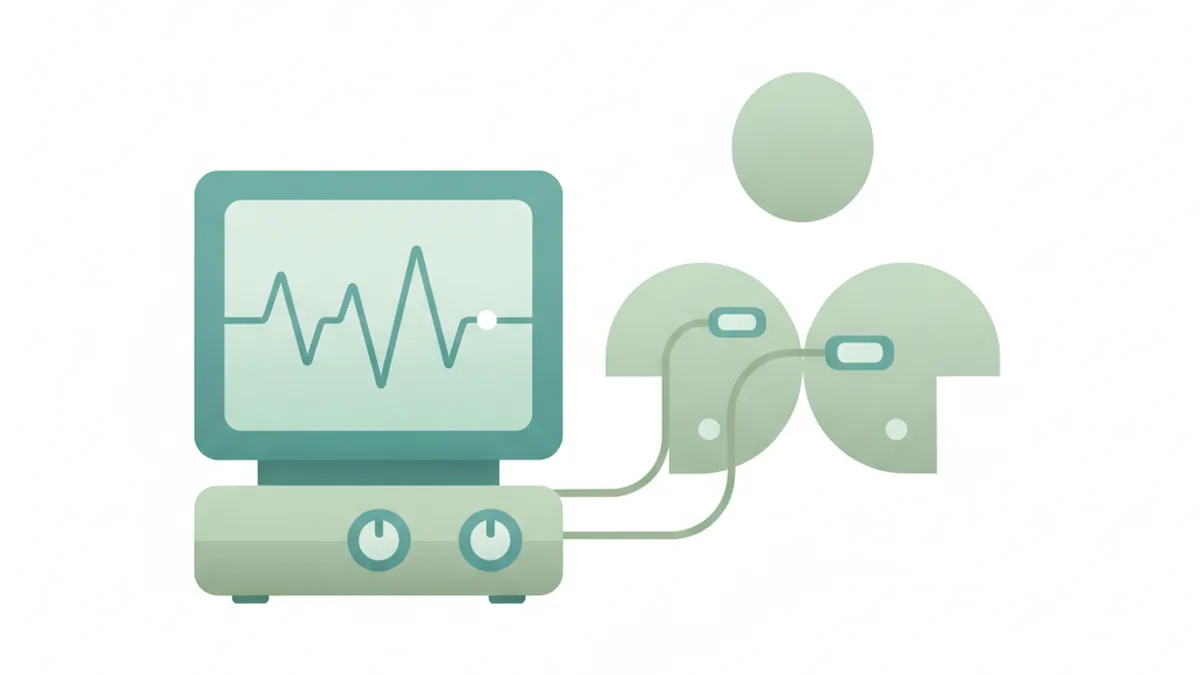
If you end up in a doctor's office because palpitations persisted past the first week, here's what you can expect.
The physical exam rarely catches a palpitation in action unless you're having them constantly. The doctor will listen to your heart, check your blood pressure, feel your thyroid, and ask detailed questions. The real work comes from testing.
An ECG (electrocardiogram) is first-line. It takes about three minutes and captures your heart's electrical activity in that moment. The catch: if you're not having palpitations during those three minutes, the ECG may be completely normal. That normal result doesn't mean "nothing's wrong" — it means "nothing was detectably wrong in that snapshot."
Bloodwork screens for thyroid dysfunction (hyperthyroidism can cause palpitations), anemia, electrolyte imbalances (particularly potassium and magnesium), and sometimes blood sugar issues. These are fixable causes that generate palpitations as a symptom, not the primary problem.
If your palpitations are frequent but didn't happen to occur during the ECG, you might get a Holter monitor — a portable ECG device you wear for 24 to 48 hours. It records continuously, capturing those episodes when they actually occur. Some newer monitors last weeks and you activate them when you feel symptoms.
Echocardiography (heart ultrasound) is less commonly needed for palpitations alone, but it checks for structural heart problems if your doctor hears a murmur or if you have risk factors suggesting valve disease.
The goal of all this testing is to answer two questions: "Is there a fixable underlying cause?" and "Is there an arrhythmia that requires treatment?" Often the answer to both is no — you have benign ectopic beats, and the treatment is reassurance plus lifestyle modification.
But sometimes testing reveals atrial fibrillation, supraventricular tachycardia, or other arrhythmias that benefit from medication or procedures. Those conditions matter because they can increase stroke risk or cause symptoms that significantly impair quality of life.
What Most People Learn Over Time
Many people who experience palpitations eventually figure out their personal equation: "I get skipped heartbeats when I'm dehydrated and stressed" or "If I have more than two cups of coffee, my heart gets jumpy that evening."
For others, the palpitations remain somewhat mysterious but clearly benign. Years of monitoring reveal no progression, no structural heart disease, just a heart that occasionally makes its presence known.
Some people develop strategies that work for them. Vagal maneuvers — bearing down as if having a bowel movement, dunking your face in ice water, coughing forcefully — can sometimes interrupt certain types of rapid heart rhythms. These aren't substitutes for medical care, but they're tools some people use for specific arrhythmias their doctor has already diagnosed.
The psychological component is real and shouldn't be dismissed. Health anxiety can perpetuate palpitations through a mechanism that's entirely physiological: anxiety triggers adrenaline, adrenaline triggers ectopic beats, ectopic beats trigger more anxiety. Breaking that cycle sometimes requires addressing the anxiety itself, not just the heart rhythm.
What you should remember about that initial moment — the first time you felt your heart flutter — is that the sensation alone doesn't tell you whether it's serious. The next hours, days, and week reveal the pattern. And the pattern is what matters.
Most palpitations are benign. Most don't require treatment beyond lifestyle changes. But some do require evaluation, and a small percentage indicate arrhythmias worth treating. You can't know which category you're in based solely on how it feels. You need the timeline, the context, the accompanying symptoms, and sometimes the testing.
If there's one thing to take away: trust patterns over single events, but don't ignore red flags. That fluttering sensation might mean nothing. Or it might be worth a conversation. The first week tells you which.
This article is for informational purposes only and isn't a substitute for medical advice. Talk to a qualified healthcare provider about your specific situation.
Sources & further reading
This article draws on guidance from recognized health authorities:


Comments
Post a Comment