When Your Head Swims: Dizziness vs. Lightheadedness
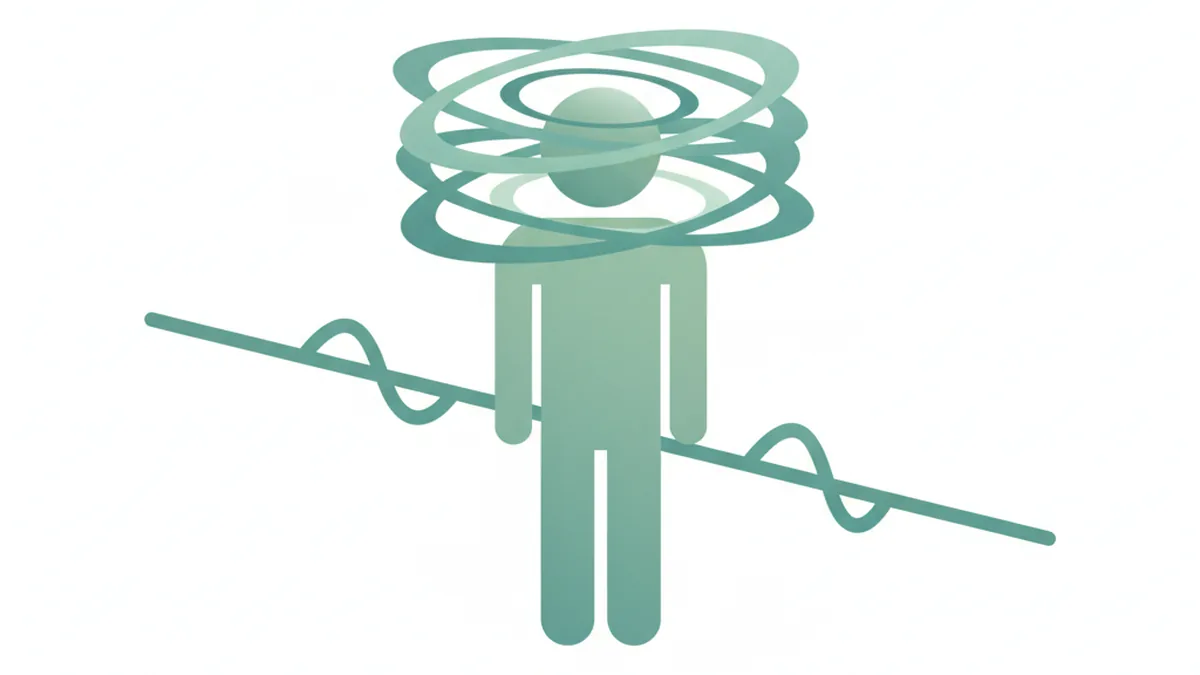
Standing up too quickly from the couch, you feel the room tilt. Or maybe it's more like your brain is floating slightly behind your skull. Perhaps the world actually seems to spin, or you just feel... off-balance, disconnected, vaguely unwell.
Most of us use "dizzy" as a catch-all for any weird sensation in our heads. But what you're experiencing—and what's causing it—can vary wildly. The distinction matters because a harmless episode of standing up too fast looks nothing like the warning signs of a stroke, even though both might make you reach for the nearest wall.
Here's what surprised me while researching this: doctors actually divide these sensations into fairly distinct categories, and the differences aren't just medical hairsplitting. They're diagnostic clues.
The Spinning World vs. The Floaty Head
True vertigo—the medical term for the sensation that you or the room is rotating—comes from your inner ear or the brain pathways that process balance signals. Think of it as your body's GPS getting contradictory data. Your eyes say you're still, but your inner ear insists you're moving. The result? Your brain splits the difference and decides everything is spinning.
Lightheadedness, by contrast, feels more like presyncope—the medical term for "almost fainting." It's that swimmy, disconnected sensation where you feel like you might pass out. The room doesn't spin; you just feel like you're not getting enough blood or oxygen to your brain. Because often, you aren't.
This isn't a trivial distinction. Vertigo usually points to problems with the vestibular system (inner ear and its neural connections). Lightheadedness more often signals cardiovascular issues—blood pressure, heart rhythm, dehydration, or blood sugar problems.
A neurologist once explained it to me this way: "Vertigo patients grab onto things because the world is moving. Lightheaded patients grab onto things because they're afraid they'll fall down."
The difference shapes everything about how we investigate and treat these symptoms.
When It's Probably Your Inner Ear

Benign paroxysmal positional vertigo—BPPV for short—is the most common cause of true vertigo. The "benign" is reassuring, though it sure doesn't feel benign when you're experiencing it.
BPPV happens when tiny calcium crystals in your inner ear dislodge and drift into the semicircular canals, which detect head rotation. These canals are filled with fluid, and they're supposed to be crystal-free. When the rogue crystals move around, they trigger false rotation signals.
The hallmark: brief (usually under a minute) but intense spinning triggered by specific head movements. Rolling over in bed. Looking up at a high shelf. Tipping your head back in the shower. Each movement sets off a predictable episode of the world rotating.
BPPV typically resolves on its own within weeks, though a healthcare provider can perform repositioning maneuvers—essentially guiding the crystals back where they belong—that work remarkably well. Research consistently shows these maneuvers resolve symptoms in a majority of cases.
Ménière's disease is the other inner-ear condition worth knowing about, though it's less common. It involves fluid buildup in the inner ear, causing episodes of vertigo lasting hours (not seconds), often accompanied by hearing loss, ear fullness, and tinnitus (ringing). Unlike BPPV's brief spins, Ménière's attacks are longer, more debilitating, and eventually damage hearing over time.
Vestibular neuritis—inflammation of the nerve connecting your inner ear to your brain—causes severe, constant vertigo that can last days. It often follows a viral infection. Unlike BPPV, the spinning doesn't come in episodes; it's unrelenting until it gradually improves over days to weeks.
When It's Probably Your Circulation
Stand up too fast, and you might experience orthostatic hypotension—a drop in blood pressure that briefly starves your brain of adequate blood flow. The sensation is classic lightheadedness: faint, swimmy, vision dimming at the edges. Sit or lie back down, and it resolves within seconds to minutes.
Orthostatic hypotension becomes more common with age, dehydration, certain medications (especially blood pressure drugs), and prolonged bed rest. For most people, it's more annoying than dangerous. Your cardiovascular system is supposed to tighten blood vessels in your legs and abdomen when you stand, preventing blood from pooling away from your brain. Sometimes it's slow to react.
But persistent or severe orthostatic symptoms deserve evaluation. They can signal autonomic nervous system problems, heart issues, or medication effects that need adjustment.
Dehydration causes lightheadedness through reduced blood volume. Less fluid in your circulatory system means less pressure to push blood to your brain, especially when you're upright. The sensation is often accompanied by thirst, dry mouth, darker urine, and fatigue. It's particularly common during illness (vomiting, diarrhea), heat exposure, or vigorous exercise without adequate fluid replacement.
Cardiac causes are the concerning ones. Arrhythmias—irregular heartbeats—can cause intermittent lightheadedness because they disrupt the efficient pumping of blood to your brain. Atrial fibrillation, in particular, reduces cardiac output and increases stroke risk. Heart valve problems and cardiomyopathy (weakened heart muscle) can do the same.
These typically cause lightheadedness with exertion, when your heart can't keep up with your body's demands. Sometimes you'll notice palpitations—the sensation of your heart racing, skipping, or fluttering. Other times, lightheadedness is the only symptom.
Low blood sugar—hypoglycemia—causes a distinctive version of lightheadedness, usually accompanied by tremor, sweating, confusion, and intense hunger. It's most common in people with diabetes taking insulin or certain oral medications, but can occur in others after prolonged fasting or unusual exertion.
When the Diagnosis Gets Trickier

Some conditions blur the lines. Migraines, for instance, can cause vertigo even without headache. Vestibular migraine is increasingly recognized as a major cause of dizziness, particularly in people with a history of traditional migraines. The vertigo can last minutes to hours, sometimes with motion sensitivity, visual disturbance, or light sensitivity.
Anxiety and panic attacks cause dizziness that patients often describe as lightheadedness, sometimes with a surreal, disconnected quality—depersonalization or derealization. The sensation is real, driven by hyperventilation (which changes blood chemistry) and the autonomic nervous system's fight-or-flight response. But the trigger is psychological, not vestibular or cardiovascular.
Here's what makes this tricky: anxiety can be both cause and effect. Someone who develops BPPV may become anxious about falling, which triggers additional dizzy sensations from the anxiety itself. Untangling the two requires careful evaluation.
Medication side effects are worth considering. Many drugs list dizziness as a potential side effect, but the mechanism varies. Blood pressure medications might cause it by lowering pressure too much. Sedatives and anti-anxiety drugs can cause it through effects on the brain. Antibiotics like gentamicin can directly damage the vestibular system.
The Red Flags That Demand Urgency
Most dizziness is benign, but certain patterns require immediate evaluation.
Sudden vertigo with severe headache, particularly the worst headache of your life, could signal bleeding in or around the brain. Vertigo with new double vision, numbness, weakness, slurred speech, or difficulty walking might indicate a stroke affecting the cerebellum or brainstem—areas that process balance and coordination. These symptoms demand emergency care.
The timing matters. Stroke-related vertigo is typically abrupt and constant, not episodic. It usually comes with other neurological symptoms, though rare posterior circulation strokes can initially present with isolated, sustained vertigo.
Lightheadedness with chest pain, severe shortness of breath, or palpitations could signal a cardiac emergency—heart attack, dangerous arrhythmia, or pulmonary embolism (blood clot in the lungs). Don't wait to see if it improves. Seek emergency care.
Dizziness after head trauma—even seemingly minor trauma—deserves evaluation for concussion or intracranial bleeding, especially if accompanied by confusion, persistent headache, or worsening symptoms.
New onset vertigo with unilateral (one-sided) hearing loss could indicate acoustic neuroma, a benign tumor on the vestibular nerve, or other structural problems requiring imaging.
What Actually Helps
For BPPV, the Epley maneuver and similar repositioning techniques work well when performed correctly. You can find videos demonstrating the technique, but working with a physical therapist trained in vestibular rehabilitation often yields better results. They can confirm the diagnosis and ensure the maneuver is done correctly for your specific ear and canal.
For orthostatic lightheadedness, the fixes are often simple: stand up more slowly, stay well-hydrated, and consider compression stockings if episodes are frequent. Some people benefit from increasing salt intake, though check with a clinician first, especially if you have heart or kidney issues.
Vestibular rehabilitation therapy—specialized physical therapy focused on balance and gaze stabilization—helps many people with chronic dizziness, regardless of cause. The therapy gradually desensitizes your brain to the problematic signals causing imbalance.
For cardiac causes, treatment targets the underlying problem: rate or rhythm control for arrhythmias, valve repair or replacement, heart failure management. For medication-related dizziness, adjusting doses or switching drugs often resolves the problem.
The challenge is that chronic dizziness often has multiple contributing factors—maybe some age-related vestibular decline, some medication effect, some anxiety. Addressing all components usually works better than seeking a single magic bullet.
When to Actually Seek Help
See a healthcare provider soon (within days) if you experience:
- Vertigo lasting more than an hour
- Recurrent episodes disrupting daily activities
- Lightheadedness that doesn't resolve with simple measures like hydration and slower position changes
- Associated hearing loss or ear fullness
- Frequent falls or near-falls
- Symptoms that are progressively worsening
Seek emergency care immediately for:
- Vertigo or lightheadedness with chest pain, shortness of breath, or palpitations
- Dizziness with sudden severe headache
- Balance problems with weakness, numbness, vision changes, or speech difficulty
- Head injury followed by persistent dizziness
- Loss of consciousness or near-fainting
For milder, occasional episodes—like brief lightheadedness when standing quickly—simple monitoring and hydration are often sufficient. But if you're reaching for the wall more than rarely, or if episodes are disrupting your life, professional evaluation makes sense.
A clinician can determine whether you need specialized testing: audiometry for hearing, vestibular function tests, cardiac monitoring, imaging, or blood work. The history and physical exam usually narrow the possibilities considerably before any testing.
The good news? Most dizziness has identifiable, treatable causes. Even when it persists, vestibular rehabilitation and other strategies can substantially improve function and reduce fall risk. The key is distinguishing the patterns early—spinning versus floating, brief versus sustained, triggered versus constant—and recognizing the red flags that demand urgency.
This article is for informational purposes only and isn't a substitute for medical advice. Talk to a qualified healthcare provider about your specific situation.
Sources & further reading
This article draws on guidance from recognized health authorities:


Comments
Post a Comment