Ferritin Levels: The Iron Marker Your Standard Blood Test Might Not Include
You're exhausted. Not just "I need more coffee" tired, but the kind of bone-deep fatigue that makes climbing stairs feel like a mountain expedition. Your doctor orders blood work. It comes back normal. "Your iron is fine," they say.
But here's what many people don't realize: standard blood tests typically measure hemoglobin — the iron in your red blood cells right now — not ferritin, which tells you how much iron your body has stored away for future use. And you can have "normal" hemoglobin while your ferritin sits at dangerously low levels, leaving you with a constellation of symptoms that traditional anemia screening completely misses.
Why does ferritin matter if my regular iron is normal?
Think of ferritin like your body's iron savings account, while hemoglobin is your checking account. Your body prioritizes keeping hemoglobin adequate because red blood cells need iron to carry oxygen. So it will drain your ferritin reserves first, sometimes for months or years, before your hemoglobin drops low enough to show up as clinical anemia.
This creates a frustrating gap. You feel terrible — exhausted, foggy-headed, weak — but your standard CBC (complete blood count) shows nothing wrong. The testing stops there.
Ferritin is a protein that stores iron inside your cells, primarily in the liver, spleen, and bone marrow. When your body needs iron to make new red blood cells or support other functions, it pulls from these ferritin stores. A ferritin blood test measures how much of this storage protein is circulating in your blood, which correlates strongly with your total iron reserves.
Normal ferritin ranges vary by lab and gender, but general guidelines suggest:
- Men and postmenopausal women: roughly 20-300 ng/mL
- Premenopausal women: roughly 10-150 ng/mL
But here's where it gets complicated. "Normal" on a lab report doesn't always mean optimal. Some people develop symptoms when ferritin drops below 30 ng/mL, even though labs may list 12-15 ng/mL as the lower limit of normal. Research consistently shows that symptoms like fatigue, hair loss, and restless legs often improve when ferritin rises above 50 ng/mL, even in people whose levels were technically "normal."
The medical community doesn't universally agree on optimal thresholds, which is partly why low ferritin gets overlooked. Some physicians only treat when ferritin falls below 15 ng/mL or when frank anemia appears. Others recognize that functional iron deficiency — where stores are depleted but anemia hasn't developed — deserves attention and treatment.
Is low ferritin serious, or just inconvenient?

Low ferritin exists on a spectrum. At one end, you might have mild depletion causing subtle fatigue. At the other end, severely depleted stores can affect multiple body systems and, if left unaddressed, eventually progress to iron deficiency anemia.
The symptoms of low ferritin without anemia can feel vague and easy to dismiss:
Fatigue and weakness — This is the most common complaint, but it's also the easiest to attribute to stress, poor sleep, or being busy. The fatigue from low ferritin often has a persistent quality. Rest doesn't fix it. Coffee doesn't touch it.
Hair thinning or shedding — Hair follicles need iron to grow. When stores run low, your body doesn't prioritize hair growth. Some people notice increased shedding in the shower or a widening part line. Dermatologists increasingly check ferritin in patients with unexplained hair loss, particularly in women.
Restless legs — That creeping, crawling sensation in your legs at night, relieved only by moving them. Studies link low ferritin to restless legs syndrome, and supplementation sometimes resolves symptoms even when other treatments haven't worked.
Brain fog and difficulty concentrating — Iron supports neurotransmitter production and brain function. Low stores can affect memory, focus, and mental clarity. Students and professionals sometimes notice their performance declining before any physical symptoms appear.
Cold intolerance — Iron helps regulate body temperature. People with depleted stores often feel colder than those around them.
Shortness of breath with exertion — Even before anemia develops, low iron stores can affect your exercise tolerance. Stairs that never bothered you suddenly leave you winded.
Beyond these symptoms, low ferritin can affect immune function, making you more susceptible to infections. It may also impair athletic performance — endurance athletes monitor ferritin closely because even mild depletion can reduce stamina and recovery.
The danger isn't usually immediate, but persistent iron depletion left untreated will eventually cause anemia. At that point, you're looking at more severe fatigue, pale skin, rapid heartbeat, dizziness, and in extreme cases, heart complications from the heart working harder to compensate for reduced oxygen delivery.
What should I actually do about low ferritin?
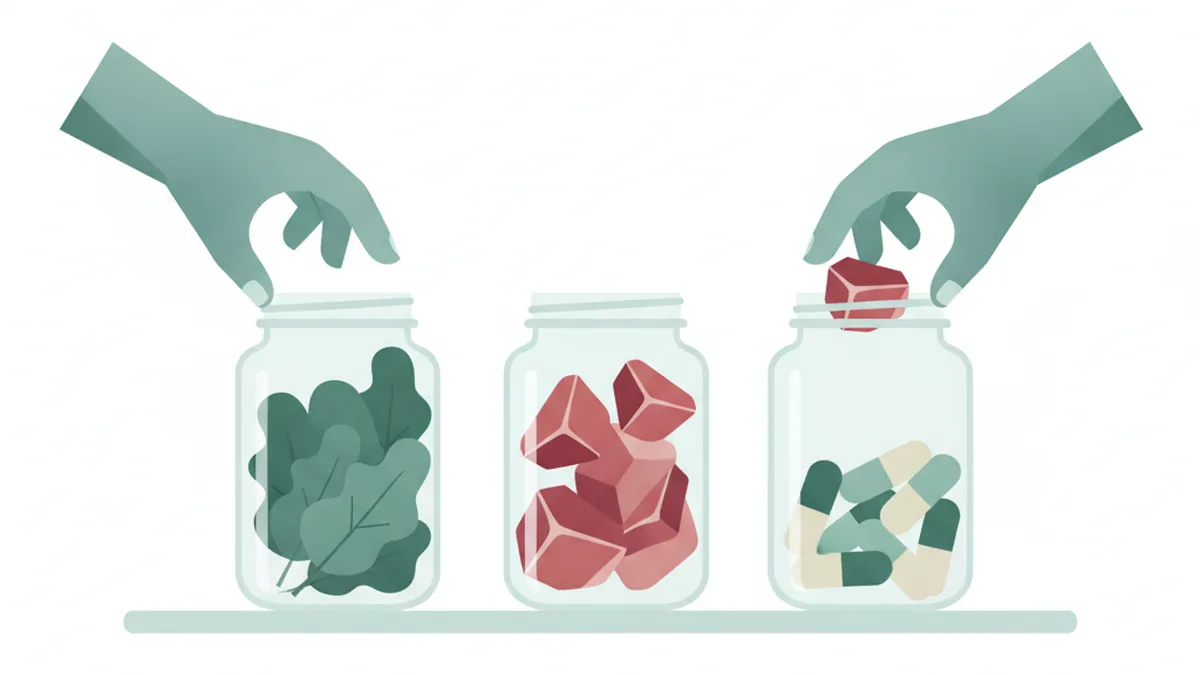
If you have symptoms that suggest iron depletion, requesting a ferritin test is reasonable. Most doctors will order it if you ask, especially if you mention specific symptoms like fatigue, hair loss, or restless legs.
The standard panel typically includes:
- Ferritin
- Serum iron (the iron currently in your bloodstream)
- Total iron binding capacity (TIBC)
- Transferrin saturation (the percentage of transferrin proteins carrying iron)
This combination helps distinguish different types of iron problems. Low ferritin with low serum iron usually indicates iron deficiency. Low ferritin with high TIBC suggests your body is trying to grab more iron from your diet. Ferritin below 30 ng/mL with symptoms warrants investigation, even if hemoglobin looks normal.
If your ferritin is low, the first question becomes: why?
The most common causes in premenopausal women are menstrual blood loss and inadequate dietary iron intake. Heavy periods can deplete iron faster than diet replaces it. Vegetarians and vegans face higher risk because plant-based iron (non-heme iron) is absorbed less efficiently than iron from meat (heme iron).
Other causes include:
- Gastrointestinal blood loss — Ulcers, polyps, hemorrhoids, inflammatory bowel disease, or colon cancer can cause chronic bleeding you might not notice. If you're a man or postmenopausal woman with low ferritin, your doctor should investigate GI sources.
- Poor absorption — Celiac disease, Crohn's disease, gastric bypass surgery, or chronic use of proton pump inhibitors (PPIs) for acid reflux can impair iron absorption.
- Frequent blood donation — Regular donors can deplete stores if they don't increase dietary iron.
- Pregnancy and breastfeeding — These dramatically increase iron needs.
A clinician will often ask about your diet, menstrual history, bowel movements (black stools can indicate bleeding), and any history of GI problems. Men and postmenopausal women with unexplained low ferritin should be evaluated for GI bleeding.
Treatment typically involves iron supplementation and addressing the underlying cause.
Oral iron supplements come in various forms — ferrous sulfate, ferrous gluconate, ferrous fumarate. Ferrous sulfate is most common and cheapest, but it causes more GI side effects (constipation, nausea, dark stools). Taking iron with vitamin C improves absorption. Avoid taking it with calcium, tea, or coffee, which interfere with absorption.
Expect slow progress. Oral supplementation typically raises ferritin by 10-20 ng/mL per month. If your level is 15 ng/mL and you're aiming for 50 ng/mL, you're looking at several months of supplements. Don't stop as soon as you feel better — your body needs time to rebuild reserves.
Side effects are common enough that many people give up on oral iron. If you can't tolerate oral forms, intravenous (IV) iron is an option. IV iron replenishes stores much faster — often in one or two infusions — with fewer GI side effects. It's more expensive and requires a medical setting, but for people with severe depletion, malabsorption issues, or intolerable oral side effects, it can be transformative.
Don't supplement blindly. Taking iron when you don't need it can cause iron overload, which damages organs over time. Some people have genetic conditions like hemochromatosis that cause excess iron accumulation. Test first, supplement based on results.
Dietary changes help maintain levels once you've rebuilt stores. Iron-rich foods include:
- Red meat, poultry, fish
- Lentils, beans, tofu
- Dark leafy greens (spinach, though absorption is lower)
- Iron-fortified cereals and breads
Pair plant-based iron sources with vitamin C (citrus, tomatoes, bell peppers) to boost absorption. If you're vegetarian or vegan, you may need higher iron intake than omnivores to maintain ferritin levels.
When should I worry, and when is it just a normal variation?
Ferritin levels fluctuate. A single low-normal result without symptoms probably doesn't warrant concern. But persistent symptoms with ferritin below 30 ng/mL deserve attention, even if your doctor initially dismisses it as "fine."
Red flags that require prompt medical evaluation:
- Ferritin below 15 ng/mL
- Unexplained weight loss alongside low ferritin
- Blood in stool or black, tarry stools
- Severe fatigue that limits daily activities
- Rapid heartbeat or chest pain with exertion (these suggest anemia has developed)
- If you're male or postmenopausal with low ferritin and no obvious explanation
Trust your instincts about your symptoms. If you're told your ferritin is "normal" but you feel terrible, ask for the actual number and consider getting a second opinion. Some physicians are more familiar with functional iron deficiency than others.
Also worth noting: ferritin can be falsely elevated during inflammation or infection because it's an acute phase reactant. If you have an active infection, inflammatory condition, or chronic disease, ferritin might look normal or high even when your iron stores are actually depleted. In these cases, additional tests like transferrin saturation help clarify the picture.
Once you've been treated and your ferritin has risen, periodic monitoring makes sense — perhaps yearly, or every six months if you had severe depletion. This helps catch drops before symptoms return. If your levels keep falling despite treatment, something is either causing ongoing blood loss or preventing absorption, and further investigation is needed.
The key is recognizing that ferritin matters independently of hemoglobin. Your body needs adequate iron stores for more than just making red blood cells. Energy production, immune function, neurotransmitter synthesis, and cell growth all depend on sufficient iron. When those reserves run low, you feel it long before anemia appears on a standard blood test.
If the symptoms fit and the fatigue won't quit, asking for a ferritin test is a reasonable step. And if it comes back low, don't let "but your hemoglobin is fine" stop you from pursuing treatment. Low ferritin deserves attention — not years down the road when it becomes anemia, but now, while rebuilding your reserves can actually restore your energy and quality of life.
This article is for informational purposes only and isn't a substitute for medical advice. Talk to a qualified healthcare provider about your specific situation.
Sources & further reading
This article draws on guidance from recognized health authorities:


Comments
Post a Comment