Your Sleep Schedule Might Matter More Than How Long You Sleep
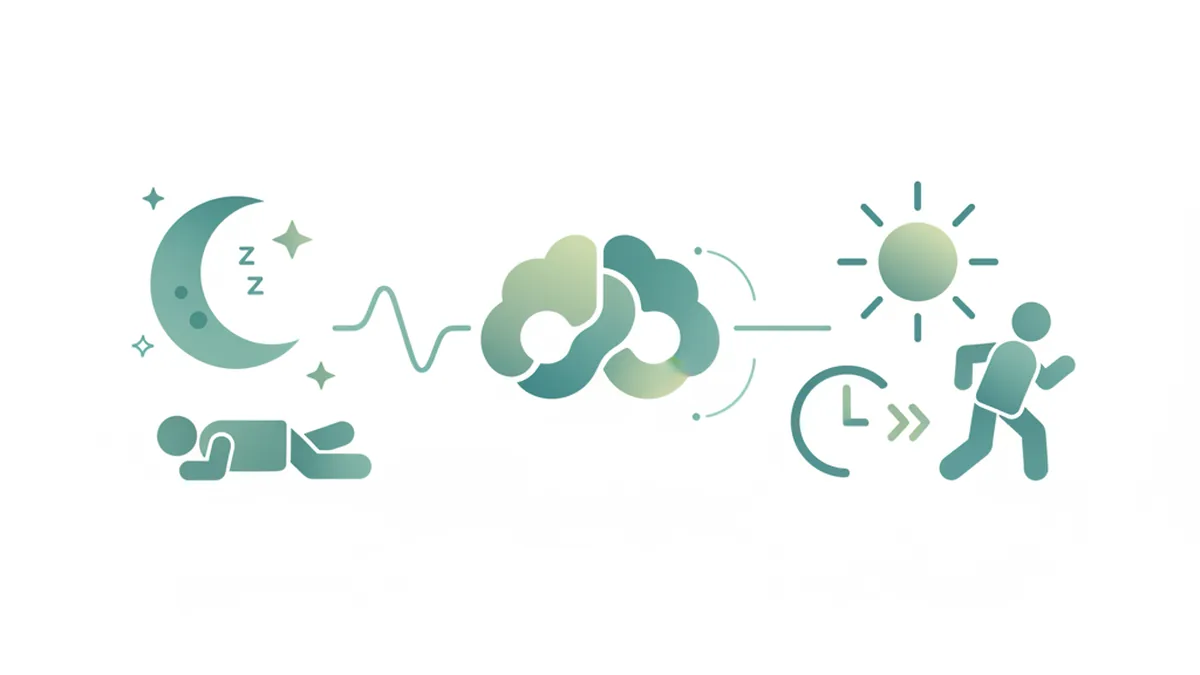
Most people obsess over getting eight hours. They'll sacrifice their bedtime, sleep in on weekends, or catch up with afternoon naps — all in pursuit of that magic number. But here's what surprised me when I started digging into the research: the clock might matter more than the hours.
Your body doesn't just count how long you sleep. It cares deeply about when.
The Myth: Eight Hours Fixes Everything
We've been sold a simple equation. Eight hours of sleep equals good health. Six hours or less? You're in trouble. Nine or ten? Even better, right?
The reality is messier.
Research from the National Sleep Foundation and circadian biology labs worldwide consistently shows that sleep timing — going to bed and waking at roughly the same time each day — predicts health outcomes more reliably than duration alone. Your body runs on an internal 24-hour clock, and when you ignore it, things go sideways fast.
Think of someone who sleeps eight hours but on a wildly inconsistent schedule. Monday night: asleep at 11 PM. Friday: 2 AM. Sunday afternoon nap turning into evening sleep. They're hitting their hours, but their body never knows what's coming next. Compare that to someone getting seven hours consistently, same bedtime, same wake time, seven days a week.
The consistent sleeper often feels better. Performs better on cognitive tests. Shows lower inflammation markers. The eight-hour chaos sleeper? They're constantly jet-lagged in their own time zone.
This phenomenon even has a name: social jet lag. It's the mismatch between your biological clock and your social schedule, and it affects roughly one-third of working adults in industrialized countries.
Reality: Your Body Runs on Biological Time
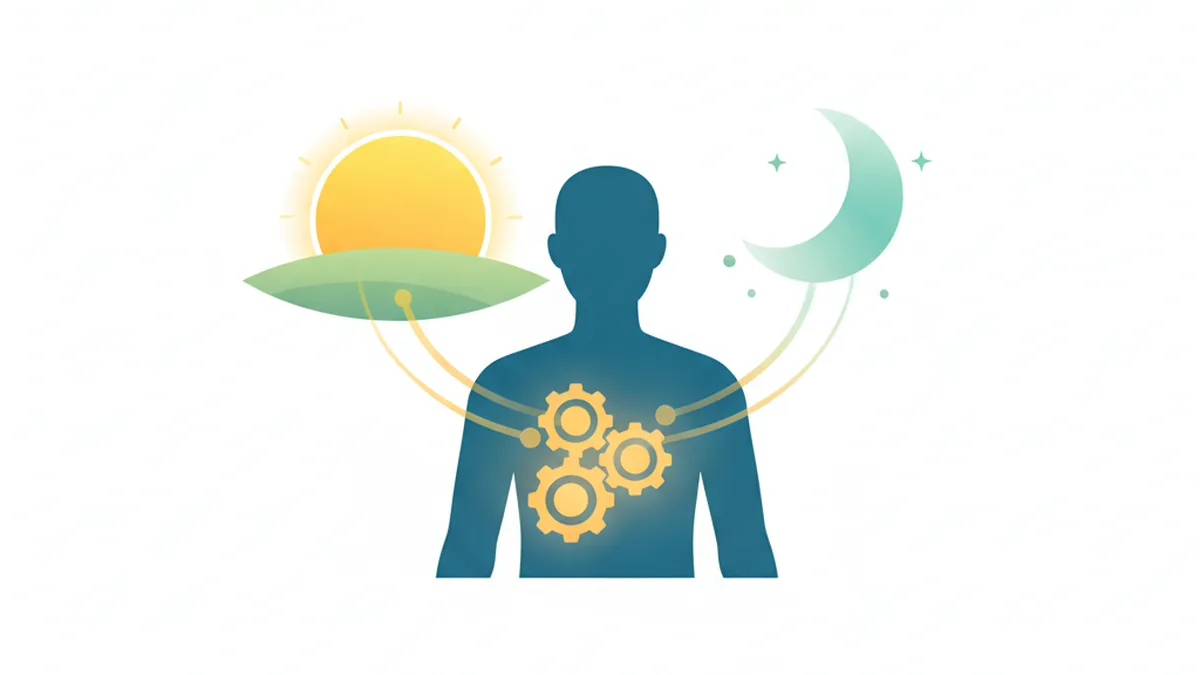
Your circadian rhythm isn't just about sleep. It's a master regulatory system governing nearly every cell in your body. Body temperature dips and rises on schedule. Hormone production follows precise patterns — cortisol peaks in the early morning to wake you up; melatonin rises in the evening to prepare you for sleep. Digestive enzymes, immune cell activity, even your pain threshold: all cycling on roughly 24-hour loops.
This internal clock lives primarily in a cluster of neurons called the suprachiasmatic nucleus, tucked behind your eyes in the hypothalamus. Light hits your retinas, and specialized cells send signals to this master clock, which then coordinates timing signals throughout your body.
When you go to bed at 10 PM every night, your body learns the pattern. Around 8:30 PM, melatonin starts rising. Body temperature drops slightly. Alertness wanes. You're biologically prepared for sleep before you even hit the pillow.
But mess with the timing — stay up until 1 AM one night, 11 PM the next, 3 AM on Saturday — and those preparatory signals get confused. Your body doesn't know whether to ramp up melatonin or keep you alert. The result? You lie awake when you want to sleep, then feel groggy when you need to be sharp.
The consequences run deeper than fatigue. Studies tracking people with irregular sleep timing show increased risks for metabolic dysfunction, weight gain, and mood disorders, even when total sleep hours stay constant. One large analysis found that every hour of social jet lag (the difference between weekday and weekend sleep schedules) correlated with roughly an 11% increase in cardiovascular disease risk.
Why? Because your metabolism is clock-dependent. Insulin sensitivity peaks in the morning and declines through the day. Eating a large meal at 10 PM hits your body when it's least equipped to process it efficiently, contributing to higher blood sugar and fat storage. Your immune system is also circadian — certain infection-fighting cells are more active at specific times. Disrupt the rhythm, and you may clear pathogens less effectively.
Even your liver operates on schedule, metabolizing toxins and medications according to circadian patterns. This is why doctors increasingly consider timing when prescribing drugs. A medication taken at 8 AM might work differently than the same dose at 8 PM.
Why the Myth Persists: Sleep Debt Feels Real
The eight-hour fixation makes intuitive sense because sleep debt is real. Restrict yourself to five hours for several nights, and you'll accumulate a deficit. You feel terrible. Performance tanks. So naturally, we conclude that more hours equals the fix.
Sleep researchers have indeed documented the harmful effects of chronic short sleep. People regularly getting fewer than six hours face higher risks for obesity, diabetes, heart disease, and cognitive decline, according to data from the Centers for Disease Control and Prevention.
But here's the catch: most studies showing these risks also note that irregular sleep schedules compound the damage. It's not just about short sleep. It's about the chaos.
The myth persists because the advice is simple. "Get eight hours" fits on a bumper sticker. "Maintain consistent sleep-wake timing aligned with your individual circadian tendency while ensuring adequate duration" does not.
We also love weekend recovery sleep. After a brutal week, sleeping until noon Saturday feels restorative. And in the very short term, it helps you feel less groggy. But it also shifts your circadian rhythm later, making Sunday night sleep harder and Monday morning miserable. You've essentially flown to a different time zone for the weekend and returned Monday.
The sleep industry doesn't help. Apps track duration. Mattress ads promise better eight-hour nights. Wearables celebrate your "sleep score" based mostly on hours logged. Timing? Consistency? Those get less attention because they're harder to gamify.
What This Means for You: Consistency Is the New Priority
So what should you actually do? Build a schedule you can keep seven days a week.
Pick a bedtime and wake time that work for your life — job, family obligations, natural tendencies — and stick to them within about 30 minutes, even on weekends. Yes, that means setting an alarm on Saturday. It feels like punishment at first, but most people adjust within a couple of weeks.
If you're naturally a night owl, don't force yourself into a 10 PM bedtime if your biology fights it. Some people have genetic variations that shift their circadian rhythm later (delayed sleep phase) or earlier (advanced sleep phase). Trying to override a strong biological preference usually fails. Instead, work with what you've got. If you naturally feel alert until midnight and groggy until 8 AM, structure your life around that if possible. Consistency at midnight-to-8AM beats chaotic 10PM-to-variable wake times.
Prioritize light exposure. Get bright light — ideally sunlight — within an hour of waking. This reinforces your morning circadian signal. Dim lights in the evening. Blue light from screens suppresses melatonin, so if you must use devices at night, consider blue-blocking settings or glasses.
Watch meal timing too. Try to eat within a consistent 10-12 hour window each day. If you eat breakfast at 7 AM, finish dinner by 7 PM. This "time-restricted eating" aligns your metabolic rhythms with your sleep-wake cycle. Late-night eating disrupts both.
Avoid long daytime naps. A 20-minute power nap is usually fine, but hour-long afternoon sleep can shift your circadian rhythm and make nighttime sleep harder. If you're consistently needing long naps, that's a sign your nighttime sleep isn't working.
Be strategic about caffeine. It has a half-life of about five hours, meaning half the caffeine from a 3 PM coffee is still in your system at 8 PM. If you're sensitive, cut off caffeine by early afternoon.
If you work shifts, this gets harder. Shift work fundamentally conflicts with circadian biology, and researchers acknowledge there's no perfect solution. But some strategies help: keep your sleep schedule as consistent as possible even on days off, use blackout curtains and white noise to create a sleep-friendly environment during daytime sleep, and consider timed light exposure and melatonin supplements under medical guidance to help shift your rhythm.
When should you see a doctor? If you maintain a consistent schedule for a month and still feel unrefreshed, wake frequently, or struggle to fall asleep, talk to a healthcare provider. You might have an underlying sleep disorder like sleep apnea, restless legs syndrome, or a circadian rhythm disorder that needs specific treatment.
Also seek help if your schedule demands clash impossibly with your biology — if you're a severe night owl forced into a 6 AM job and suffering daily, a sleep specialist can assess whether you have delayed sleep phase disorder and discuss light therapy, melatonin timing, or work accommodations.
Excessive daytime sleepiness despite adequate, consistent sleep deserves evaluation. Same with loud snoring, gasping during sleep, or witnessed breathing pauses — these suggest sleep apnea, which needs diagnosis and treatment.
The Science We're Still Learning
Circadian research is exploding. We're discovering clock genes in nearly every tissue. We're learning that circadian disruption may contribute to cancer risk, possibly because cell division and DNA repair follow circadian schedules. We're finding that the gut microbiome has circadian rhythms and may influence sleep quality.
Researchers are exploring "chronotherapy" — timing medical treatments to circadian rhythms for maximum effectiveness and minimum side effects. Early studies suggest that certain chemotherapy drugs work better and cause fewer side effects when given at specific times of day.
We're also starting to understand individual differences better. Genetic testing can identify whether you're biologically wired as an early bird or night owl, which might eventually guide personalized sleep recommendations.
What we don't know yet: the optimal amount of circadian flexibility. Can you safely vary your schedule by an hour without consequences? Two hours? How quickly can you shift your rhythm when traveling across time zones without lasting effects? These questions remain open.
We also lack great data on how modern life's 24/7 light exposure, irregular meal patterns, and shift work will affect health across a full lifespan. The first generation exposed to smartphones from adolescence is only now reaching middle age.
But the core message is clear enough to act on: your body expects regularity. Millions of years of evolution tuned your biology to the predictable cycle of day and night. Modern life lets you override that pattern, but your cells haven't adapted to the chaos.
So yes, get enough sleep — most adults need seven to nine hours. But get it on a schedule. Same bedtime, same wake time, same every day. Your eight-hour Tuesday-to-midnight Saturday variable sleeper is fighting their own biology. The seven-hour consistent sleeper is working with it.
The clock matters.
This article is for informational purposes only and isn't a substitute for medical advice. Talk to a qualified healthcare provider about your specific situation.
Sources & further reading
This article draws on guidance from recognized health authorities:


Comments
Post a Comment