Personalized Medicine: When Your DNA Actually Changes the Treatment Plan
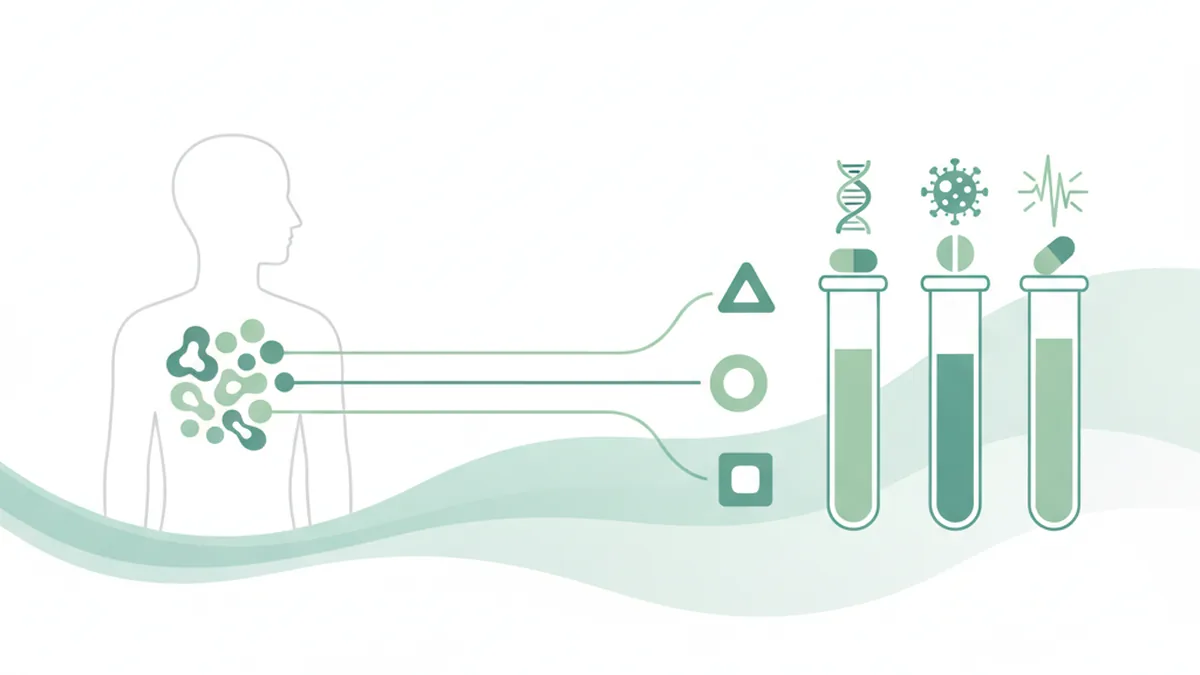
You walk into the clinic with the same diagnosis as the person before you. Same disease, same stage, similar age. Yet your doctor prescribes an entirely different medication. Not a guess. Not a hunch. Your genes said so.
This is personalized medicine — and it's quietly reshaping how we approach everything from cancer to depression to heart disease. But here's what catches people off guard: it's not science fiction, and it's also not always worth doing. The reality is more interesting than the hype.
What People Think Personalized Medicine Is (And What It Actually Does)
The popular image — some slick commercial where a cheek swab predicts your entire medical future — misses the point. Personalized medicine isn't fortune-telling. It's pattern recognition.
Your genome contains roughly 20,000 genes. Most of them do predictable things in predictable ways. But scattered throughout are variations — sometimes just a single letter change in your DNA — that alter how your body processes medications, metabolizes toxins, or responds to disease.
Take warfarin, the blood thinner. Standard dosing used to be trial-and-error: start with a typical dose, check your blood levels weekly, adjust until you hit the target range. Frustrating for patients, occasionally dangerous when someone metabolized it too slowly and bled, or too quickly and clotted. Now we can test for variants in two genes — CYP2C9 and VKORC1 — that explain about 30-40% of the dosing variability between people. Not perfect, but enough to start closer to your actual ideal dose from day one.
That's the modest, practical reality of personalized medicine right now. It doesn't decode your destiny. It narrows the guesswork.
The field rests on a straightforward premise: people with similar genetic profiles often respond similarly to treatment. When we know which profile you have, we can skip treatments unlikely to work and fast-track the ones with better odds. Sometimes that's the difference between remission and months of ineffective therapy.
Where Genetics Actually Changes the Treatment — And Where It Doesn't

Cancer treatment is where personalized medicine has moved furthest from theory into routine practice. Oncologists now routinely sequence tumor DNA to identify specific mutations driving the cancer's growth.
Breast cancer demonstrates this clearly. HER2-positive breast cancers — where a particular gene produces too much of a growth-promoting protein — respond to targeted drugs like trastuzumab. HER2-negative tumors don't. Before genetic testing became standard, everyone got similar chemotherapy regimens. Now treatment splits based on what the tumor's genes reveal. The difference in outcomes isn't subtle.
Lung cancer treatment has shifted similarly. Certain mutations in genes like EGFR or ALK make tumors vulnerable to specific targeted therapies that work far better than traditional chemotherapy for those patients. A decade ago, you'd start chemo and hope. Now the first step is often genetic testing of the tumor to see if you're a candidate for a targeted drug.
Psychiatric medications represent another area where genetic testing has gained ground, though with more controversy. Pharmacogenetic tests can flag gene variants that affect how you metabolize antidepressants or antipsychotics. Someone with certain CYP2D6 variants might break down a medication too rapidly for it to work, or too slowly, leading to side effects.
The evidence here is mixed. Some studies suggest genetic testing reduces the trial-and-error phase of finding the right psychiatric medication. Others find minimal benefit over careful clinical monitoring. The FDA has issued warnings about overstating what these tests can predict. Worth discussing with a psychiatrist, but not a crystal ball.
Then there are the many conditions where genetics doesn't yet change much. Diabetes management, for instance, rarely involves genetic testing outside of specific rare forms. Same with most autoimmune diseases, osteoporosis, or routine infections. The genetics are complex — often hundreds of genes each contributing tiny effects — and we don't yet know how to translate that into different treatment decisions.
This is the current landscape. Personalized medicine works best when a single gene or small set of genes dramatically alters drug response or disease behavior. It's less useful when the condition involves intricate interactions among dozens of genes plus environmental factors.
When Genetic Testing Actually Makes Sense (The Decision Framework)

Your doctor suggests genetic testing. Or maybe you saw an ad and you're curious. How do you know if it's worth doing?
Start with the treatment question: will the results change what you actually do? If your doctor says "we'd prescribe the same medication either way," the test isn't clinically useful yet, regardless of how interesting the information might be.
Cancer diagnosis almost always justifies testing now. Tumor genomic profiling has become standard of care for many cancers because it directly influences which therapies oncologists choose. The cost has dropped dramatically — what cost tens of thousands a decade ago now runs a few thousand, often covered by insurance for established cancer types.
Cardiovascular medication can warrant testing in specific scenarios. If you need clopidogrel (Plavix) after a stent, CYP2C19 testing might reveal whether you're a poor metabolizer who won't activate the drug properly and needs an alternative. If you're starting warfarin long-term, genetic testing for dose prediction is reasonable, though many cardiologists still manage dosing fine without it through careful monitoring.
Family history sometimes tips the scales. If multiple relatives developed early-onset breast or colon cancer, genetic testing for BRCA mutations or Lynch syndrome can identify whether you carry a high-risk variant that justifies enhanced screening or preventive measures. This isn't routine; it's targeted testing when personal and family history suggest elevated risk.
Medication failures can prompt pharmacogenetic testing. If you've tried three antidepressants without benefit, or experienced severe side effects from medications at standard doses, testing for drug-metabolism genes might explain why and guide next choices. The evidence supporting this varies by drug class, but for someone who's already struggled, the added information sometimes helps.
Pain management represents a growing application. Gene variants affect how people process opioids, with some metabolizing them to inactive forms (getting minimal pain relief) and others converting them too efficiently (higher overdose risk). For chronic pain patients, this information can inform safer prescribing.
Direct-to-consumer genetic tests — the kind you order yourself online — occupy murkier territory. Companies like 23andMe provide ancestry information plus some health-related genetic markers. The FDA has approved certain reports, like BRCA variants associated with breast cancer risk. But most of what these tests report falls into the "interesting but not actionable" category. Learning you have a 1.3-fold increased genetic risk for type 2 diabetes doesn't change the advice: maintain healthy weight, exercise, eat well. You'd do that anyway.
The test probably isn't worth it if:
- You're healthy with no specific condition being treated
- The results won't change your treatment options
- You're just curious about generic "wellness" insights
- The testing company promises to optimize your supplements or diet based on genes (the evidence for nutritional genomics remains thin)
It probably is worth discussing if:
- You have cancer and treatment decisions are pending
- You need a medication with known genetic predictors of response
- You have strong family history of certain hereditary cancers
- You've experienced unusual medication responses
- Your doctor recommends it for a specific clinical reason
The Practical Reality: What Happens Next

You decide to get tested. What actually occurs?
For tumor testing in cancer, the oncology team typically arranges everything. They send a biopsy sample to a lab that sequences relevant genes, usually a panel of dozens to hundreds of cancer-related genes. Results come back in one to three weeks. Your oncologist reviews them with you, explaining which mutations were found and whether targeted therapies exist for any of them.
For pharmacogenetic testing, you might give a blood sample or cheek swab. The lab analyzes specific genes related to drug metabolism — often a panel covering multiple medications across different classes. You receive a report, ideally reviewed with your doctor, indicating which medications you metabolize normally, rapidly, or poorly. Some systems integrate this into your electronic health record so it's available whenever a provider prescribes medication.
The information usually stays relevant for life. Your germline genetics — the DNA you were born with — doesn't change. Test once, and that CYP2D6 status remains the same at 40 and 80. (Tumor genetics can evolve as cancer mutates, which is why oncologists sometimes retest if disease progresses.)
Cost varies wildly. Comprehensive tumor genomic profiling might run $3,000-5,000, often covered by insurance for established cancer indications. Pharmacogenetic panels range from a few hundred to over a thousand dollars. Direct-to-consumer tests cost $100-300, but remember you're paying for information that may not be medically actionable.
Insurance coverage is inconsistent. Medicare covers certain genetic tests for specific cancers. Private insurers vary by plan. If your doctor orders testing for an established indication — HER2 testing in breast cancer, EGFR in lung cancer — coverage is likely. For newer tests or less-established uses, you might face denial and appeal.
One underappreciated issue: interpretation evolves faster than testing. You might get tested today and receive a report saying a particular variant has "uncertain significance." Three years later, research clarifies that variant's impact. Some labs offer free reanalysis as knowledge advances. Others don't. The data doesn't expire, but its meaning can sharpen over time.
What Personalized Medicine Can't Tell You (The Honest Limitations)
Genetic testing won't predict when you'll get sick, with rare exceptions. Yes, a BRCA1 mutation substantially raises lifetime breast and ovarian cancer risk. But it doesn't say you'll definitely develop cancer, and it doesn't reveal when. Genes load the gun; environment and chance pull the trigger.
Most common diseases — diabetes, heart disease, Alzheimer's, depression — involve complex genetics. You inherit not one "diabetes gene" but a collection of small risk-increasing variants scattered across your genome, plus environmental contributions that often matter more. Polygenic risk scores attempt to quantify this cumulative genetic risk, but they're not yet accurate enough to guide most treatment decisions. The person with high genetic risk who exercises daily and maintains healthy weight may fare better than someone with low genetic risk who doesn't.
Pharmacogenetic testing doesn't guarantee you'll avoid side effects or find the perfect medication immediately. It improves odds, nothing more. You might metabolize a drug normally according to your genes but still experience side effects for non-genetic reasons. Or you might be a predicted poor metabolizer who tolerates the medication fine at adjusted doses. Genes are one variable in a complex equation.
The tests can't tell you about drug interactions, allergies, or how your specific disease case will behave. They provide probabilities, not certainties.
And there's the problem of overinterpretation. Patients sometimes receive genetic test results showing variants classified as "increased risk" for certain conditions and spiral into anxiety, even when the absolute risk remains low. A gene variant that doubles your risk sounds alarming — unless your baseline risk was 1 in 10,000, making the new risk 2 in 10,000, still negligible.
We also don't yet understand what most genetic variants do. The human genome contains millions of variations. Labs test for the ones with established clinical meaning, but you carry thousands more whose effects remain unknown. That creates an illusion of completeness — you got tested, you got results — when actually we've only scratched the surface.
Moving Forward: Is This Right for You?
Personalized medicine isn't a single decision. It's a series of conversations with your healthcare team as your situation evolves.
If you're facing a cancer diagnosis, genetic testing of the tumor is almost certainly worth pursuing. The technology has matured, the cost-benefit ratio usually favors testing, and treatment decisions genuinely hinge on the results.
If you're struggling with medication side effects or lack of efficacy, pharmacogenetic testing might clarify why. Bring it up with your doctor. In some cases, it offers useful guidance. In others, you'll get more value from careful dose adjustment and monitoring.
If you're healthy and curious, direct-to-consumer testing can satisfy that curiosity, but temper expectations. You'll learn interesting things about ancestry and maybe a few health predispositions, but you probably won't discover anything that changes your day-to-day health decisions. The fundamentals — sleep, nutrition, exercise, stress management, not smoking — matter more than most genetic variants.
Before any testing, ask:
- What will you do differently based on the results?
- How will this information change my treatment or screening?
- What's the cost, and is it likely to be covered?
- Who will help me interpret the results?
If the answers satisfy you, proceed. If not, waiting until the clinical utility becomes clearer is perfectly reasonable.
The field is advancing quickly. Tests that are experimental today become routine in five years. What insurance doesn't cover now might be standard later. Personalized medicine isn't an all-or-nothing proposition. You can opt in when it makes sense for your specific situation.
The future likely holds more precision, not less. Drug development increasingly incorporates genetic insights. Screening protocols may become more tailored to individual risk profiles. But we're not there yet. Right now, personalized medicine is most valuable when it answers a specific clinical question: which drug will work better for this person's tumor? How should we dose this medication given their metabolism? Does this patient carry a hereditary cancer syndrome?
Those are concrete questions with concrete answers. The rest — the promise of perfectly optimized health based on genetic blueprints — remains more aspiration than reality.
This article is for informational purposes only and isn't a substitute for medical advice. Talk to a qualified healthcare provider about your specific situation.
Sources & further reading
This article draws on guidance from recognized health authorities:


Comments
Post a Comment