Ultra-Processed Foods Aren't What Most People Think They Are
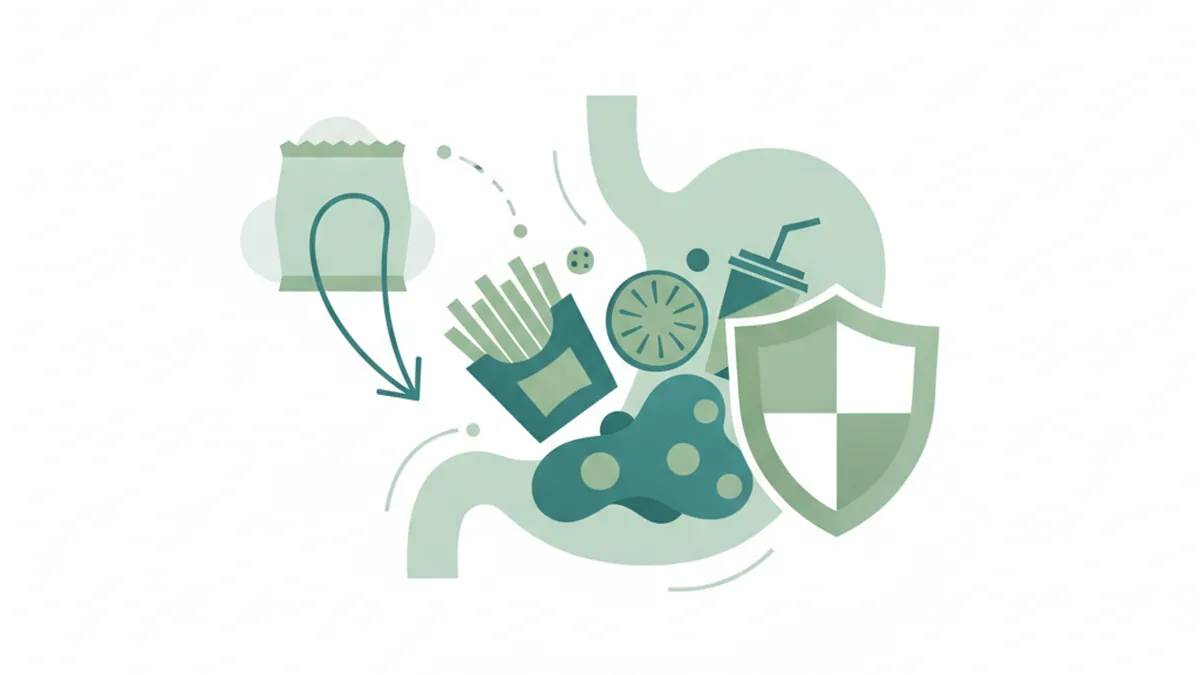
You probably picked up something ultra-processed today without realizing it. Not because you weren't paying attention, but because the category itself is misunderstood. Most people equate "ultra-processed" with obviously junky foods — candy bars, chips, soda. And while those qualify, so does that protein bar you thought was a smart choice. So does the whole-grain bread you deliberately selected. Even some plant-based milk alternatives that scream "health food" on the label.
The confusion makes sense. We've collapsed all processing into a single villain, when the reality is far more textured. A can of chickpeas is processed. So is a Twinkie. Clearly, these aren't the same thing.
What Actually Separates Ultra-Processed from Everything Else
Food scientists use a classification system called NOVA, developed by researchers in Brazil, to sort foods into four groups based on processing extent. It's not about good versus bad — it's about understanding what happened between farm and fork.
Group 1 is unprocessed or minimally processed: fresh vegetables, plain rice, dried beans, eggs, milk. These might be cleaned, dried, or pasteurized, but they're fundamentally still the original food.
Group 2 covers processed culinary ingredients: butter, sugar, oil, salt. You wouldn't eat a bowl of these alone, but they help you cook Group 1 foods.
Group 3 is processed foods: canned vegetables with salt, freshly baked bread, cheese, cured meats. These combine Groups 1 and 2, usually with methods people have used for centuries — smoking, fermenting, canning.
Group 4 — ultra-processed foods — is where things get interesting. These contain ingredients you'd never use in home cooking. Maltodextrin. Hydrolyzed proteins. Modified starches. Emulsifiers like carrageenan or mono- and diglycerides. They're formulated in industrial facilities to be hyperpalatable, shelf-stable, and ready to eat with minimal preparation.
Here's the catch: whole-grain bread can fall into Group 3 or Group 4 depending on what's in it. Five ingredients including whole wheat flour, water, salt, yeast, and maybe honey? Group 3. That same bread with added dough conditioners, preservatives, emulsifiers, and artificial flavors? Group 4.
The difference isn't always visible from the outside of the package. A breakfast cereal marketed as "natural" and "high fiber" can still be ultra-processed if it contains protein isolates, modified corn starch, and synthetic vitamins added back after processing stripped the grain down to almost nothing.
This is why simplistic advice like "avoid processed foods" falls apart. Processing itself isn't the problem — humans have been drying, fermenting, and preserving food for millennia. What changed is the degree of industrial reformulation.
Why Scientists Started Worrying About Ultra-Processing
The concern didn't emerge from food snobbery. It came from epidemiological patterns that researchers couldn't explain with existing nutritional models.
For decades, we focused on individual nutrients: too much saturated fat, too much sodium, not enough fiber. But people whose diets were high in ultra-processed foods showed worse health outcomes even after accounting for those nutrients. Something about the food matrix itself — how the ingredients are combined and structured — seemed to matter.
Research consistently links higher ultra-processed food consumption with increased risks of cardiovascular disease, type 2 diabetes, and certain cancers. Large observational studies across multiple countries have found these associations, though they can't prove direct causation. The issue is disentangling ultra-processing from other factors: people who eat more ultra-processed foods often have less access to fresh food, less time to cook, lower incomes, and higher stress — all independent health risk factors.
Still, controlled feeding studies offer clues. In one notable trial, researchers gave participants either an ultra-processed diet or an unprocessed diet, matched for calories, sugar, fat, fiber, and macronutrients. Participants could eat as much as they wanted. Those on the ultra-processed diet consumed roughly 500 more calories per day and gained weight. Those on the unprocessed diet lost weight.
Why? Partly eating speed. Ultra-processed foods are often engineered for rapid consumption — soft textures, intense flavors, minimal chewing. You can demolish a serving of chips in minutes. The same calories in whole foods (think apple slices with nut butter) takes longer to eat, giving satiety signals time to catch up.
There's also emerging research around how ultra-processing affects the gut microbiome, inflammation markers, and even how our bodies extract energy from food. But we're still early in understanding mechanisms. What we know for certain is the pattern: higher consumption correlates with poorer health across populations.
The World Health Organization and various national dietary guidelines now recommend limiting ultra-processed foods, though the advice varies in specificity. Some countries are more direct than others about naming these foods as a distinct category.
Sorting Real Food Decisions from Noise

So should you purge your pantry? Probably not. The goal isn't perfection or purity — it's understanding where your calories actually come from.
Some ultra-processed foods are genuinely useful. A working parent grabbing pre-cooked rotisserie chicken and bagged salad isn't making the same choice as someone living on frozen pizza and energy drinks. Canned beans with added salt are technically processed, but they're cheap, shelf-stable, and nutritious. Frozen vegetables with a light sauce might contain emulsifiers, yet they still deliver fiber and vitamins to people who otherwise wouldn't eat vegetables.
Context matters. An occasional protein bar or packaged snack isn't a health crisis. The issue is dietary pattern — when ultra-processed foods become the foundation of your eating rather than occasional conveniences.
Here's how to actually assess what you're eating:
Read past the front label. "Whole grain!" and "Made with real fruit!" are marketing, not promises of minimal processing. Flip to the ingredients. If the list includes things you wouldn't recognize as food (sodium stearoyl lactylate, anyone?), that's ultra-processed. If it's short and readable, probably not.
Count ingredients as a rough heuristic. Five ingredients or fewer generally means less processing, though not always. Some ultra-processed foods game this by listing "spices" as one ingredient when it's actually a dozen additives. Still, it's a decent starting screen.
Notice how much chewing is required. Foods designed to dissolve quickly or require minimal jaw work are often ultra-processed. They're engineered for easy consumption. Whole foods resist you a bit — they have texture, structure, toughness. An apple fights back. Applesauce slides down.
Track where your meals come from for a week. Not obsessively, just awareness. How many meals started with whole ingredients you cooked versus things you reheated or opened from a package? The ratio matters more than any single meal.
Watch for the blood sugar spike-crash pattern. Ultra-processed foods, even "healthy" ones, often cause rapid glucose swings because their structure is broken down. If you're hungry an hour after eating, or you get shaky and irritable between meals, consider whether you're eating foods that are too refined.
Prioritize additions over subtractions. Instead of fixating on what to eliminate, focus on what to add. More whole fruits. More vegetables in any form. More legumes. More nuts. More foods that still look like something that grew. As you add these, ultra-processed foods naturally occupy less space on your plate.
The worst approach is rigid rules that make eating stressful. "I can never have X" typically backfires. Better: "Most of my meals come from whole foods, and I don't sweat the exceptions."
Some situations make ultra-processed foods nearly unavoidable. Food deserts where fresh produce is scarce or prohibitively expensive. Disabilities that make cooking difficult. Work schedules that leave no time. Treating ultra-processed food consumption as a moral failure ignores these structural realities. Do what's feasible with the resources you have.
When in doubt, ask: "Did this food exist 100 years ago in roughly this form?" Bread, yes. Bread with 40 ingredients including cellulose gel and caramel color, no. Cheese, yes. Cheese product with modified food starch and artificial flavor, no. It's not a perfect test, but it points you in the right direction.
When to Actually Worry
Most people don't need to panic about ultra-processed foods, but a few patterns warrant attention.
How to Tell Ultra-Processed from Just Processed When the Label Tricks You
You're standing in the bread aisle, comparing two loaves. Both say "whole grain." Both list whole wheat flour first. One has seven ingredients. The other has nineteen. Which is ultra-processed?
The ingredient count helps, but it's not the whole answer. What matters more is what kind of ingredients fill that list. Here's the practical filter: scan for substances that only exist because of industrial chemistry.
Emulsifiers and stabilizers are the clearest tells. Mono- and diglycerides. Polysorbate 80. Soy lecithin. Carrageenan. Xanthan gum. These keep oil and water mixed, prevent separation, extend shelf life. You'll never use them at home because they require lab synthesis or industrial extraction. One or two in a product that's otherwise whole ingredients? Borderline. Five or six? Definitely ultra-processed.
Protein isolates and hydrolysates signal reformulation. Soy protein isolate. Whey protein concentrate. Hydrolyzed vegetable protein. These are proteins stripped from their original food matrix and added back to boost protein content or improve texture. A whole soybean is minimally processed. Soy protein isolate is what's left after you chemically extract everything else. If protein is added to the food rather than naturally in it, that's industrial reformulation.
Modified starches mean the food was engineered for texture. Modified corn starch. Modified food starch. Maltodextrin. These are starches that have been chemically or physically altered to thicken, stabilize, or change mouthfeel. Regular corn starch in a homemade pudding? Fine. Modified corn starch in your "whole grain" cereal to create a specific crunch? Ultra-processed.
Synthetic vitamins listed at the end often mean the food was stripped first. Fortification isn't inherently bad — adding iodine to salt prevents deficiency diseases. But when you see a long string of added vitamins and minerals (thiamine mononitrate, folic acid, iron, niacin), it often means the manufacturer processed the base ingredient so heavily that natural nutrients were destroyed, then added synthetic versions back. Whole grain flour doesn't need vitamin fortification. Refined flour stripped to white powder does.
Watch for flavor and color that wouldn't occur naturally. "Natural flavors" sounds innocent, but it's a catch-all for dozens of compounds extracted and recombined in labs to create specific tastes. One natural flavor might contain twenty separate chemical components. Caramel color, Red 40, Yellow 5 — these exist to make food look a certain way, not to nourish you. If the ingredient list includes multiple colors or flavors, especially numbered ones, you're holding an ultra-processed product.
Here's the test that works in practice: Could you theoretically make this at home if you had the time and the base ingredients? Bread from flour, water, salt, and yeast? Yes. Bread that requires calcium propionate, datem, and ascorbic acid? No. Peanut butter from ground peanuts and salt? Yes. Peanut butter with fully hydrogenated vegetable oils and mono- and diglycerides? No.
Some borderline cases will always exist. Tofu is technically processed — soybeans don't naturally form curds — but it's been made the same way for centuries using minimal ingredients. Same with cheese, yogurt, and traditionally fermented foods. The NOVA system places these in Group 3 (processed) rather than Group 4 (ultra-processed) because they use time-tested methods, not modern industrial additives.
When you're genuinely unsure, count the unfamiliar chemical-sounding ingredients. One or two might be acceptable depending on the food. Five or more? You're almost certainly looking at ultra-processed. And if you can't pronounce half the list, that's your answer.
What to Track If You're Trying to Shift Your Pattern
Vague intentions like "eat less processed food" rarely stick. What works better: tracking one or two concrete metrics that reflect your actual eating pattern, not your aspirations.
Track meals that required a knife. Sounds absurd, but it's surprisingly effective. If you had to chop, slice, or cut whole ingredients to make the meal, it's almost certainly less processed. A stir-fry with fresh vegetables and chicken you sliced yourself? Counts. A microwaved burrito? Doesn't. This isn't about perfection — it's about noticing the ratio. If you go three days without using a knife for meal prep, you're likely leaning heavily ultra-processed.
Count "ingredient list" meals versus "no list" meals. Did your dinner come with an ingredient label, or was it just... food? A baked potato with butter and a side salad has no ingredient list. A frozen dinner has a paragraph. Again, the goal isn't zero packaged foods — it's awareness. If every single thing you eat this week came out of a package with a label, that's worth examining.
Notice your hunger timeline. Write down what you ate and when you got hungry again. Ultra-processed foods are often designed to be calorically dense but not very satiating — you can pack in 400 calories and feel empty ninety minutes later. Whole foods tend to keep you full longer because of fiber, protein structure, and how your body has to work to break them down. If you're constantly snacking or feeling shaky between meals, look at what you ate before the hunger hit. Was it something soft, sweet, or requiring zero chewing?
Track your weekly grocery ratio: perimeter versus center aisles. This is imperfect because stores vary, but in most supermarkets, whole foods live on the perimeter (produce, meat, dairy, eggs) and ultra-processed foods dominate the center (boxed, bagged, canned items with long shelf lives). What percentage of your cart comes from each zone? If it's 80% center aisles, you're likely buying mostly ultra-processed. Aim to shift that ratio over time, not overnight.
When you do eat ultra-processed foods, write down why. Not to shame yourself — to identify patterns. Was it convenience? Cost? Taste preference? Lack of cooking skills? Time pressure? Each reason has a different solution. If it's time, batch-cooking whole foods on weekends might help. If it's cost, focusing on cheap whole foods like beans, rice, and seasonal produce makes sense. If it's skill, you might benefit from learning three simple recipes you can rotate. You can't solve a problem you haven't clearly defined.
What you're looking for over a week or two is pattern, not perfection. If 70% of your meals are ultra-processed and you shift that to 50%, you've made real progress. If you're at 30% and you drop to 20%, the marginal health benefit is probably minimal — your effort might be better spent elsewhere, like moving more or sleeping better.
One useful threshold from research: when ultra-processed foods make up more than half your daily calories, health risks start climbing noticeably. That's not a hard cutoff where everything suddenly goes wrong, but it's a reasonable place to aim below if you're trying to improve your diet.
And if tracking feels like too much work or triggers unhealthy fixation on food, skip it. Some people do better with simple rules: "I'll cook dinner at home four nights a week" or "I'll eat a vegetable with lunch." The best approach is the one you'll actually maintain.
If your diet is majority ultra-processed — say, 70% or more of your calories come from packaged, ready-to-eat foods — and you're experiencing unexplained weight gain, persistent fatigue, digestive issues, or difficulty managing blood sugar, it's worth discussing dietary patterns with a healthcare provider. A registered dietitian can help you identify practical swaps without overhauling your life.
If you have existing metabolic conditions (diabetes, prediabetes, cardiovascular disease), reducing ultra-processed food intake may improve management. That doesn't mean going extreme — even modest shifts matter. Research suggests that replacing just 10% of ultra-processed calories with minimally processed options can have measurable health benefits.
Parents of young children might also pay closer attention. Kids develop taste preferences early, and a diet dominated by hyperpalatable ultra-processed foods can make whole foods seem bland by comparison. It's not about never giving your child a chicken nugget, but about ensuring they also regularly encounter foods with varied textures and less exaggerated flavors.
Conversely, if you're already eating a largely whole-food diet with occasional ultra-processed items and your health markers are good, you probably don't need to do anything differently. The dose makes the poison.
This article is for informational purposes only and isn't a substitute for medical advice. Talk to a qualified healthcare provider about your specific situation.
Sources & further reading
This article draws on guidance from recognized health authorities:
- CDC — Ultra-Processed Food Consumption Data Brief
- American Heart Association — Processed vs. Ultra-Processed Food
- NIH — Ultra-Processed Foods: What They Are and How to Identify Them


Comments
Post a Comment