Night Sweats: When They're Normal and When They Signal Something More
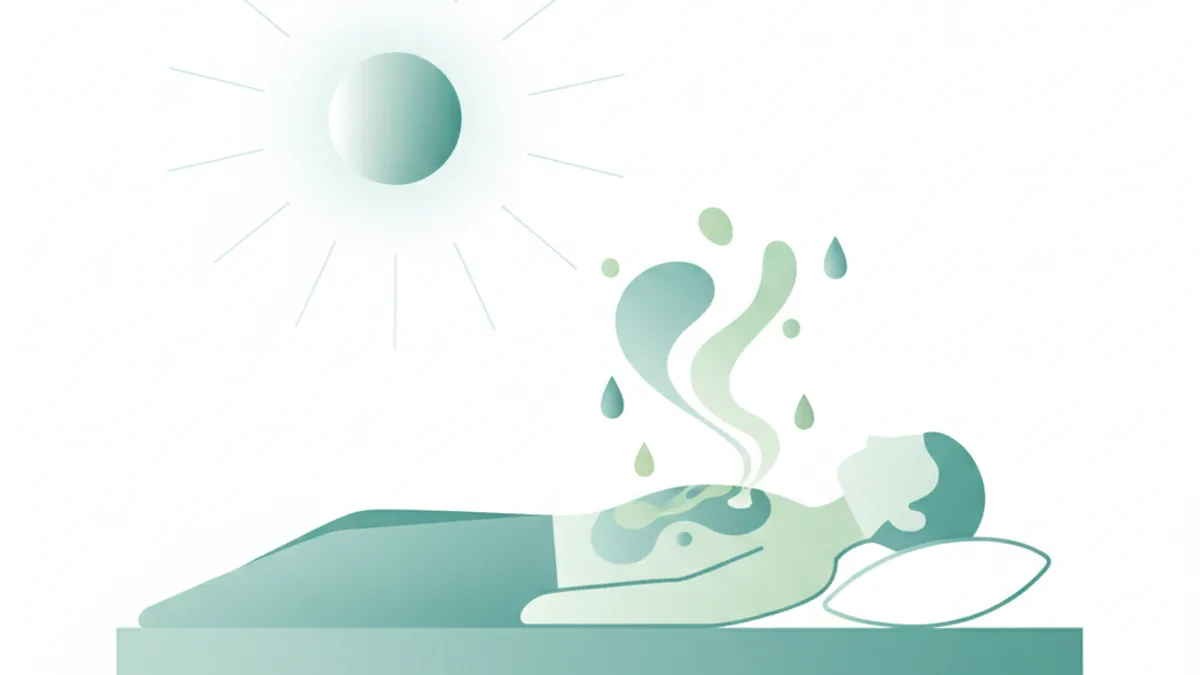
You jolt awake at 3 AM, sheets soaked through, pajamas clinging to your skin. Again. You throw off the blankets, stumble to the bathroom, change clothes, and wonder: Is this just getting older? Or is something wrong?
Night sweats — clinically called "sleep hyperhidrosis" — affect somewhere between 10-40% of adults at some point, though pinning down exact numbers is tricky because people report them differently. What one person calls "warm at night" another calls "completely drenched." But if you're waking up genuinely wet — not just warm, but needing to change clothes or flip the pillow — you're experiencing the real deal.
Here's what makes night sweats confusing: they can be completely benign (your bedroom's too warm, you had wine with dinner) or a sign your body's trying to tell you something important. The challenge is figuring out which category you're in.
Why does this happen?
Your body's temperature regulation system is remarkably precise under normal circumstances. Your hypothalamus — a walnut-sized region at the base of your brain — acts as your internal thermostat, constantly monitoring core temperature and making tiny adjustments to keep you around 98.6°F.
When something shifts that set point, even slightly, your body responds by sweating to cool down. At night, this creates a perfect storm: you're under blankets, your core temperature naturally dips during certain sleep stages, and your sweat glands are fully functional even while you're unconscious.
Hormones are the biggest culprit for most people experiencing night sweats, particularly fluctuating estrogen levels. When estrogen drops — whether from menopause, perimenopause, or your monthly cycle — it confuses your hypothalamus. The messaging gets garbled, and your brain mistakenly thinks you're overheating. Cue the sweat response, often intense enough to wake you.
The menopausal connection is well-established. Hot flashes and night sweats (together called "vasomotor symptoms") affect roughly three-quarters of women going through menopause, according to the North American Menopause Society. These can start years before your periods actually stop, during perimenopause, when hormone levels swing wildly rather than declining smoothly.
But hormones aren't the only players. Your autonomic nervous system — the part that handles automatic functions like heart rate and digestion — also influences sweating. When it's overstimulated by stress, certain medications, or underlying conditions, night sweats can result even when your actual body temperature is fine.
Then there's the metabolic angle. Your thyroid gland, that butterfly-shaped organ in your neck, regulates your metabolic rate. An overactive thyroid (hyperthyroidism) essentially speeds everything up, including heat production. People with this condition often feel warm all the time, and night sweats are common.
Infections trigger sweating too, for a straightforward reason: your body raises its temperature to fight invaders, then sweats to cool back down. This creates the classic fever-and-chills cycle, which absolutely continues during sleep.
Is this serious?
Most night sweats aren't dangerous. They're uncomfortable, they wreck your sleep, they create mountains of laundry — but they're not inherently harmful.
The trick is pattern recognition.
Probably fine if:
- They started around age 45-55 and you're noticing other menopause symptoms (irregular periods, mood changes, vaginal dryness)
- Your bedroom is genuinely warm, you're using heavy blankets, or you wore too many layers to bed
- You had alcohol, spicy food, or ate late before the episode
- They're occasional (once or twice a month) rather than nightly
- You otherwise feel completely healthy during the day
Worth investigating if:
- You're soaking through clothes regularly (multiple times per week)
- You've lost weight without trying
- You're experiencing fevers, persistent cough, or unusual fatigue
- You're a man under 50 (less likely to be hormonal)
- They started suddenly and persist despite room temperature adjustments
- You have other concerning symptoms: swollen lymph nodes, pain, digestive changes
See a doctor promptly if:
- You have night sweats plus unintentional weight loss (this combination can signal lymphoma or other serious conditions)
- You're coughing up blood or experiencing severe chest pain
- You have a fever above 103°F or one that persists despite typical fever reducers
- You notice lumps, unusual bleeding, or other new physical changes
The combination of night sweats plus unintentional weight loss deserves special emphasis. Individually, each symptom has dozens of benign explanations. Together, they're a recognized pattern that warrants thorough evaluation, as they can occasionally indicate cancers like lymphoma or leukemia. This doesn't mean you should panic if you've lost a few pounds and had some sweaty nights — but it does mean you should get checked out rather than waiting months.
What should I do?
Start with the simple fixes. They sound almost too obvious, but addressing basic environmental factors eliminates a surprising number of cases.
Control your sleep environment first. Drop your bedroom temperature to 60-67°F — yes, that cool. It feels cold when you first get in bed, but that's the range where most people sleep best. Use breathable cotton or moisture-wicking sheets instead of polyester or flannel. Ditch the heavy comforter for layered, lighter blankets you can adjust. Consider a fan for air circulation even in winter.
Look at your evening routine. Alcohol is a massive trigger because it dilates blood vessels and disrupts temperature regulation, effects that peak 2-4 hours after drinking — right when you're trying to sleep. Spicy foods, caffeine after 2 PM, and large meals within three hours of bed all raise metabolic heat production. Hot showers right before bed feel relaxing but can trigger compensatory sweating. Try warm (not hot) showers 1-2 hours before sleep instead.
Review your medications. Antidepressants, particularly SSRIs and SNRIs, cause night sweats in up to 20% of people taking them. Other common culprits include certain blood pressure medications, diabetes drugs, and hormone therapies. Never stop a prescription on your own, but mention new night sweats to the prescriber — there may be alternative options.
Track the pattern for two weeks. Note when night sweats occur, what you ate or drank that evening, stress levels, where you are in your menstrual cycle if applicable, and any other symptoms. This record becomes incredibly valuable if you do see a doctor, and it often reveals patterns you hadn't noticed.
For women in perimenopause or menopause, lifestyle adjustments help many people manage symptoms. Regular exercise (but not right before bed) can reduce frequency and severity. Maintaining a healthy weight matters — vasomotor symptoms tend to be worse with excess weight. Some women find relief through mind-body practices like yoga or meditation, possibly by reducing stress-related triggers. Layered clothing and keeping water by the bed help you cope when sweats do occur.
When lifestyle changes don't cut it, medical options exist. Hormone replacement therapy remains the most effective treatment for menopausal night sweats, typically reducing them by 80-90% within weeks, though it's not appropriate for everyone given potential risks. Non-hormonal prescription options include certain antidepressants (yes, even though some cause sweats, specific ones help when used at lower doses) and gabapentin, originally a seizure medication that research has shown can reduce hot flashes and night sweats.
If an underlying condition is present, treating that usually resolves the sweats. Thyroid medication for hyperthyroidism, antibiotics for infections, better diabetes control if blood sugar's running high overnight, adjustments to blood pressure medications — addressing the root cause typically fixes the symptom.
The self-assessment question to ask yourself: "If I took away the sweating, would I be worried about my health?" If you have other symptoms that concern you — persistent fatigue that's not explained by poor sleep, fevers, pain, swelling, bleeding, unexplained weight changes — those warrant medical attention regardless of the night sweats. The sweating might be pointing toward something that needs evaluation.
For isolated night sweats in otherwise healthy adults, trying environmental and lifestyle modifications for 3-4 weeks is reasonable before scheduling an appointment. But if they're severe (changing clothes multiple times nightly), if they appeared suddenly and persist, or if you're genuinely worried, getting evaluated earlier makes sense. Trust your instincts about your own body.
How will a doctor evaluate this?
If you do see a clinician about persistent night sweats, expect thorough questions about patterns, triggers, timing, other symptoms, and your medical history. Women will likely be asked about menstrual cycles and menopausal status. Everyone gets asked about fevers, weight changes, and medication use.
The physical exam focuses on things that might explain sweating: checking your thyroid for enlargement, feeling for swollen lymph nodes, listening to heart and lungs, looking for skin changes or other abnormalities.
Blood work commonly includes thyroid function tests, complete blood count (checking for infection or blood cell abnormalities), blood sugar, and sometimes hormone levels. For women approaching menopause with other typical symptoms, extensive testing often isn't necessary — the clinical picture is clear enough.
If initial evaluation doesn't reveal a cause and symptoms persist, further testing might include chest X-ray (tuberculosis can cause drenching night sweats, though it's less common in the US), more specialized blood tests, or occasionally imaging studies.
The good news: for most people, evaluation either identifies a treatable cause or provides reassurance that nothing serious is happening. The percentage who end up with a concerning diagnosis is genuinely small — single digits in most studies of patients presenting with isolated night sweats.
Waking up soaked is miserable. It fragments your sleep, creates anxiety about going to bed, and leaves you exhausted the next day. But for most people experiencing this, it's not signaling anything dangerous — just a mismatch between your body's temperature regulation and your sleep environment, or a hormonal transition that will eventually stabilize.
The wisdom is in knowing when to watch, when to adjust, and when to investigate further. Pay attention to the whole picture: Are you otherwise healthy? Are there other symptoms? Does anything make it better or worse? That context tells you whether you're dealing with a nuisance or something that deserves medical attention.
And if you're in that frustrating middle zone — where nothing seems alarming but you're genuinely struggling — don't minimize it. Disrupted sleep affects everything: mood, concentration, physical health, quality of life. It's worth addressing even when it's "just" night sweats.
This article is for informational purposes only and isn't a substitute for medical advice. Talk to a qualified healthcare provider about your specific situation.
Sources & further reading
This article draws on guidance from recognized health authorities:


Comments
Post a Comment