Traveling With GLP-1s: Storage, Flying, and Coolers
You do not need an elaborate mobile refrigeration unit to travel safely with GLP-1 medications—unless your itinerary demands one. For most domestic getaways, the pen you are actively using can sit comfortably at room temperature for weeks, while extended international journeys require strict, unbroken cold-chain transport.
Knowing which strategy matches your trip is the difference between a ruined vacation and a smooth transit. GLP-1 receptor agonists—such as semaglutide (Ozempic, Wegovy), tirzepatide (Mounjaro, Zepbound), and liraglutide (Saxenda)—are delicate biological peptide drugs. Exposing them to extreme heat breaks their chemical bonds, but accidental freezing destroys them instantly.
Traveling successfully with these medications comes down to mastering two competing approaches: traveling within the room-temperature grace period or actively preserving the cold chain.
Key Takeaways
- Most opened or in-use GLP-1 pens can remain at controlled room temperature (under 86°F or 30°C) for 21 to 56 days, depending on the specific brand.
- Freezing temperatures permanently alter the protein structure of GLP-1s; a frozen and thawed pen must be discarded immediately.
- Never place injectable medications in checked luggage, where aircraft cargo holds routinely dip below freezing.
- Airport security agencies, including the TSA, allow medically necessary liquids, gel ice packs, and injection needles in carry-on bags with proper screening.
Two Approaches: Room-Temperature Travel vs. Active Cold Chain
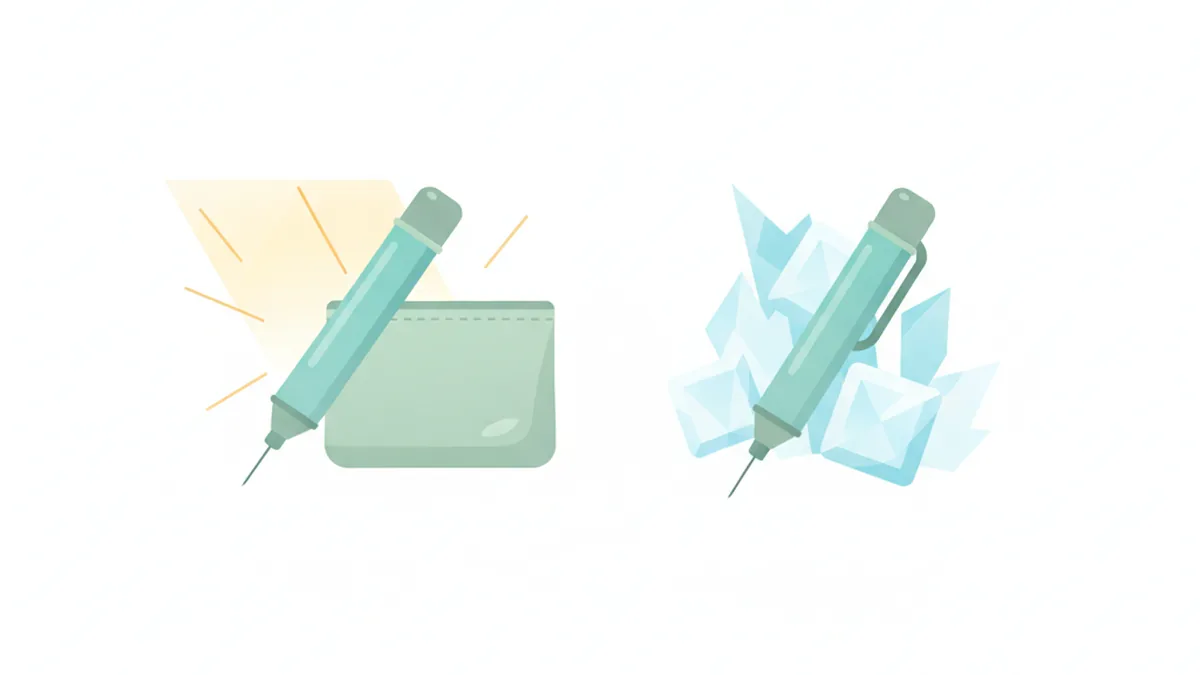
When planning travel with GLP-1 injections, you have two fundamental strategies. Choosing the right one prevents unnecessary luggage bulk while ensuring your medication remains potent.
How long is your trip, and how many doses do you need to take?
-
Trip within single-pen window (Under 21–56 days, depending on brand)
APPROACH A: ROOM TEMPERATURE
- Pack in insulated, unchilled case
- Protect from direct sun & cars
- Keep below 86°F (30°C)
- Discard pen when time limit hits
-
Trip exceeds single-pen window OR traveling in extreme ambient heat
APPROACH B: ACTIVE COLD CHAIN
- Pack in certified medical travel cooler
- Use conditioned biogel or temp-monitored flasks
- Maintain 36°F–46°F (2°C–8°C)
- Essential for unopened backup pens
Approach A: The Room-Temperature Grace Period
Every major GLP-1 medication features an FDA-approved window during which it remains stable outside the refrigerator, provided the ambient environment stays below 86°F (30°C). For many travelers, this eliminates the need for ice packs entirely.
The rules differ markedly by medication: - Tirzepatide (Mounjaro, Zepbound): Can be stored at room temperature up to 86°F (30°C) for up to 21 days. Once a pen reaches room temperature, it should not be returned to the refrigerator. - Semaglutide for weight management (Wegovy): Can remain at room temperature between 46°F and 86°F (8°C to 30°C) for up to 28 days with the cap on. - Semaglutide for type 2 diabetes (Ozempic): After first use, the pen can be stored either in the refrigerator or at room temperature (59°F to 86°F or 15°C to 30°C) for up to 56 days. - Liraglutide (Saxenda, Victoza): Can be kept at room temperature (59°F to 86°F or 15°C to 30°C) for up to 30 days after first use. - Dulaglutide (Trulicity): May be kept at room temperature below 86°F (30°C) for up to 14 days.
When Approach A Works Best
This approach suits business trips, domestic vacations, and brief international holidays lasting two to three weeks. If you only need to administer one or two doses while away, bringing a single, in-use pen wrapped in a simple, protective padded sleeve is usually sufficient.
The Hidden Pitfalls of Approach A
The biggest danger here is passive heat creep. An ambient temperature of 75°F in a hotel room sounds safe, but leaving your kit on a sunlit nightstand, inside a parked rental car, or inside an unventilated beach bag can push temperatures past 100°F in minutes. Heat causes the peptide chains to denature—unfolding their structure and rendering them inactive.
Furthermore, once you let a pen ride the room-temperature clock, you cannot pause it by putting it back into cold storage later. The clock keeps ticking until the manufacturer’s limit arrives.
Approach B: Continuous Cold-Chain Maintenance
The second approach requires maintaining a strict temperature range between 36°F and 46°F (2°C to 8°C) from the moment you leave home until you reach your destination.
When Approach B Is Mandatory
- Long-term travel: Trips extending past your medication's room-temperature allowance.
- Multi-pen transport: Carrying unopened backup pens intended for future months.
- High-heat destinations: Travel to tropical, desert, or humid environments where indoor climate control cannot be guaranteed.
- Remote itineraries: Camping, trekking, or cruises with uncertain refrigeration access.
The Hidden Pitfalls of Approach B
The greatest hazard of active cooling is not heat—it is accidental freezing. Standard kitchen ice cubes or unbuffered freezer gel packs sit at roughly 0°F to 20°F (-18°C to -6°C). If you lay a glass GLP-1 pen directly against a frozen block, the liquid inside will freeze.
Freezing permanently destabilizes the molecular structure of GLP-1 peptides. When thawed, the chemical bonds do not reconstruct properly, resulting in a loss of clinical efficacy and a potential increase in injection-site reactions. If an active cold-chain strategy drops your medication below 36°F (2°C), the pen is ruined.
Comparing Travel Coolers: Which Gear Fits Your Trip?
If your itinerary demands active cooling, selecting the right equipment matters. Standard lunch bags and grocery-store ice packs are unreliable for expensive biological medications. Three primary cooling technologies dominate medical travel:
| Cooler Type | Average Cold Duration | Best For | Main Vulnerability |
|---|---|---|---|
| Solid Gel / Phase Change (e.g., 4AllFamily, ChillMed) | 24 to 36 hours | Flights, long road trips, predictable transit | Ice packs must be conditioned to avoid freezing the pen |
| Evaporative Sleeves (e.g., Frio) | Keeps cool (not cold) for 48 hours | Warm-weather trips using room-temperature buffer | Cannot achieve true 36°F–46°F refrigeration; ambient air required |
| USB-Powered Thermoelectric Flasks | Indefinite (with power source) | Digital nomads, long multi-leg international flights | Mechanical fan failure; requires consistent battery/wall power |
1. Phase Change Material (PCM) and Insulated Flasks
These medical thermoses rely on engineered biogel packs that freeze at a slightly higher temperature than pure water, reducing the risk of accidental freezing. - The Verdict: The most reliable option for long flights. - How to use safely: Never take a gel pack straight from a deep freeze and pack it against your pen. Let the pack sit on the counter for 10 to 15 minutes until its outer surface begins to sweat and soften slightly. This "sweating" step ensures the pack is at 32°F (0°C) rather than sub-zero before you insert your medication.
2. Evaporative Cooling Sleeves
Evaporative cases use crystals that absorb water and slowly release moisture to cool the interior. - The Verdict: Excellent for keeping room-temperature pens from overheating in hot climates, but inadequate for cold-chain storage. - How to use safely: These sleeves do not lower temperatures to refrigerator levels (36°F to 46°F). They hover in the 65°F to 75°F range. Use them solely to protect an already-opened pen against sweltering outdoor heat. They also require air circulation; sealing them in a plastic bag stops the evaporative process entirely.
3. Thermoelectric Travel Flasks
These hybrid devices feature an electric cooling lid paired with an insulated stainless-steel vacuum flask. They can run on a USB battery pack during transit and plug into a wall outlet at a hotel. - The Verdict: Outstanding for international itineraries spanning multiple days. - How to use safely: Ensure the cooling fan exhaust remains uncovered in your bag. If the fan vent is blocked by clothing or personal items, heat accumulates and the device can overheat the medication instead of cooling it.
Flying With Injectables: TSA Rules, Packing, and Cabins
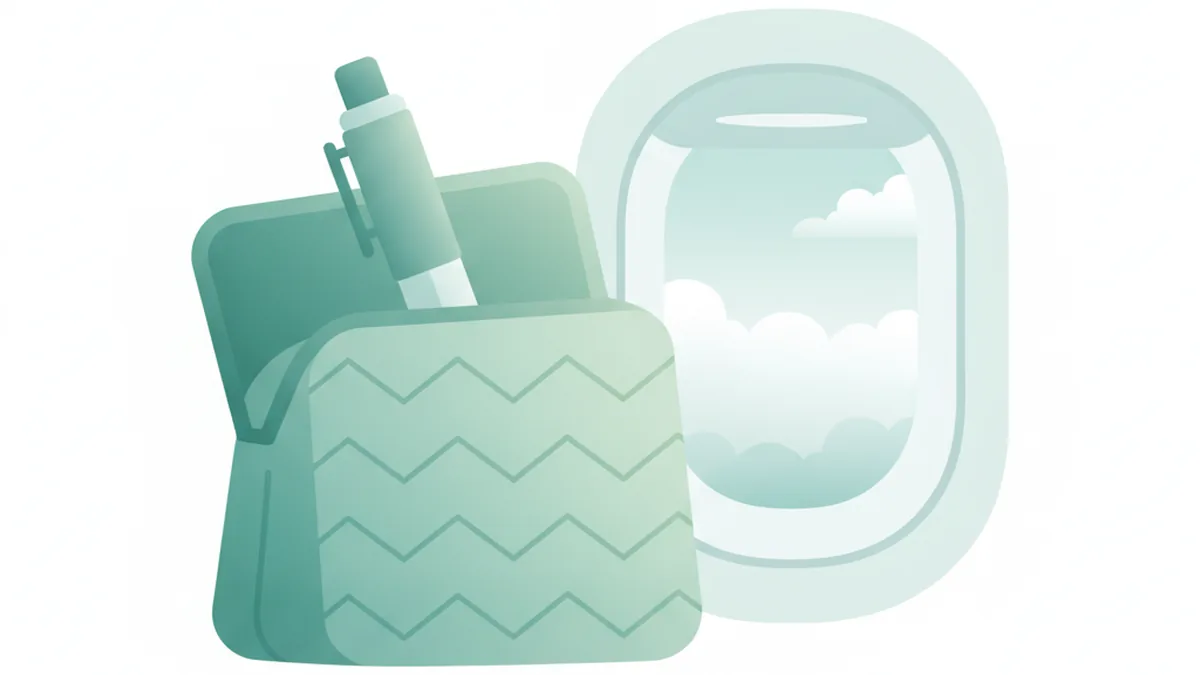
Commercial aviation introduces sudden changes in air pressure, security screenings, and luggage temperature swings. Managing the airport environment requires adherence to a few strict logistical rules.
-
AT THE AIRPORT
Carry-On Luggage ONLY
- Never check GLP-1 pens
- Declare med cooler to TSA
- Gel packs may be slushy
-
IN THE CABIN
Keep Bag Under Seat
The Iron Rule: Never Check Your MedicationNever put your GLP-1 pens into checked baggage. The cargo hold of a commercial airliner frequently drops below freezing at cruising altitude, even on short domestic hops. Temperatures in unheated baggage compartments routinely reach sub-zero levels, which can freeze the liquid inside the cartridge.
Additionally, if your luggage is lost, delayed, or misrouted, replacing a GLP-1 prescription in a foreign country or unfamiliar city can be difficult and costly. Always carry your medication in your primary personal item or carry-on bag.
Navigating Airport Security
The Transportation Security Administration (TSA) maintains clear exceptions for medical necessities. According to TSA guidelines: - Injectables, needles, and associated cooling apparatus are exempt from the standard 3.4-ounce (100ml) liquid restriction. - Frozen gel packs and ice packs are permitted through the checkpoint. While the TSA prefers gel packs to be frozen completely solid upon arrival, agents can make exceptions for partially melted or slushy packs if they accompany medical supplies, though they may require additional manual screening. - You are not legally required to present a written prescription or doctor's note for domestic travel within the United States, but carrying the original packaging with the pharmacy label showing your name is strongly recommended. - For international flights, bring a physical copy of your prescription and a brief letter from your clinician stating that you require injectable medication for a diagnosed condition.
When reaching the X-ray conveyer, remove your medical cooler or travel pouch and place it in its own bin. Inform the security officer: "I have medically necessary injectable pens and a cooling pack."
GLP-1 pens can safely pass through the standard airport X-ray baggage scanners and walk-through body scanners. The low-dose radiation used in luggage imaging does not damage peptide structures.
What to Do in the Aircraft Cabin
Cabin air is pressurized, dry, and regulated, but local temperature variations exist. - Avoid storing your cooler flush against the outer wall of the aircraft or directly on the cabin floor near emergency exits, where cold air can pool. - Keep your medication bag under the seat in front of you rather than in an overhead bin. If turbulence delays access to the overhead compartments, you still have your supplies at your feet. - Do not ask flight attendants to store your medication in the aircraft galley refrigerators. Commercial flight crews are generally prohibited by airline policy from handling or storing passenger pharmaceuticals due to liability, cross-contamination, and variable galley temperatures.
At Your Destination: Hotel Pitfalls and Time Zones
Arriving at your hotel or rental home introduces a new set of risks. The most dangerous appliance for a GLP-1 pen is a mini-fridge.
Avoiding the Mini-Fridge Freeze
Dorm-style compact refrigerators found in hotel rooms are notoriously erratic. They rarely distribute cold air evenly. The cooling plate or coils at the back or top of the unit will often freeze anything placed directly against them.
To protect your medication: 1. Never place your pen on the top shelf or directly against the rear cooling plate. 2. Use the door bins. The door shelf is the warmest microclimate inside a mini-fridge, keeping items cool while minimizing the risk of freezing. 3. Use the cup buffer trick. Place your pen inside a regular drinking glass or travel mug before placing it in the fridge. The surrounding air layer protects the pen from sudden freezing spikes. 4. Use a portable thermometer. If you are staying somewhere for an extended period, a small digital refrigerator thermometer with a minimum/maximum memory tells you if the appliance dipped below 36°F overnight.
Hotel Mini-Fridge Safety
- Freezer Compartment / Ice Coils
- Top Shelf: DANGER ZONE (Do not put pens here)
- Middle Shelf
- Back Wall: DANGER (Direct Contact)
- DOOR BINS: SAFE ZONE (Put pens in a cup here)
Navigating Time Zones and Dosing Schedules
Because GLP-1 medications for weight loss and type 2 diabetes are typically administered once weekly, moderate time-zone shifts are manageable.
- Short shifts (1 to 4 hours): Ignore the time difference. Take your injection on your normal day at your normal local time.
- Long shifts (5 to 12+ hours): The human body does not register a calendar day change; it registers elapsed hours. An interval of 7 days equals 168 hours.
The consensus across clinical labeling (including Wegovy and Mounjaro package inserts) is that you can take your next dose early or late, provided that the time between two doses is at least 3 days (72 hours).
If you are crossing the International Date Line and feel unsure of the day: - Taking your injection 12 hours earlier or 12 hours later than usual is clinically safe. - If you forget your injection entirely, administer it as soon as you remember, provided your next scheduled dose is not within the next 48 to 72 hours. If your next regular injection day is only two days away, skip the missed dose and resume your normal calendar schedule. Never take two doses within 72 hours of each other to make up for a delay.
Inspection Protocol: How to Check for Damaged Medication
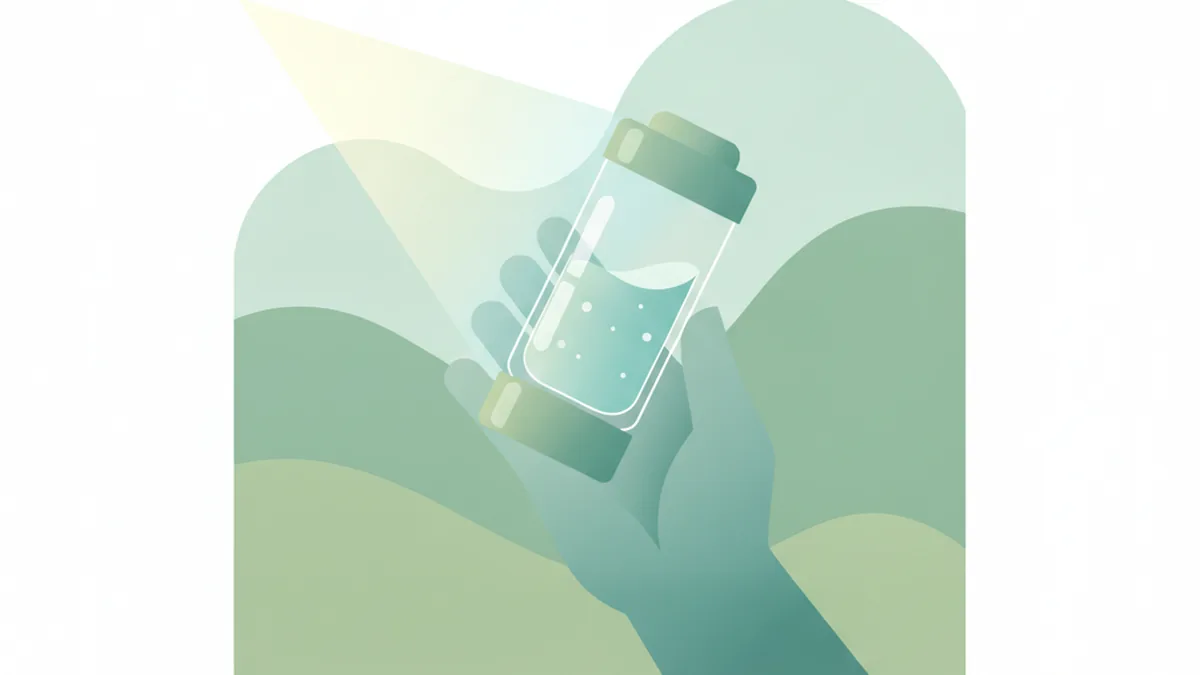
Before injecting a dose while traveling, inspect the liquid inside the glass cartridge. You can do this using the clear inspection window built into every GLP-1 pen.
Look for the following:
- Optical Clarity: The solution should be completely clear and colorless. A slight tint may be normal for some formulations, but cloudiness, haziness, or milkiness indicates protein aggregation. Denatured peptides group together and scatter light, making the liquid cloudy.
- Particulates: Hold the pen up to a light source. If you see tiny white specks, flakes, or sediment floating in the cartridge, the formulation has broken down. Do not inject it.
- Viscosity changes: If the liquid appears stringy, thick, or syrupy, it has suffered severe thermal degradation.
- Cracks in the glass: Sub-zero temperatures during transit can create hairline fractures in the internal glass cartridge that are not visible through the plastic chassis until examined under direct light. A cracked cartridge compromises sterility.
If your pen appears cloudy, contains floating debris, or was exposed to temperatures above 86°F for multiple days, do not inject it. Discard the pen and contact your prescriber or travel insurance medical assistance provider for a replacement script.
Packing Checklist for GLP-1 Travel
Use this checklist before leaving home:
- [ ] Sufficient medication: Pack your primary pen plus one additional week's worth of doses if traveling abroad, in case flights are delayed or canceled.
- [ ] Needles: Pack twice as many pen needles as you anticipate needing. Needles can bend, drop on dirty hotel floors, or fail. They are difficult to buy over the counter without a prescription in many countries.
- [ ] Sharps disposal container: Bring an FDA-cleared travel sharps container, or a heavy-duty, puncture-resistant opaque plastic bottle with a screw-top lid (such as an empty detergent or heavy plastic travel bottle).
- [ ] Pharmacy prescription labels: Ensure the label on your medication box clearly matches the name on your passport or driver's license.
- [ ] Alcohol swabs: Pack individual foil-wrapped prep pads in your carry-on kit.
- [ ] Backup plan for refrigeration: Identify whether your accommodations have reliable room refrigerators or if you need to coordinate with the front desk in advance.
Frequently Asked Questions
What happens if my GLP-1 pen reaches 90°F for a few hours?
Brief exposure to warm temperatures does not instantly make the medication toxic, but it accelerates the degradation of the peptide. If your pen was exposed to heat above 86°F (30°C) for several hours, inspect the liquid for cloudiness or particles. When in doubt, contact the manufacturer's medical information line or your pharmacist before injecting.
Can I leave my injection pen in a hotel room safe?
Only if the safe is not heated by internal electronics. Some digital hotel safes generate heat from their circuit boards or backup batteries, turning the compartment into a low-level warming box. A dark closet shelf or bedside drawer that is away from sunlight and electronics is usually a safer choice.
What should I do if a hotel mini-fridge accidentally freezes my pen?
Do not thaw and use it. Freezing permanently alters the structural integrity of GLP-1 peptides, destroying their therapeutic effect even after they melt back to liquid. If the pen contains ice or has frozen solid at any point, dispose of it safely and seek a replacement.
Can I take my GLP-1 injection while airborne on a flight?
Yes, but it is rarely necessary or advisable. Aircraft bathrooms are not sterile environments, and unexpected turbulence can cause needle injuries or dose misfires. Unless your schedule demands it, wait until you reach your hotel or a clean airport lounge before administering your dose.
Is an evaporative cooling sleeve sufficient for a 14-day trip to Europe?
An evaporative sleeve is designed to keep medications cool, not cold. If your pen is already in use and you are relying on the room-temperature window (which lasts 21 to 56 days, depending on the brand), an evaporative sleeve works well to protect the pen from ambient heat spikes above 86°F. However, if you are transporting unopened pens that must stay refrigerated, an evaporative sleeve is insufficient.
This article is for informational purposes only and isn't a substitute for medical advice. Talk to a qualified healthcare provider about your specific situation.
Related reading
Comments
Post a Comment