Understanding 'Ozempic Face': Why GLP-1s Change Your Facial Features

"Ozempic face" is not a toxic drug reaction or a mysterious dermatological disorder; it is the visible consequence of rapid, systemic adipose deflation outrunning your skin's natural elastic recoil.
When you lose a substantial amount of weight in a short period, your body draws energy from fat stores everywhere without making an exception for your cheeks, temples, or jawline. Because medications like semaglutide (Ozempic, Wegovy) and tirzepatide (Mounjaro, Zepbound) suppress appetite so effectively, the velocity of that weight loss frequently rivals what surgeons see after bariatric procedures. The underlying scaffolding shrinks, but the cutaneous envelope over it does not snap back overnight.
For millions of adults managing type 2 diabetes or obesity, this shift can be disorienting. You step on the scale and celebrate a healthier metabolic profile, only to catch your reflection in overhead lighting and wonder why you suddenly look exhausted, hollowed, or ten years older.
Understanding what is actually changing beneath the skin surface makes the difference between panicking and making rational, evidence-based choices about how to manage your appearance during weight loss.
Key Takeaways
- "Ozempic face" is mechanical rather than pharmacological: it stems from rapid fat depletion across deep and superficial facial compartments, not a direct chemical attack on your skin.
- Distinguishing between structural volume deficit (loss of deep fat pads) and cutaneous laxity (stretched, depleted skin) is crucial for choosing effective interventions.
- Younger skin with dense collagen reserves can often retract over 6 to 12 months, whereas patients over 40 frequently experience permanent tissue redundancy after rapid loss.
- Practical strategies—including slowing the medication titration rate, hitting daily protein targets, and prioritizing resistance training—can soften the visual impact before pursuing aesthetic treatments.
The Structural Blueprint: What Lies Beneath the Surface

To make sense of what is happening, you have to look past the epidermis. Human facial anatomy is arranged like a five-layer cake: skin on top, followed by superficial fat, a fibromuscular layer known as the SMAS (superficial musculoaponeurotic system), deep fat pads, and finally the underlying bone.
Facial Layer Architecture
- Skin (Epidermis & Dermis: Collagen & Elastin)
- Superficial Adipose Compartments (Nasolabial, Jowl)
- SMAS (Fibromuscular Retaining Network)
- Deep Adipose Compartments (Sub-Orbicularis, Buccal)
- Periosteum and Facial Skeleton
When weight gain occurs, adipocytes (fat cells) across both superficial and deep compartments swell. This extra volume stretches the overlying skin taut, smoothing out fine lines and masking underlying skeletal hollows. In aesthetic medicine, fat is often described as youth; it softens sharp angles, lifts the cheeks, and creates the smooth, continuous light reflections associated with vitality.
GLP-1 receptor agonists disrupt this dynamic by inducing sustained hypocaloric states. As systemic lipolysis accelerates, your adipocytes empty their lipid stores.
Crucially, you cannot choose where your body burns that fuel. Research tracked by the American Academy of Dermatology highlights that the face is often one of the earliest anatomical sites to exhibit observable fat reduction.
When the deep fat pads beneath the eyes (the sub-orbicularis oculi fat) and around the cheekbones (the deep malar pads) shrink, the mechanical support for the midface drops out. The superficial skin and muscle layers then slide downward and inward under the steady pull of gravity, accumulating along the lower jaw and around the mouth.
Comparing the Two Culprits: Structural Volume Loss vs. Dermal Laxity
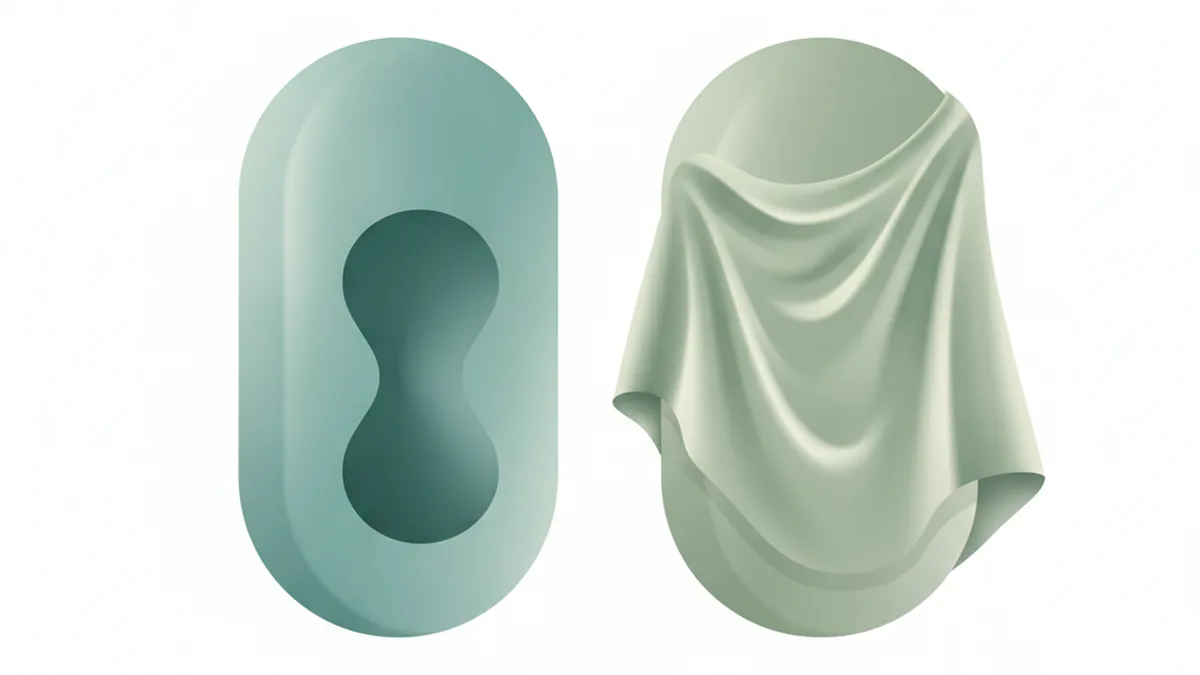
When people look in the mirror and notice dramatic facial changes, they tend to describe the problem as "sagging skin." But in clinical practice, dermatologists and plastic surgeons separate these changes into two distinct phenomena that require completely different management.
| Acute Fat Pad Deflation (Volume Loss) |
Dermal Structural Laxity (Skin Redundancy) |
|---|---|
|
|
Condition A: Acute Volume Deflation (Fat Loss)
Acute volume deflation is a three-dimensional architecture problem. The underlying structural cushions have shrunk, leaving empty space where firm support once existed.
How it presents: - Temporal hollowing: The sides of your forehead, just outside the eyebrows, look scooped out or concave. This can expose the temporal crest of the skull, giving the upper face an angular, skeletal contour. - Periorbital hollowing: The eyes look deeper-set. Dark circles become pronounced, not necessarily from hyperpigmentation, but because the thinning of the tear-trough fat creates a literal shadow under room lighting. - Flattened midface: The apex of the cheek drops. Instead of a convex curve when viewed from an angle, the cheek looks flat or slightly sunken. - Accentuating nasolabial folds: The "smile lines" running from the nose to the corners of the mouth appear deeper, largely because the deflated cheek tissue collapses forward over the crease.
Condition B: Dermal Structural Laxity (Skin Envelope Redundancy)
Dermal structural laxity, on the other hand, is a two-dimensional envelope problem. It occurs when the surface area of the skin exceeds the volume of the tissue it is meant to cover, compounded by a breakdown in dermal quality.
How it presents: - Crepiness and textural changes: When you smile, talk, or gently manipulate your skin, it crinkles like tissue paper rather than moving as a firm, cohesive unit. - Jowl formation: Redundant skin gathers along the previously straight contour of the mandible, softening or obscuring the jawline. - Marionette lines and oral commissure downturn: Loose skin bunches at the corners of the mouth, giving the resting face a downturned, unhappy appearance. - Vertical neck banding: As the platysma muscle loses the superficial fat pad that previously smoothed its contours, vertical chords and loose folds become visible on the neck.
How to Tell Them Apart: A Simple Self-Assessment
If you are trying to understand what is driving the changes in your own face, clinical practitioners use straightforward physical assessments to differentiate volume loss from skin redundancy:
- The Vector Test: Place your index fingers at the tops of your cheekbones and apply light, upward traction toward your temples (a 45-degree angle). If lifting that tissue restores your cheeks, smooths your smile lines, and makes your face look instantly rested without pulling skin uncomfortably taut, your primary deficit is midface volume loss. The scaffolding has fallen.
- The Pinch and Recoil Test: Gently pinch the skin on your lower cheek between your thumb and forefinger, hold it for three seconds, and let go. In resilient skin with intact collagen and elastin, the tissue snaps back instantaneously. If it flattens slowly, leaves visible wrinkles, or feels thin and paper-like, you are dealing with significant dermal laxity.
- The Shadow Analysis: Examine your face in diffuse, natural light facing a window, and then step into a room with harsh overhead light. Volume loss creates sharp, dramatic dark pockets under overhead lights—particularly at the temples, under the eyes, and beneath the cheekbones—that soften dramatically when illuminated from the front. Dermal laxity, by contrast, shows its fine wrinkles, texture changes, and loose folds regardless of where the light source is located.
When Each Factor Dominates: The Age and Velocity Equation
Why does one person lose 40 pounds on a GLP-1 and look vibrant, while another person loses the same amount and looks haggard? The answer comes down to biological age, chronological sun damage, and weight-loss velocity.
Expected Tissue Response by Age Group
-
Age < 35:
- High Elastin/Collagen
- Deflation Occurs
- Skin Envelope Retracts (6-12 mos)
-
Age 40+:
- Degraded Elastin Network
- Deflation Occurs
- Envelope Remains Redundant/Sags
The Retraction Threshold
Human skin is elastic, but its ability to adapt to sudden changes is limited. Collagen provides tensile strength; elastin gives tissue its bounce-back capacity.
Starting in our mid-twenties, human skin loses roughly 1% of its dermal collagen content each year. Fibroblasts become less active, existing collagen fragments, and elastin fibers stretch out and lose their original architecture.
If you are 28 years old and lose 50 pounds over nine months, your dermal elastin network is usually robust enough to shrink down to match your new facial contours. It may take six to twelve months post-weight stabilization, but tissue remodeling occurs naturally.
If you are 48 or 58, that same 50-pound loss occurs against a backdrop of diminished collagen reserves and weakened retaining ligaments. When the underlying fat disappears rapidly, the skin simply lacks the elastic tension to snap back. It hangs in place.
The weight loss has not chemically aged your skin; it has pulled back the curtain on chronological changes that were already present but camouflaged by subcutaneous fat.
The Problem with Caloric Deprivation and Collagen Synthesis
There is another physiological factor at play: nutrition. Medications like semaglutide and tirzepatide slow gastric emptying and alter central satiety signaling in the brain.
When your appetite drops sharply, it becomes remarkably easy to consume an accidental ultra-low-calorie diet. Many people inadvertently cut their daily intake below 1,000 calories, severely shortchanging essential macronutrients.
The body is a ruthless prioritizing machine. When faced with an acute caloric and amino acid shortfall, it channels available protein to essential functions—maintaining cardiac muscle, hepatic function, and cellular repair.
Producing fresh Type I and Type III collagen in the dermal fibroblasts of your face ranks very low on the survival checklist. If rapid weight loss is accompanied by inadequate protein intake, the skin thins, dehydration accelerates, and existing structural support degrades even faster.
Actionable Strategy: Managing Your Face While Improving Your Metabolic Health

You should never sacrifice cardiometabolic improvements, blood sugar control, or obesity resolution simply out of fear of facial changes. You can, however, take deliberate steps to protect your facial contours while staying on your medication.
Comprehensive Protection Roadmap
- Rate Modulation: Cap weight loss at 1-2 lbs/week via measured GLP-1 dose titration.
- Nutritional Scaffolding: 1.2-1.6g protein per kg/day + adequate hydration and micronutrients (Zinc, Vit C).
-
Targeted Aesthetic Interventions:
- Dermal Laxity: Retinoids, Microfocused Ultrasound, RF
- Volume Loss: Biostimulators, Fat Grafting, HA Fillers
Step 1: Modulate the Speed of Weight Loss
The most effective tool for mitigating "Ozempic face" is controlling your rate of loss. Faster is not better.
Data tracked across major weight-management trials consistently shows that losing 1 to 2 pounds per week is the safest zone for preserving lean muscle mass and allowing connective tissue to adapt. If you are dropping 4, 5, or 6 pounds week after week, you are outrunning your skin's biological capacity to remodel.
- Discuss titration intervals with your prescriber: The standard escalation schedules (such as moving up in dose every four weeks) are maximum guidelines, not mandatory rules. If you are experiencing substantial appetite suppression and steady weight reduction on a lower dose, talk to your doctor about staying at that tier longer rather than bumping up automatically.
- Monitor the trend line: If the scale is dropping precipitously, adjust your meal planning to include higher-density, nutrient-rich foods that provide adequate calories without causing GI distress.
Step 2: Build the Nutritional Scaffolding
Preventing lean tissue catabolism requires deliberate dietary choices, especially when you do not feel hungry.
- Hit protein minimums: Strive for 1.2 to 1.6 grams of protein per kilogram of ideal body weight daily, provided your kidney function is normal (a clinician can confirm this with a basic metabolic panel). Distribute this across your meals: whey or plant-based protein isolates, eggs, fish, poultry, tofu, or Greek yogurt.
- Support endogenous collagen pathways: Collagen molecules cannot be built without specific precursors. Ensure your diet contains sufficient vitamin C (a mandatory cofactor for prolyl and lysyl hydroxylase, the enzymes that stabilize collagen triple helices), zinc, and copper.
- Prioritize fluid balance: GLP-1 medications can dampen your sensation of thirst alongside your appetite. Dehydration makes the stratum corneum brittle and exaggerates fine lines. Keep water and electrolyte intake consistent throughout the day.
Step 3: Align Treatments with Your Specific Deficit
If facial changes have already occurred, generic skincare will not fix structural shifts. You must match the treatment to whether you are dealing with volume loss, skin laxity, or both.
Treatment Decision Matrix
Is the primary issue...
-
Loss of deep structural fat?
- Consider: Autologous Fat Grafting or Biostimulatory Fillers (e.g., PLLA)
- Avoid: Surface-only skin tightening devices
-
Redundant, loose, or crinkly skin?
- Consider: Topicals (Retinoids), Energy-Based Devices (US/RF), or Surgical Excision
- Avoid: Overfilling with soft-tissue hyaluronic acid
For Primary Volume Loss (The Hollowed Frame)
When deep fat compartments have deflated, trying to fix the problem by simply tightening the skin can yield an unnatural, pulled look. The lost volume must be thoughtfully restored.
- Biostimulatory Injectables: Products containing poly-L-lactic acid (PLLA) or calcium hydroxylapatite (CaHA) differ fundamentally from traditional hyaluronic acid gels. Rather than just taking up physical space, they stimulate your body’s own fibroblasts to produce new collagen over several months. This creates a gradual, subtle restoration of tissue density that softens hollow temples and cheeks without creating an overfilled appearance.
- Autologous Fat Transfer: For individuals who have stabilized their weight for at least six months, plastic surgeons can harvest fat cells via gentle liposuction from stubborn donor sites (like the inner thighs or flanks) and micro-inject them into the deep facial compartments. Because it uses your own living cells, it integrates naturally, though some portion of the transferred fat will be reabsorbed by the body in the first three months.
- Strategic Hyaluronic Acid (HA) Fillers: Small amounts of high-density HA filler placed deep against the bone can act as an artificial scaffold, lifting the cheek and opening the periorbital area. The caution here is restraint: overfilling deflated skin with hydrophilic (water-binding) gels can cause puffiness, pillow-face deformities, and an unnatural appearance during facial animation.
For Primary Skin Laxity (The Loose Envelope)
If you still have reasonable underlying volume but your skin has lost its spring, your strategy shifts toward tightening and structural redraping.
- Topical Retinoids: Prescription tretinoin or over-the-counter retinaldehyde remains the foundational standard for increasing epidermal turnover and stimulating type I collagen production in the papillary dermis. It takes four to six months of nightly use to see structural differences, but it improves texture and fine crinkliness.
- Energy-Based Devices: Technologies such as microfocused ultrasound (MFU) and radiofrequency (RF) deliver controlled thermal energy into the deep dermis and fibromuscular layers (around 60°C to 70°C). This heat denatures old collagen and triggers a wound-healing response that tightens tissue over three to six months. These devices work best for mild to moderate skin laxity; they cannot compensate for large amounts of excess skin.
- Surgical Redraping: When substantial weight loss leaves significant skin folds along the jawline, neck, and midface, non-invasive procedures eventually hit a biological ceiling. In these cases, a structural surgical procedure—such as a deep-plane facelift and neck lift—physically releases the retaining ligaments, repositions the fallen SMAS layer, and removes redundant skin. Surgeons generally advise waiting until your weight has remained stable for at least 6 to 12 months before considering operative procedures.
When to Seek Professional Guidance
While aesthetic changes can be distressing, some facial shifts indicate medical complications rather than simple fat loss.
You should contact your prescribing healthcare provider promptly if: - You notice unilateral facial drooping: Any sudden weakness, asymmetric sagging, or inability to close an eye is a neurological red flag that requires immediate emergency evaluation to rule out a transient ischemic attack, stroke, or Bell's palsy. - Facial wasting is accompanied by profound fatigue: If your temples and cheeks are hollowing while you experience severe muscle weakness, inability to climb stairs, or hair loss (telogen effluvium), you may be suffering from severe protein-calorie malnutrition or rapid sarcopenia (muscle loss). Your physician should evaluate your nutritional markers, electrolytes, and thyroid function. - You experience severe persistent nausea or vomiting: Intractable gastrointestinal side effects prevent adequate nutrient absorption and cause rapid dehydration, exacerbating facial thinning.
For cosmetic adjustments, the best time to consult a qualified dermatologist or plastic surgeon is not while you are actively losing weight at a rapid clip. Wait until your weight loss curve flattens and you have maintained a steady dose and weight for at least three to six months.
This plateau allows your body's metabolic adaptations to settle, gives your skin envelope a chance to demonstrate its natural retraction capacity, and prevents you from spending significant resources correcting facial contours that are still actively changing.
Frequently Asked Questions
Will my facial volume come back if I stop taking a GLP-1?
If you stop taking the medication and regain body fat, your facial fat compartments will typically expand again along with the rest of your body. However, fat does not always redeposit in the exact symmetry or distribution it previously had, especially if underlying skin laxity has developed in the interim. A healthier approach is working with your physician to establish a sustainable maintenance dose rather than cycling your weight on and off medications.
Does semaglutide directly damage collagen?
No evidence shows that semaglutide, tirzepatide, or any other GLP-1 receptor agonist directly harms collagen fibers or impairs fibroblast biology. The changes seen in your face are purely mechanical and nutritional: rapid emptying of adipose compartments underneath the skin, sometimes compounded by inadequate dietary protein and hydration during extreme caloric deficits.
Can facial exercises or "face yoga" reverse these changes?
Facial exercises cannot replace depleted fat pads or shrink stretched, redundant skin. While exercising your facial muscles might slightly increase the size of certain muscle bellies, repetitive hyperactive muscle movements can actually worsen dynamic expression lines (such as forehead creases and crow's feet). Exercises do not stimulate collagen synthesis or replenish deep subcutaneous fat.
How long should I wait before getting fillers or a facelift?
Most experienced plastic surgeons and dermatologists recommend waiting until your weight has been completely stable for at least 6 months. Undergoing surgical excision or injecting permanent or semi-permanent fillers while you are still actively losing weight means your facial dimensions will continue to shift, often throwing off the symmetry and aesthetic outcome of your treatments.
This article is for informational purposes only and isn't a substitute for medical advice. Talk to a qualified healthcare provider about your specific situation.
Comments
Post a Comment