Why GLP-1 Drugs Cause Nausea—and How to Ease It
GLP-1 nausea is not simply a heavy feeling in your stomach—it is a dual-action biological response triggered simultaneously in your gut and the vomiting center of your brain. For the vast majority of people taking medications like semaglutide (Ozempic, Wegovy) or tirzepatide (Mounjaro, Zepbound), this queasiness peaks within 24 to 72 hours after an injection, especially during dose escalation, and gradually subsides as neural and gastrointestinal pathways adapt.
Yet living through it can feel debilitating. When every smell turns your stomach and the thought of eating triggers a wave of cold sweats, knowing the biological explanation alone does not solve your day. Relief requires understanding how these drugs manipulate your digestion and neurochemistry, recognizing when discomfort borders on clinical danger, and applying concrete adjustments to how, what, and when you eat.
Key Takeaways
- Nausea stems from a two-pronged mechanism: delayed gastric emptying in the gut and direct stimulation of GLP-1 receptors in the brain's area postrema (the chemoreceptor trigger zone).
- Symptoms typically surge 1 to 3 days after an injection and are most pronounced during the first few weeks after initiating treatment or increasing a dose.
- Taking anti-nausea medications like ondansetron without medical guidance can severely backfire by worsening medication-induced constipation, creating a secondary cycle of nausea.
- Discomfort that transitions into persistent vomiting, severe upper abdominal pain radiating to the back, or an inability to keep fluids down for 24 hours requires urgent medical evaluation.
The Common Myth: "It’s Just Food Sitting in Your Stomach"

When people first pick up their prescription pens, the prevailing narrative online is straightforward: the medicine slows down your digestion, so food sits in your stomach longer, and that mechanical fullness makes you sick.
This explanation makes intuitive sense. Anyone who has ever eaten an enormous holiday dinner recognizes that heavy, immobile sensation. Patients are frequently told to "just eat smaller portions" or warned that feeling nauseated is a rite of passage—proof that the drug is actively working to suppress appetite. Some push through weeks of dry heaving under the impression that suffering is the price of metabolic health or weight loss. Others assume their dose escalation schedule is set in stone, rushing up the titration ladder every four weeks even while struggling to function at work.
The assumption that nausea is purely mechanical leads people down the wrong paths. They sip large glasses of plain water to "flush" the system, only to vomit immediately. They switch entirely to dense protein shakes, unaware that concentrated liquids can hit the small intestine in ways that trigger sudden, intense visceral signals. Most dangerously, they may brush off severe symptoms as standard side effects, missing early warnings of deeper complications.
The reality of how these medications interact with your physiology is far more complex—and considerably more interesting.
What the Research Actually Shows: The Brain-Gut Crossfire
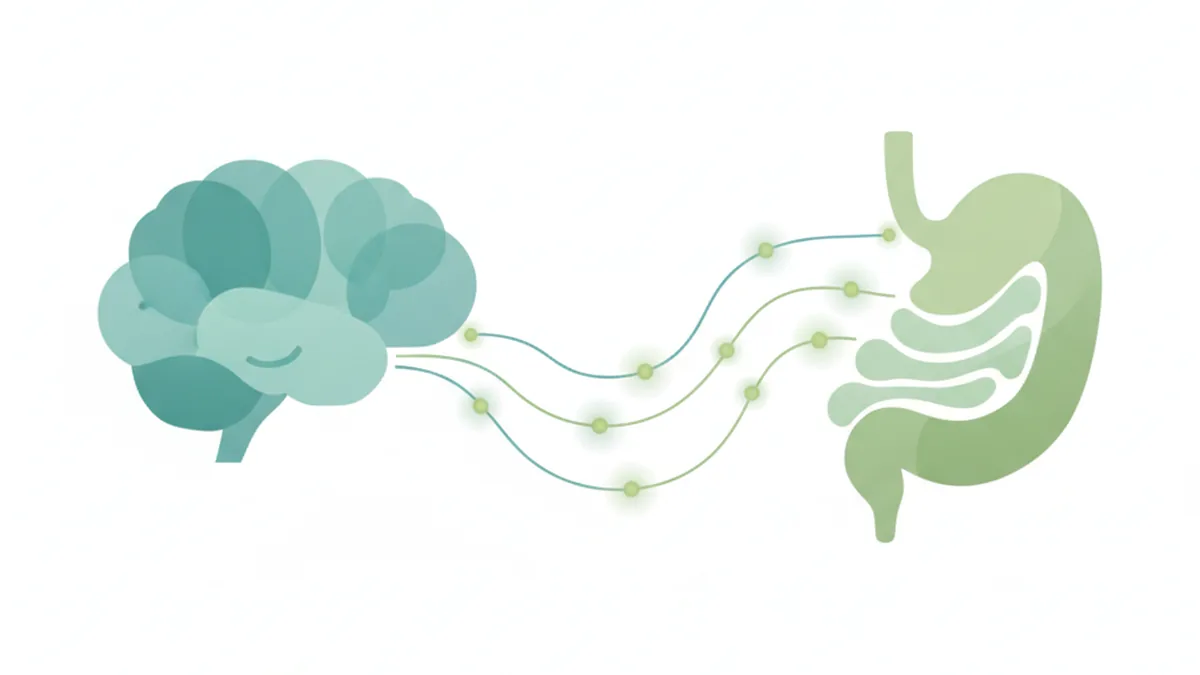
Glucagon-like peptide-1 (GLP-1) is a native incretin hormone that your intestines naturally secrete in response to food. It prompts the pancreas to release insulin, suppresses glucagon, and signals satiety. Synthetic GLP-1 receptor agonists, however, are engineered to resist the enzyme that usually breaks native GLP-1 down within minutes. They circulate at pharmacological concentrations for days or weeks.
When these molecules circulate through your bloodstream, they do not just act on the digestive tract. They cross into the central nervous system.
-
Injected GLP-1 Medication
-
Brainstem Pathways
- Area postrema activation
- CTZ trigger (emetic signal)
- Central appetite suppression
-
Gastrointestinal Tract
- Slower peristalsis
- Delayed gastric emptying
- Mechanical distension
-
Brainstem Pathways
- Perception of Nausea
The Brain's Chemical Sensor
In the hindbrain sits an organ called the area postrema, located on the floor of the fourth ventricle. Unlike most of the brain, the area postrema lacks a fully developed blood-brain barrier. It functions essentially as the body’s chemical alarm system—what physiologists call the chemoreceptor trigger zone (CTZ). Its evolutionary job is to detect blood-borne toxins and induce nausea or vomiting before poisons can kill you.
The area postrema and the adjacent nucleus of the solitary tract are rich in GLP-1 receptors. Research reviewed by the American Diabetes Association and published in leading metabolic journals demonstrates that synthetic GLP-1 directly stimulates these hindbrain receptors. In other words, your brain interprets the sudden presence of high-potency GLP-1 analogs partly as an internal alarm. The drug is directly flicking the neural switch that generates the sensation of queasiness, independent of whether your stomach contains food.
The Gastric Pause and Tachyphylaxis
Simultaneously, the drug acts on the enteric nervous system to slow gastric peristalsis—the rhythmic muscular contractions that move food from the stomach into the duodenum. In normal digestion, a solid meal empties from the stomach within 90 to 120 minutes. Under the initial influence of a GLP-1 agonist, that window widens substantially. Food remains in the stomach, distending the gastric walls and sending mechanical stretch signals back along the vagus nerve to the brain.
This creates a sensory mismatch: 1. The stomach wall remains stretched longer than usual. 2. The vagus nerve continuously broadcasts signals of intense fullness. 3. The brainstem’s emetic center is already sensitized by circulating medication.
The combination produces the classic GLP-1 wave of nausea.
Here is the crucial clinical insight: the stomach's response often experiences tachyphylaxis—a gradual decrease in response to the drug over repeated exposure. Research shows that while the brain-mediated appetite suppression persists long-term, the severe delay in gastric emptying frequently moderates after several weeks on a stable dose. Your stomach learns to adapt, which explains why nausea tends to be an episodic challenge during titration rather than a permanent state for most people.
Clinical trial data submitted to the U.S. Food and Drug Administration (FDA) reveals that across major semaglutide trials, roughly 20% to 40% of participants reported nausea at some point during treatment. Yet only a small fraction—typically around 4% to 7%—ended up discontinuing the drug entirely due to gastrointestinal adverse events. For the majority, the storm passes if the body is given sufficient time to adapt.
Why This Matters: Sorting Adaptation from Danger

Navigating GLP-1 nausea is not merely a matter of comfort; it is a clinical safety issue. Because gastrointestinal upset is expected, patients often ignore signs of genuine metabolic or physical crises.
The Dehydration Trap
When people feel chronically nauseated, their fluid intake plummets. Drinking a glass of water suddenly feels like swallowing lead. But GLP-1 agonists already reduce the sensation of thirst along with hunger. When you combine suppressed thirst with reduced liquid intake and intermittent vomiting, dehydration sets in rapidly.
The FDA has issued prescribing warnings across the GLP-1 class regarding acute kidney injury. The vast majority of these kidney complications are not caused by direct toxic damage from the drug itself; they are hemodynamic events caused by volume depletion. Severe dehydration drops blood pressure and diminishes renal perfusion. If you are vomiting and cannot maintain oral hydration, you are not simply dealing with a rough week—you are putting your kidneys under immediate physical strain.
Severe Complications You Cannot Ignore
You need a clear clinical line separating standard drug adjustment from medical emergencies:
- Pancreatitis: A known, though uncommon, risk noted in class labeling. Standard nausea produces a diffuse, queasy feeling, often paired with food aversion. Pancreatitis presents with sharp, severe pain in the upper abdomen that frequently radiates straight through to your back, often accompanied by persistent vomiting, a rapid heart rate, and an inability to stand comfortably upright.
- Gastroparesis (Stomach Paralysis): While some delay in emptying is intended, extreme paralysis of the stomach can occur. If you vomit undigested food that you consumed 12, 18, or 24 hours prior, your stomach has effectively halted transit entirely.
- Bowel Obstruction or Ileus: Because GLP-1 medications slow smooth muscle contractions throughout the entire digestive tract, severe constipation can escalate into an ileus (a lack of movement in the intestines). If nausea is accompanied by significant abdominal swelling, cramping, and an utter inability to pass gas or stool for several days, this is not routine nausea. It requires emergency care.
| Symptom Profile | Standard Adaptation Nausea | Red Flag / Emergency Care Needed |
|---|---|---|
| Pain Level | Mild discomfort, dull heaviness, queasiness | Severe, sharp, or radiating to the back |
| Vomiting Frequency | Occasional wave, rarely more than once in a day | Inability to keep liquids down for 24 hours |
| Bowel Movements | Mild constipation or transient loose stools | Complete cessation of stool and gas; severe distension |
| Systemic Signs | Mild fatigue, aversion to strong food smells | High fever, dizziness upon standing, dark amber/absent urine |
| Timing Pattern | Peaks 24–72 hours post-shot; improves through the week | Escalating agony that does not correlate with injection cycle |
Practical Tactics for Nausea Relief
If your symptoms fall within the range of standard medication adjustment, white-knuckling your way through the week is the least effective strategy. Relief requires deliberate management of physical volume, macronutrient density, and digestive timing.
Managing GLP-1 Nausea
-
Physical Rules
- Stop at 60% full
- No fluids with food
- Sit upright 45m+
-
Dietary Shifts
- Cut heavy fats
- Choose bland, cold
- Sip electrolytes
-
Clinical Levers
- Hold dose steady
- Track shot-to-peak
- Treat constipation
1. The Physics of the Plate: Volume and Consistency
Because the stomach takes significantly longer to clear its contents, mechanical overload is the primary trigger for day-to-day nausea.
- Ditch the "Clean Your Plate" Habit: You must stop eating at the very first cue of satiety. On GLP-1 medications, the interval between "I could eat a bit more" and "I am painfully overfilled" is virtually nonexistent. By the time you feel completely full, you have already eaten too much for your delayed stomach to manage.
- Separate Solids from Liquids: Do not drink large volumes of water with your meals. Taking multiple gulps of fluid while eating expands stomach volume instantly, stretching the gastric walls and initiating an emetic reflex. Drink your fluids 30 to 45 minutes before or after you eat.
- Beware the "Healthy" Smoothie Trap: Many patients, struggling to eat solid foods, switch to dense smoothies packed with protein powder, nut butters, and fruit. Dumping a high-osmolarity, calorie-dense liquid rapidly into a sensitized gastrointestinal tract can trigger visceral distension and reflex nausea. Soft, solid, easily chewed foods are often tolerated far better than rich, blended shakes.
- Remain Upright Post-Meal: Gravity is an essential digestive ally. Reclining, lounging on the couch, or heading to bed within two hours of eating invites delayed gastric contents to press against the lower esophageal sphincter, prompting both acid reflux and nausea.
2. Dietary Composition: What Moves, What Stalls
What you eat matters just as much as how much you eat. Fat slows down stomach emptying more than any other macronutrient.
- Slash Dietary Fat Temporarily: Greasy, fried, or heavily buttered foods linger in the stomach far longer than lean proteins or easily digested carbohydrates. If you eat a high-fat meal while on a GLP-1 medication, that food may remain in your stomach for hours, leading to sulfur burps, fermentation, and relentless nausea. Shift toward poached poultry, white fish, tofu, eggs, and lean cuts.
- Rethink Raw Roughage: Enormous raw kale salads or fibrous raw cruciferous vegetables require intense mechanical churning to break down. When stomach motility is blunted, those fibers sit, bloat, and produce distress. Transition to well-steamed vegetables, squash, carrots, and peeled produce during nausea flares.
- Harness Cold and Low-Aroma Foods: The brainstem's emetic circuits are intensely reactive to olfactory stimulation. Hot, steaming foods emit strong aromatic vapors that can trigger instant gagging. Cold or room-temperature foods—such as chilled grilled chicken, plain Greek yogurt, cottage cheese, or chilled fruit slices—generate minimal smell and are substantially easier to consume during rough patches.
- The Power of Simple Carbs for Acute Queasiness: When waves of nausea strike, complex dietary rules can fall by the wayside. Keeping a small sleeve of saltines, plain toast, or dry unsweetened cereal nearby can help absorb acidic gastric secretions. A single cracker eaten before sitting up in bed can break the morning cycle of empty-stomach nausea.
3. Hydration Strategy: The Sip-and-Electrolyte Method
Gulping water when you are nauseated triggers an immediate stretch response in the upper stomach, often causing you to bring the water right back up.
Instead, practice micro-sipping. Keep an insulated bottle of ice-cold water or room-temperature fluid beside you and take single sips every five to ten minutes.
Plain water is often unpalatable during bouts of medication-induced queasiness. Diluted electrolyte solutions, unsweetened iced tea with lemon, bone broths, or water infused with mint or cucumber slice across the palate more cleanly. Electrolytes are essential: sodium, potassium, and magnesium facilitate smooth muscle contraction and help safeguard kidney function when your caloric intake is temporarily low.
4. Working the Clinical Levers
Too many people suffer in silence because they view their dosage schedule as an unyielding command. It is not. The prescribing information for GLP-1 medications outlines recommended dose escalations, but real-world clinical care must be personalized.
- Hold the Dose: If your prescriber suggests moving from 0.25 mg to 0.5 mg, or from 0.5 mg to 1.0 mg, but you are still experiencing weekly nausea on your current dose, speak up. There is zero clinical necessity to step up your dose on an arbitrary calendar schedule. Staying at your current dose for an additional four weeks gives your brainstem and gastrointestinal tract extra time to develop tolerance.
- Discuss the Injection Site: While pharmacokinetic studies generally show similar overall drug absorption whether injected into the abdomen, thigh, or upper arm, substantial numbers of patients report fewer gastrointestinal side effects when injecting into the subcutaneous tissue of the outer thigh compared to the abdomen. Discuss this option with your healthcare provider; switching injection sites is a simple, zero-risk adjustment.
- Track Your Injection Peak: Most patients notice their symptoms follow a clear weekly clock. The concentration of semaglutide in your blood typically crests between 24 and 72 hours after injection. If you take your shot on Sunday evening, Tuesday might be your high-risk day. Plan your schedule accordingly: avoid scheduling high-stakes dinners or intense physical demands during your personal peak, and prioritize lighter meals during that 48-hour window.
5. Remedies: What Works, What Harms
Natural and over-the-counter remedies have a role, but they must be selected carefully:
- Ginger: One of the few non-pharmacological interventions backed by consistent clinical evidence. Ginger contains gingerols and shogaols, compounds that act as mild antagonists to 5-HT3 (serotonin) receptors in the gut and central nervous system—the same general pathway targeted by powerful pharmaceutical antiemetics. Ginger lozenges, steeped fresh ginger tea, or ginger capsules (250 mg to 500 mg) can blunt the edge of mild to moderate nausea.
- Peppermint: Enteric-coated peppermint oil capsules or sniffing culinary-grade peppermint oil can help relax gastrointestinal smooth muscle and soothe nausea pathways via sensory distraction.
- The Constipation Connection: This is the most common clinical misstep. Constipation and nausea form a vicious cycle. If your lower bowel is packed with stool, transit stalls upstream, and your stomach cannot empty. Patients frequently ask their doctors for ondansetron (Zofran) to treat their GLP-1 nausea. While ondansetron is a potent antiemetic, its primary side effect is severe constipation. Taking it regularly without treating underlying bowel stagnation can grind your GI tract to a complete halt, drastically worsening your nausea days later. If you are nauseated, audit your bowel habits first. Resolving constipation with gentle osmotic laxatives like polyethylene glycol (MiraLAX) or magnesium citrate often makes the nausea vanish entirely.
Frequently Asked Questions
How long does GLP-1 nausea typically last after starting the medication?
For most individuals, acute nausea is most pronounced during the first 2 to 3 days following an injection and gradually fades as the week progresses. Across the broader treatment timeline, side effects generally peak during the first few weeks after starting the drug or immediately following a dose increase. Once your body adapts to a stable maintenance dose, nausea typically resolves or drops to a mild, manageable level within 2 to 6 weeks.
Does experiencing nausea mean the medication is working better for weight loss?
No. While nausea can drastically reduce food intake in the short term by making the thought of eating repellant, it is an adverse effect, not the intended mechanism of the drug. The therapeutic goal of GLP-1 therapy is metabolic regulation and sustainable appetite satiety—feeling comfortably indifferent to food, not violently ill. Clinical studies show that patients who experience minimal or no gastrointestinal side effects still achieve robust glycemic control and weight reduction.
Can I take over-the-counter or prescription anti-nausea medication like Zofran?
You should only take prescription antiemetics, such as ondansetron (Zofran), under the direct guidance of your healthcare provider. While effective for acute relief, medications like ondansetron frequently cause significant constipation. Because GLP-1 drugs already slow down your entire digestive tract, adding an agent that further halts bowel motility can lead to severe impaction, ultimately triggering worse rebound nausea.
What should I eat when I feel too nauseated to eat anything at all?
Focus on bland, low-odor, room-temperature or chilled foods that require minimal digestive effort. Saltine crackers, plain dry toast, cold apple slices, plain rice, bone broth, or a small cup of low-fat Greek yogurt are typically well-tolerated. Prioritize small, frequent bites over full meals, and ensure you are micro-sipping fluids containing electrolytes throughout the day to prevent dehydration.
Disclaimer: This article is for informational and educational purposes only and does not constitute personalized medical advice. If you are experiencing persistent vomiting, inability to retain fluids, severe abdominal pain, or other distressing symptoms while taking a GLP-1 medication, contact your prescribing physician or seek immediate medical care.
This article is for informational purposes only and isn't a substitute for medical advice. Talk to a qualified healthcare provider about your specific situation.
Comments
Post a Comment