GLP-1s and Sleep Apnea: What the Science Shows

GLP-1 medications do not instantly cure obstructive sleep apnea, but recent clinical data demonstrates that the substantial weight loss they produce can cut nighttime breathing interruptions roughly in half.
For the millions of adults tethered to a continuous positive airway pressure (CPAP) machine every night, that finding is generating enormous hope. For years, sleep physicians have delivered the same frustrating message: lose 10% of your body weight and your airway might open up. Yet for patients chronically exhausted from oxygen deprivation, losing weight through diet and exercise alone has always felt like an uphill battle against their own biology.
The arrival of powerful incretin therapies—particularly dual-agonist medications like tirzepatide and GLP-1 receptor agonists like semaglutide—is shifting that conversation from abstract advice to measurable clinical outcomes. The U.S. Food and Drug Administration (FDA) has closely reviewed clinical trial data examining tirzepatide specifically as a treatment for moderate-to-severe obstructive sleep apnea in adults with obesity.
Here is what the science actually shows, how the physical changes unfold over time, and what this means for the mask resting on your nightstand.
Key Takeaways
- GLP-1 and dual GIP/GLP-1 medications significantly reduce the Apnea-Hypopnea Index (AHI)—the primary metric tracking breathing pauses per hour—chiefly by reducing fat tissue in the tongue, neck, and upper airway.
- Improvements do not happen overnight; meaningful airway changes typically appear after 12 to 24 weeks of progressive weight loss and dose escalation.
- You should never stop using your CPAP abruptly just because you are losing weight; shrinking facial structures often cause mask leaks, and your airway resistance changes, requiring formal pressure retitration.
- Weight loss dramatically softens the severity of sleep apnea, but it may not eliminate the condition entirely if your airway collapse is driven by jaw structure, tonsil anatomy, or neurological sleep traits.
The Airway Under Pressure: Why Weight Drives Apnea
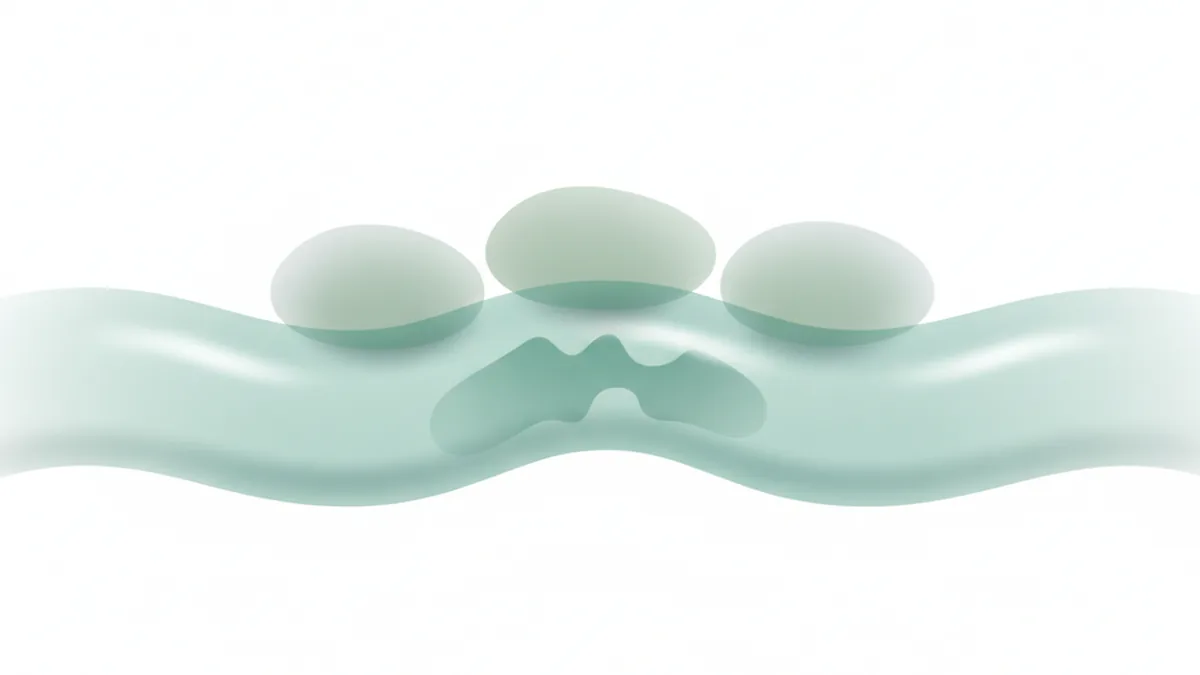
To understand how these medications alter sleep apnea, you have to look at the geometry of the human throat.
Obstructive sleep apnea (OSA) is fundamentally a mechanical plumbing issue. When you fall asleep, the muscular tone throughout your body relaxes. In a healthy airway, the passage behind your tongue and soft palate remains wide enough for air to slip through quietly. But in people predisposed to airway collapse, those soft tissues slump inward. The airway narrows, vibrates (producing snoring), or seals shut entirely.
When your airway closes, your blood oxygen drops. Your brain registers this chemical emergency, releases a jolt of adrenaline, and forces you awake just enough to gasp, clear the obstruction, and resume breathing. This cycle can repeat 15, 30, or even 60 times an hour. You wake up exhausted because you never spent extended time in deep, restorative sleep.
Excess body weight intensifies this mechanical failure in three distinct ways:
- Parapharyngeal fat pads: Fat collects along the lateral walls of your pharynx, narrowing the diameter of the airway tube before you even lay your head down.
- Lingual fat: Research has shown that the human tongue stores significant amounts of adipose tissue. A heavier tongue falls backward more easily when you sleep on your back, functioning like a cork in a bottle.
- Reduced lung volume: Abdominal fat presses upward against the diaphragm, particularly in the supine position. This lowers functional residual capacity, which reduces the natural downward tension (caudal traction) on the trachea that normally keeps the windpipe pulled taut and open.
Until recently, nonsurgical weight reduction rarely produced the deep, sustained 15% to 20% drops in body mass required to physically reshape these deep airway structures. The newest generation of obesity medications changes that physiological baseline.
The Treatment Timeline: What Happens Over Weeks, Months, and Beyond
When someone with obstructive sleep apnea begins treatment with a GLP-1 or dual GIP/GLP-1 receptor agonist, the path to clearer breathing follows a distinct physiological progression. Airway remodeling does not track linearly with how you feel on day three.
Here is what happens inside your body, week by week and month by month.
Weeks 1 to 4: The Metabolic Shift
The opening month of therapy is characterized by micro-adjustments. Most patients begin on the lowest introductory dose—such as 0.25 mg for semaglutide or 2.5 mg for tirzepatide—designed to acclimate the gastrointestinal tract rather than produce dramatic weight reduction.
During these initial four weeks: - Weight loss is modest: Most individuals drop 2 to 6 pounds, a substantial portion of which is water weight and reduced glycogen stores. - Airway changes are negligible: Your parapharyngeal fat pads and tongue volume remain virtually unchanged. - Fatigue may temporarily increase: As your caloric intake drops and your digestive system adjusts to delayed gastric emptying, daytime fatigue can actually tick upward. It is easy to mistake this adaptation period for worsening sleep apnea. - CPAP needs remain static: Your machine pressures still need to remain at their prescribed settings.
The takeaway for Month 1? Do not expect your snoring to vanish yet. The drug is working on your gut peptides and central appetite signals, laying the metabolic groundwork for the structural changes ahead.
Months 2 to 3: The Mechanical Turning Point
By week 8 to 12, doses are stepped up to intermediate therapeutic levels. At this stage, sustained caloric deficits begin to mobilize deeper visceral and ectopic fat depots—including the fat tucked away inside the neck and upper respiratory tract.
Around this window, many patients notice subtle shifts in their nighttime symptoms: - Snoring volume often drops: Partners are usually the first to report that the bedroom is quieter. The mechanical vibration of the soft palate decreases as soft tissue bulk shrinks. - Lingual fat begins to decline: Imaging research indicates that ectopic fat in the tongue decreases along with general visceral fat reduction. As the base of the tongue loses volume, it becomes less prone to falling directly against the posterior pharyngeal wall during REM sleep. - Early AHI reductions occur: Clinical trials evaluating tirzepatide have demonstrated that drops in the Apnea-Hypopnea Index begin tracking steadily downward alongside body weight by week 12. - Mask leaks appear: This is an unexpected hurdle. As facial fat diminishes around your cheeks, jawline, and the bridge of your nose, your CPAP mask may no longer seal properly. Whistling leaks, air blowing into your eyes, or dry mouth frequently crop up during this phase.
If your mask starts leaking, do not toss it aside. You likely need a different cushion size or a redesigned headgear setup to match your changing facial structure.
Months 6 to 12: Airway Remodeling and Retitration
Between six months and a year of treatment, patients often hit their highest tolerated dose and reach significant benchmarks in total weight loss—frequently exceeding 15% to 20% of their baseline body mass.
This is the window where the American Academy of Sleep Medicine (AASM) guidelines and clinical data highlight the most profound clinical improvements:
- Substantial AHI drops: In major clinical trials investigating adults with moderate-to-severe OSA who were not using CPAP, tirzepatide reduced apnea-hypopnea events by roughly 25 to 30 events per hour over a year. For many, this moved their diagnosis from "severe" down to "mild" or even subclinical territory.
- Enhanced oxygen saturation: Nighttime oxygen desaturation events become shorter and far less frequent. The heart is spared the severe, repetitive spikes in blood pressure caused by hypoxia-driven surges of adrenaline.
- CPAP intolerance due to high pressure: If you are on an older, fixed-pressure CPAP machine, the air pressure that previously blew open a heavy, obstructed throat may now feel overwhelming. You might wake up feeling bloated from swallowing air (aerophagia), or find yourself ripping the mask off midway through the night because the airflow feels suffocatingly strong.
- Daytime energy rebounds: The combination of improved sleep architecture and lower metabolic inflammation typically produces a clear, noticeable lift in mental clarity and daytime stamina.
This is the critical juncture to schedule a follow-up with your sleep specialist. Your airway resistance has changed; your machine settings must change with it.
Year 1 and Beyond: The New Baseline
After a full year on treatment, your weight typically plateaus at a new, lower set point. At this stage, you and your medical team face an important question: What does your sleep apnea look like now?
For some individuals, the condition enters functional remission. Their AHI drops below 5 events per hour, their oxygenation remains rock-solid all night, and they feel alert throughout the day without respiratory support.
For many others, however, residual sleep apnea persists.
Why? Because weight is only one variable in a complex anatomical equation. If you have a naturally recessed lower jaw (retrognathia), an elongated soft palate, large palatine tonsils, or an unusually low arousal threshold (where your brain wakes up at the slightest respiratory ripple), you may still experience airway collapses regardless of how much weight you lose.
At Year 1, your sleep apnea is no longer being amplified by excess tissue mass. What remains is your true anatomical and neurological baseline.
GLP-1 & Sleep Apnea Progression
- Weeks 1–4: Metabolic adaptation; GI adjustments; no change in airway.
- Months 2–3: Early visceral/lingual fat loss; snoring softens; mask leaks emerge.
- Months 6–12: Major AHI drops; airway expands; fixed CPAP pressures may feel too high.
- Year 1+: Weight plateaus; residual apnea evaluated via follow-up sleep study.
The CPAP Conundrum: Can You Truly Ditch the Mask?
The most common question readers ask is delightfully straightforward: "If I take these medications, can I throw away my CPAP machine?"
The short answer is: Not automatically, and certainly not without clinical testing.
There is an understandable temptation to unplug the machine the moment your pants fit looser and your partner says your snoring has stopped. But subjective improvement can be deeply deceptive. You can feel noticeably more energetic simply because your events dropped from 45 per hour to 18 per hour—yet 18 events per hour still classifies as moderate sleep apnea, which silently strains your cardiovascular system over time.
Untreated moderate sleep apnea maintains a steady background hum of vascular inflammation. It elevates your risk of atrial fibrillation, accelerates arterial stiffening, and raises the likelihood of stroke. Feeling "fine" is not a reliable surrogate for normal nocturnal oxygen levels.
How to Safely Transition or Adjust
If you are losing weight on a GLP-1 or dual agonist and suspect you need less airway support, follow a structured process:
- Do not alter machine settings on your own. If you are using an auto-adjusting machine (APAP), it will naturally adapt within its programmed range. However, if your baseline pressure range was set when you were 40 pounds heavier, the upper limit may now be far too aggressive.
- Track your internal data. Modern machines store your nightly AHI, leak rate, and median pressure. If your machine's software shows that your average nightly AHI is consistently below 2 and your machine rarely ramps up its pressure, show those metrics to your physician.
- Undergo a formal re-evaluation. Your sleep physician will likely order a home sleep apnea test (HSAT) or an in-lab polysomnography study. To assess your true current baseline, this study is often performed without your CPAP mask for a night or two under medical direction.
- Consider intermediate therapies. If your AHI has dropped from severe to mild, you may suddenly become an ideal candidate for less intrusive alternatives, such as a custom-fitted mandibular advancement device (a dental appliance made by a sleep dentist) or simply positional therapy (devices that keep you off your back).
Tirzepatide vs. Semaglutide: What the Trials Actually Show
While both GLP-1 receptor agonists and dual GIP/GLP-1 receptor agonists spur significant weight loss, their formal trial footprints for sleep apnea differ.
Tirzepatide has been evaluated specifically for obstructive sleep apnea in dedicated Phase 3 clinical trials (the SURMOUNT-OSA study program). These multi-center randomized trials examined two distinct groups over 52 weeks: adults with moderate-to-severe OSA who were unable or unwilling to use CPAP, and adults who were consistently using CPAP at baseline.
The findings were striking: - Patients taking tirzepatide experienced an average reduction of nearly 30 breathing events per hour in the non-CPAP cohort. - In the cohort utilizing CPAP, participants saw an average reduction of approximately 30 events per hour, allowing many to lower their machine pressures significantly or maintain stable oxygenation even during partial nights off the machine. - Clinically meaningful improvements were also recorded in sleep-related patient-reported outcomes, such as daytime functioning and sleep disturbance scales.
Semaglutide, by contrast, has demonstrated clear, powerful reductions in cardiovascular risk and significant total body weight loss (as observed in trials like SELECT and STEP). While dedicated sleep-apnea-specific trials for semaglutide continue to accumulate, real-world registry data confirms that its secondary effect on airway mechanics is driven through the same primary physiological lever: substantial reduction of adipose tissue in the neck, thorax, and upper airway.
The critical distinction is regulatory. Clinical trial data specifically targeting sleep apnea endpoints gives health authorities the empirical basis to consider dedicated indications for sleep apnea, which can directly influence how private insurers and Medicare approach coverage.
Beyond the Airway: The Hidden Vascular Benefit

Sleep apnea is not simply a respiratory problem; it is a cardiovascular hazard.
Every time your airway closes, your thoracic cavity generates intense negative intrathoracic pressure as your chest heaves against a sealed throat. This physical suction stretches the chambers of your heart. Simultaneously, falling oxygen levels trigger a systemic vascular constriction, driving nighttime blood pressure through the roof.
Over a decade, this mechanical and chemical beating damages the vascular endothelium, promoting atherosclerosis and cardiac arrhythmias.
When a GLP-1 or dual agonist reduces sleep apnea severity, the cardiovascular benefits are compounded:
- Blood Pressure Synergies: GLP-1s independently facilitate mild natriuresis (sodium excretion via the kidneys) and promote endothelial relaxation. When you combine that direct vascular benefit with fewer nighttime adrenaline spikes from airway collapse, nocturnal blood pressure drops significantly.
- Cardiometabolic Relief: Obstructive sleep apnea significantly worsens insulin resistance. By clearing airway blockages and activating incretin pathways simultaneously, you target insulin dysregulation from both directions.
- Systemic Inflammation: Circulating markers of inflammation, such as high-sensitivity C-reactive protein (hs-CRP), plunge when systemic hypoxia and excess adipose tissue are addressed at the same time.
This interconnectedness explains why sleep specialists and cardiologists are increasingly working in tandem when managing these therapies.
When Weight Loss Is Not Enough: The Limits of Pharmacology
It is critical to maintain clear expectations. Incretin therapies are transformative metabolic tools, but they cannot reconstruct your facial skeleton.
Sleep medicine categorizes obstructive sleep apnea into several underlying "phenotypes":
- High anatomical collapsibility (The Weight Factor): Airway closure driven primarily by tissue volume crowding a normal skeleton. These patients respond dramatically to GLP-1-mediated weight reduction.
- Structural skeletal anatomy: Individuals with a small, narrow mandible, a high-arched hard palate, or bimaxillary retrusion. If your bones do not provide adequate room for the base of your tongue, thinning the tongue helps, but the structural box remains fundamentally cramped.
- High loop gain: An unstable ventilatory control system. In these individuals, the brain's respiratory center overreacts to small changes in carbon dioxide, leading to erratic breathing cycles that cause the airway to collapse during the "troughs." GLP-1s do not alter loop gain.
- Poor muscle responsiveness: In some individuals, the upper airway dilator muscles (like the genioglossus) fail to activate properly during sleep, regardless of tissue weight.
If your sleep apnea is rooted primarily in skeletal mechanics or non-anatomical traits, GLP-1s will improve your metabolic health and lighten the load on your heart, but they will not eliminate your need for nocturnal airway support.
Recognizing which category you fall into requires a comprehensive evaluation by an airway specialist—typically a licensed sleep physician working alongside an otolaryngologist (ENT) or sleep dentist.
Action Plan: Navigating Your Care
If you are currently taking or considering a GLP-1 medication and have sleep apnea, here is how to handle your treatment safely:
1. Inform Both Prescribers
Ensure your sleep specialist knows you are starting a GLP-1, and ensure your obesity medicine doctor or primary care provider knows your baseline AHI and CPAP settings. These two disciplines must communicate.
2. Monitor for Mask Fit Issues Early
Between months 2 and 4, watch for increased air leakage. If you find yourself tightening your mask straps until your face hurts, stop. Your face has changed shape; contact your durable medical equipment (DME) supplier to get re-fitted for a different mask style or size.
3. Track CPAP Data Monthly
Log into the patient portal associated with your CPAP machine (such as myAir or DreamMapper). Watch your 30-day average AHI and your 95th-percentile pressure. If your pressure needs are trending downward and your event rate is persistently low, request a consultation.
4. Never Stop CPAP Cold Turkey
Even if your snoring disappears, maintain your therapy until a repeat diagnostic study confirms your airway remains stable without positive pressure. A premature pause can leave your heart exposed to nocturnal hypoxia.
5. Watch for Warning Signs
If at any point during your medication course you experience sudden chest pain, profound shortness of breath, unexplained fainting (syncope), or irregular heart rhythms, seek emergency medical care immediately. These symptoms fall outside ordinary medication side effects or sleep-related fatigue.
Frequently Asked Questions
Can GLP-1 medications completely cure obstructive sleep apnea?
For some individuals with mild-to-moderate sleep apnea driven almost entirely by excess weight, significant weight loss can bring breathing interruptions down to normal levels (under 5 events per hour), effectively placing the condition into remission. However, if your apnea is caused by jaw structure, enlarged tonsils, or neurological signaling issues, weight loss will reduce the severity but will not cure the underlying condition.
How quickly will my snoring improve after starting a GLP-1?
Most patients do not notice meaningful reductions in snoring during the first month, as early dosages are focused on gradual metabolic adaptation. Clear reductions in snoring volume and frequency typically emerge between months 2 and 4, correlating with the mobilization of deep fat deposits in the tongue and lateral pharyngeal walls.
What should I do if my CPAP mask starts leaking as I lose weight?
As you lose fat tissue from your cheeks, temples, and jawline, the original seal of your CPAP mask will often fail. Do not overtighten the headgear, which can cause pressure sores and skin breakdown. Contact your sleep equipment provider or physician for a refitting; transitioning to a nasal pillow mask or a smaller cushion size often resolves the issue immediately.
Will insurance cover GLP-1 medications specifically for sleep apnea?
Coverage policies are actively evolving. While medications like tirzepatide have demonstrated powerful efficacy in clinical trials for obstructive sleep apnea, insurance coverage currently depends largely on FDA-approved indications, your employer's specific pharmacy benefit design, and your body mass index (BMI). Check directly with your insurer regarding their requirements for prior authorization.
This article is for informational purposes only and isn't a substitute for medical advice. Talk to a qualified healthcare provider about your specific situation.
Comments
Post a Comment