Morning Joint Stiffness: Ordinary Aging or Something More?
You reach for the alarm, and your fingers won't quite cooperate. Your knees protest as you swing your legs out of bed. The first few steps toward the bathroom feel like walking through molasses, your ankles reluctant to bend. By the time you've showered and made coffee, though, things have loosened up. You're moving almost normally again.
Sound familiar? Morning stiffness is one of those symptoms that sneaks up gradually. For a while, you might dismiss it—maybe you slept wrong, maybe it's just age. But when it becomes your daily greeting, the question shifts: Is this just what happens when you get older, or is your body trying to tell you something more specific?
The answer isn't always straightforward. Morning joint stiffness sits in an awkward medical gray zone. Sometimes it's benign, the mechanical consequence of aging joints. Sometimes it's an early whisper of arthritis or another inflammatory condition. The trick lies in reading the details.
What Actually Happens While You Sleep
Understanding morning stiffness starts with understanding what happens to your joints overnight. Think of your joints as hinges that need regular movement to stay lubricated. Synovial fluid—the slippery substance that cushions your joints—works best when you're active. Movement circulates this fluid, nourishes cartilage, and keeps everything gliding smoothly.
When you sleep, you're essentially immobile for six to eight hours. Fluid can pool. Tissues swell slightly. Muscles and tendons tighten up. This is normal physiology, and it explains why most people feel a bit creaky first thing in the morning, regardless of age.
But here's where it gets interesting. For some people, this overnight stiffening resolves in minutes. You stand, stretch, walk to the kitchen, and you're done. For others, the stiffness lingers—thirty minutes, an hour, sometimes longer. That persistence is what separates ordinary morning creakiness from something worth investigating.
Research shows that prolonged morning stiffness is one of the earliest and most consistent signs of inflammatory arthritis. The immune system's activity follows circadian rhythms. Certain inflammatory markers peak during nighttime hours, which is why people with conditions like rheumatoid arthritis often feel their worst in the morning. By afternoon, inflammation has typically quieted down, and they feel considerably better.
When Morning Stiffness Crosses a Line

Not all morning stiffness is created equal. The pattern matters as much as the sensation itself.
Duration is your first clue. Stiffness that melts away in five or ten minutes suggests mechanical causes—aging joints, mild osteoarthritis, or just the normal consequence of being still overnight. Stiffness lasting more than 30 minutes starts raising flags. When it extends past an hour, you're in territory where inflammatory conditions become more likely. Rheumatologists consider prolonged morning stiffness—especially lasting 45 minutes or more—a hallmark of rheumatoid arthritis and other autoimmune joint diseases.
Location tells you something too. Osteoarthritis, the wear-and-tear variety most common with aging, typically hits weight-bearing joints first: knees, hips, lower back. It's often asymmetric—your right knee bothers you more than your left. Inflammatory arthritis, by contrast, tends toward symmetry. Both hands stiffen. Both ankles ache. Small joints—fingers, wrists, toes—get involved early. If you're finding it hard to make a fist in the morning or your finger joints look puffy, that's a pattern worth noting.
The feel of the stiffness matters. Mechanical stiffness from osteoarthritis often comes with a grating or grinding sensation. You might hear your knees creak. The joint feels like it needs to be worked loose. Inflammatory stiffness feels different—joints may be tender to touch, warm, or visibly swollen. The stiffness isn't just tightness; it's coupled with a sensation that something's actively inflamed.
Age matters, but not always how you'd expect. Osteoarthritis is indeed more common after 50, the result of decades of joint use. But inflammatory arthritis doesn't always respect age boundaries. Rheumatoid arthritis can emerge in your 30s or 40s. Lupus often appears in younger adults. If you're developing significant morning stiffness in your 30s or 40s, don't write it off as premature aging. Your immune system doesn't wait for retirement to malfunction.
The Conditions Behind Persistent Morning Stiffness
Several conditions share morning stiffness as a cardinal symptom, but they differ in important ways.
Rheumatoid arthritis is an autoimmune disease where the immune system attacks the lining of joints. It's persistently inflammatory, which is why morning stiffness can last an hour or more. The small joints of the hands and feet are often affected first. People describe their hands feeling "like sausages" in the morning. Over time, if untreated, RA can cause permanent joint damage. The condition affects roughly 1% of adults, with women developing it two to three times more often than men.
Osteoarthritis works differently. It's degenerative rather than inflammatory—cartilage wears down over years of use. Morning stiffness happens here too, but typically resolves faster, usually within 30 minutes. The pain often worsens with activity and improves with rest, the opposite pattern of inflammatory arthritis. Osteoarthritis is far more common, affecting the majority of people over 65 to some degree, though not everyone develops symptoms.
Polymyalgia rheumatica deserves mention because it's easily missed. This inflammatory condition almost exclusively affects people over 50 and causes severe stiffness in the shoulders, neck, and hips. Morning stiffness is often so intense that people struggle to get out of bed or lift their arms to brush their hair. It responds dramatically to corticosteroids, which is part of how doctors confirm the diagnosis.
Psoriatic arthritis can develop in people with psoriasis, the skin condition that causes scaly patches. Not everyone with psoriasis develops joint problems, but for those who do, morning stiffness is common. The pattern can resemble rheumatoid arthritis, but psoriatic arthritis also causes a distinctive swelling of entire fingers or toes—what doctors call "sausage digits."
Ankylosing spondylitis primarily affects the spine and sacroiliac joints (where your spine meets your pelvis). Severe lower back stiffness in the morning, especially in younger adults, is a classic presentation. The stiffness improves with movement and worsens with rest. It often begins in the late teens or twenties, unusual for most arthritis types.
What's Happening Inside Your Joints
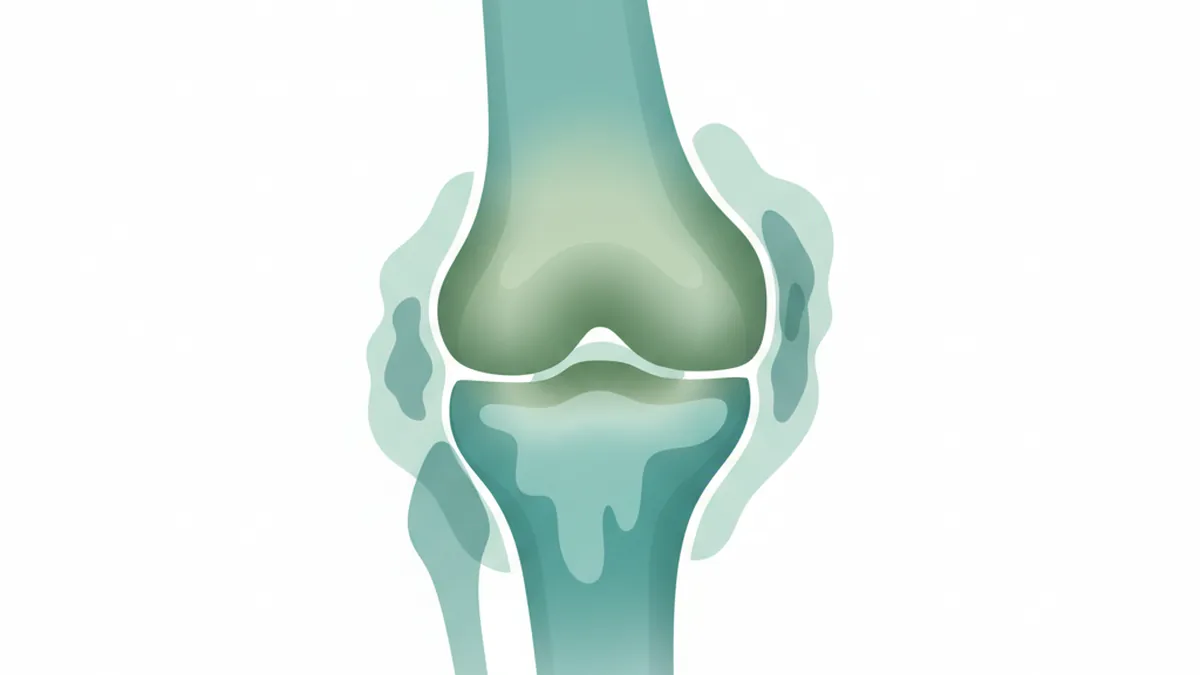
The biology of morning stiffness reveals why it's such a useful diagnostic sign.
In healthy joints, synovial membranes produce just enough fluid to keep cartilage surfaces gliding smoothly. Overnight, with minimal movement, this fluid production slows. Some fluid is reabsorbed. What remains can become slightly more viscous. When you start moving again, it takes a few minutes for your body to ramp up fluid production and restore optimal lubrication. That's the benign version.
In inflammatory arthritis, the synovial membrane itself is under attack. Immune cells infiltrate the joint lining, causing inflammation. This process produces excess fluid, but that fluid is loaded with inflammatory proteins. The joint becomes swollen and stiff, not from lack of lubrication but from active inflammation. During sleep, when anti-inflammatory signals naturally dip and pro-inflammatory markers rise, this inflammation intensifies. Morning stiffness becomes the physical manifestation of this nocturnal inflammatory surge.
The duration of morning stiffness roughly correlates with the degree of inflammation present. More inflammation means longer stiffness. This is why, in clinical trials for arthritis medications, researchers track changes in morning stiffness duration as a measure of treatment effectiveness.
Reading Your Body's Patterns
Beyond the basic duration and location of stiffness, other signs can help you gauge what's happening.
Fatigue paired with stiffness suggests systemic inflammation. If you're waking up stiff and also feeling exhausted despite adequate sleep, that combination points toward an inflammatory process rather than simple joint wear.
Weather sensitivity is interesting but not definitive. Many people with arthritis report worsening symptoms before weather changes, particularly with dropping barometric pressure. The mechanism isn't fully understood, though one theory involves pressure changes affecting fluid dynamics in inflamed joints. But weather sensitivity happens with both osteoarthritis and inflammatory conditions, so it doesn't distinguish between them.
The "gel phenomenon" describes how joints stiffen after periods of sitting still, not just overnight. If your knees lock up after a car ride or your hands stiffen during a movie, that suggests inflammatory arthritis. Osteoarthritis typically doesn't cause this mid-day stiffening as intensely.
Morning stiffness that's getting worse matters more than static symptoms. Joints that were stiff for 20 minutes last year and now stay stiff for 45 minutes signal progression. Don't wait to see how much worse it gets.
Multiple joint involvement increases concern. One stiff knee could be old injury, overuse, or localized arthritis. Six stiff joints simultaneously suggests something systemic.
What Else Could Cause Morning Joint Stiffness?
Not every case of morning stiffness comes from arthritis. Other conditions can produce similar symptoms.
Fibromyalgia causes widespread pain and stiffness, but it's not from joint inflammation. The stiffness is real but stems from altered pain processing in the nervous system. It's often accompanied by other symptoms: poor sleep quality, brain fog, heightened sensitivity to touch or temperature. The joints themselves aren't inflamed or damaged.
Hypothyroidism slows metabolism throughout the body, including in joints and muscles. People with underactive thyroid often report joint stiffness, particularly in the morning, along with fatigue, weight gain, and cold sensitivity. A simple blood test checking thyroid function can rule this in or out.
Vitamin D deficiency has been linked to musculoskeletal pain and stiffness. The connection isn't fully understood, but adequate vitamin D seems important for both bone health and inflammation regulation. Many people, especially those in northern climates or who spend little time outdoors, run low on vitamin D without knowing it.
Medication side effects occasionally cause joint stiffness. Certain statins, used to lower cholesterol, can cause muscle and joint pain in some people. Aromatase inhibitors, used in breast cancer treatment, commonly cause joint stiffness and pain.
Lyme disease, in its later stages, can cause arthritis-like symptoms including morning stiffness, typically in larger joints like knees. If you've had a tick bite or spent time in areas where Lyme is common, and you're developing joint symptoms, it's worth mentioning to your doctor.
When to Stop Waiting and See Someone

The threshold for seeking medical evaluation depends on the pattern you're seeing.
Seek care relatively soon if:
- Morning stiffness lasts more than 30 minutes consistently
- Multiple joints are involved, especially symmetrically
- Joints appear swollen or feel warm to touch
- Stiffness is accompanied by unexplained fatigue or weight loss
- Symptoms are worsening week to week
- You're under 50 and developing significant joint stiffness
Contact a healthcare provider promptly if:
- A single joint becomes acutely painful, swollen, and stiff—could indicate infection or gout
- You develop fever along with joint symptoms
- Stiffness is severe enough to interfere with basic self-care—dressing, bathing, eating
- You notice a rash along with joint symptoms
- Morning stiffness is accompanied by eye redness or vision changes (can indicate inflammatory conditions spreading)
Don't wait for emergency intervention, but don't panic either. Joint stiffness rarely constitutes an emergency unless it's part of a broader, acute illness. But early treatment matters significantly for inflammatory arthritis. Catching rheumatoid arthritis early, before significant joint damage occurs, dramatically improves long-term outcomes. The window where treatment is most effective is often in the first few months to a year of symptoms.
What a Doctor Will Actually Look For
Understanding the diagnostic process helps you know what to expect and how to prepare.
Your history matters enormously. A doctor will want to know exactly how long stiffness lasts, which joints are affected, whether symptoms are symmetric, if stiffness occurs only in the morning or also after rest during the day, and what makes it better or worse. They'll ask about other symptoms—fatigue, fever, rashes, eye problems, gastrointestinal issues—because inflammatory conditions often affect multiple organ systems.
The physical examination focuses on identifying inflammation. Your doctor will look for joint swelling, warmth, tenderness, and reduced range of motion. They'll check for patterns—are the same joints affected on both sides of your body? Are small joints involved? They'll look at your hands carefully, checking for subtle swelling around finger joints that you might not have noticed yourself.
Blood tests help distinguish inflammatory from non-inflammatory conditions. Inflammatory markers like C-reactive protein (CRP) and erythrocyte sedimentation rate (ESR) rise when inflammation is present. Rheumatoid factor and anti-CCP antibodies can indicate rheumatoid arthritis, though their absence doesn't rule it out. A complete blood count might show anemia, which often accompanies chronic inflammation. Thyroid tests, vitamin D levels, and Lyme testing might be included depending on your history.
Imaging provides structural information. X-rays show bone and joint damage but often appear normal early in inflammatory arthritis. Ultrasound can detect synovial inflammation and excess fluid that physical examination misses. MRI is most sensitive for early inflammatory changes but is expensive and not always necessary initially.
Practical Steps While You Figure This Out
Waiting for a diagnosis doesn't mean waiting passively. Several approaches can ease morning stiffness regardless of the underlying cause.
Gentle movement before bed and upon waking helps. Even five minutes of easy stretching or range-of-motion exercises can reduce stiffness duration. The goal isn't intense exercise but rather encouraging fluid circulation through joints.
Heat application in the morning can make a meaningful difference. A warm shower loosens stiff joints faster than staying in bed wishing they'd improve. Some people find electric blankets or heating pads helpful, warming joints before attempting to get up.
Sleep position matters more than most people realize. Sleeping with joints bent or twisted can worsen morning stiffness. Using pillows to support neutral joint positions—knees slightly bent, wrists straight—may help. If hand stiffness is severe, some people benefit from wearing lightweight wrist splints at night to keep joints in a restful position.
Anti-inflammatory diet changes might help, though evidence is mixed and individual. Some people with inflammatory arthritis report improvement when reducing processed foods, added sugars, and red meat while increasing fish, vegetables, and whole grains. It's not a substitute for medical treatment when needed, but for mild symptoms, it's a reasonable starting point.
Over-the-counter NSAIDs like ibuprofen or naproxen reduce both pain and inflammation. They're more effective for morning stiffness than acetaminophen, which treats pain but not inflammation. Use them carefully—long-term daily use carries risks for stomach and kidney problems. They're fine for occasional use while you're sorting out what's happening, but if you're reaching for them every morning, that's itself a sign you need medical evaluation.
Weight management helps if excess weight is present. Every additional pound adds roughly four pounds of pressure on knee joints. Even modest weight loss can reduce mechanical stress and inflammation.
Living with Uncertainty
One frustrating aspect of morning joint stiffness is that diagnosis isn't always immediate or clear-cut. Inflammatory arthritis can be difficult to diagnose early. Blood tests are sometimes negative initially. Symptoms may wax and wane. You might see one doctor who tells you it's nothing and another who orders extensive testing.
This diagnostic ambiguity doesn't mean the symptoms aren't real or important. It means that joint conditions often evolve gradually, and early stages don't always fit neatly into diagnostic categories. If initial evaluation is inconclusive but symptoms persist or worsen, follow up. Monitoring symptoms over time—keeping notes on stiffness duration, affected joints, triggers—provides valuable information.
Sometimes the answer is genuinely benign. Mild osteoarthritis developing in your 60s, causing 15 minutes of morning stiffness that responds well to movement and occasional ibuprofen, may not require aggressive intervention. Physical therapy, weight management if needed, and staying active might be sufficient.
But when something more significant is brewing—inflammatory arthritis in particular—early treatment changes trajectories. Disease-modifying drugs can slow or halt joint damage. Ignoring symptoms until damage is visible on X-rays means missed opportunities.
The balance is recognizing that not every ache requires medical intervention while also trusting yourself to know when something feels different, persistent, or concerning. Morning joint stiffness, especially when prolonged or progressive, falls into that "probably worth checking" category. It's not necessarily serious, but it's asking for attention.
This article is for informational purposes only and isn't a substitute for medical advice. Talk to a qualified healthcare provider about your specific situation.
Sources & further reading
This article draws on guidance from recognized health authorities:
- CDC — Osteoarthritis
- NIH — Osteoarthritis Symptoms, Causes & Risk Factors
- MedlinePlus — Osteoarthritis


Comments
Post a Comment