GLP-1s and Fatty Liver: Can They Reverse MASH?

GLP-1 medications can significantly reduce liver fat and calm chronic inflammation in metabolic dysfunction-associated steatohepatitis (MASH), though clearing out advanced scar tissue remains a slower, more complicated biological hurdle.
For years, hepatologists had remarkably little to offer people diagnosed with progressive fatty liver disease beyond a frustratingly simple directive: lose 10% of your body weight through diet and exercise alone. For the vast majority of patients, that goal proved extraordinarily difficult to achieve and even harder to maintain. The emergence of incretin-based therapies—namely GLP-1 receptor agonists like semaglutide and dual GIP/GLP-1 agonists like tirzepatide—has fundamentally altered that conversation.
These medications are not just changing waistlines. They are transforming the treatment landscape for an illness that is quietly becoming the leading cause of liver transplants worldwide.
Key Takeaways
- GLP-1 receptor agonists and dual incretins show high rates of MASH resolution in clinical trials, largely by halting toxic fat accumulation and quelling chronic liver inflammation.
- While these drugs routinely clear hepatic fat and resolve active cellular injury, reversing established stage 2 or stage 3 liver fibrosis takes substantially longer and remains an active area of clinical investigation.
- A "normal" liver enzyme panel (ALT and AST) does not rule out advanced fatty liver disease; specialized non-invasive tools like the FIB-4 index and transient elastography (FibroScan) provide a much clearer picture of liver stiffness.
- Most GLP-1 medications are currently prescribed off-label for liver disease itself, meaning coverage typically depends on having co-existing conditions such as type 2 diabetes or obesity.
What Exactly Is Happening Inside a Fatty Liver?
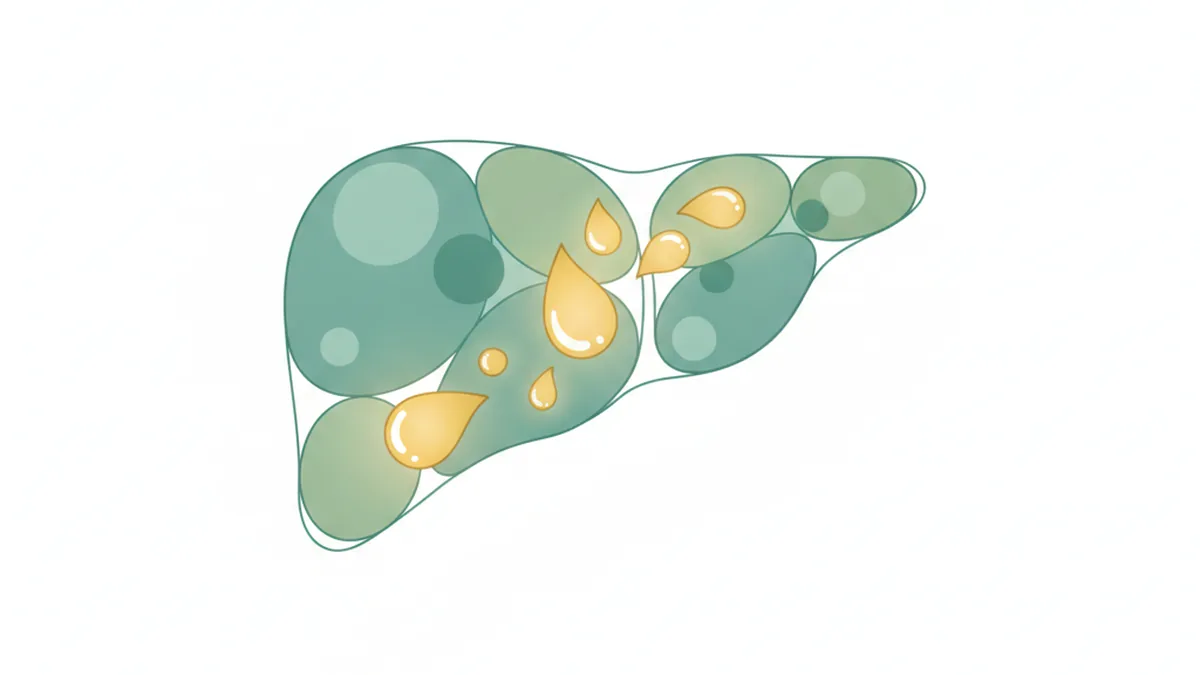
To understand why these medications matter, we have to look at how a healthy metabolic organ turns into an inflamed, scarred one.
Medical societies recently updated the nomenclature around this condition. What used to be called nonalcoholic fatty liver disease (NAFLD) is now termed metabolic dysfunction-associated steatotic liver disease (MASLD). Its progressive, inflammatory form—formerly NASH—is now known as MASH (metabolic dysfunction-associated steatohepatitis). The rename was not merely cosmetic. It was designed to anchor the disease where it truly belongs: squarely within systemic metabolic dysfunction.
The process begins with simple steatosis. When peripheral tissues, especially visceral fat and skeletal muscle, become resistant to insulin, the body loses its ability to handle circulating fuel efficiently. Free fatty acids pour into the bloodstream and lodge inside liver cells (hepatocytes).
Having some fat in your liver is not an immediate emergency. Roughly one in three adults globally carries excess hepatic fat. The crisis begins when the liver's storage capacity is overwhelmed.
Surplus triglycerides decompose into toxic lipid intermediates. This lipotoxicity acts like a continuous chemical burn, stressing hepatocytes until they swell, malfunction, and balloon. Specialized immune cells in the liver, called Kupffer cells, wake up and sound the alarm. They unleash inflammatory signals that call in outside white blood cells.
If this smoldering injury continues unchecked, hepatic stellate cells step in to lay down a protective collagen mesh—scar tissue. This is fibrosis.
Over a decade or two, fine webs of collagen stiffen into thick structural bands. When scar tissue takes over the organ's architecture, normal blood flow gets choked off, setting the stage for cirrhosis, liver failure, and hepatocellular carcinoma.
The progression is rarely linear, and it is almost always silent. The liver has no sensory nerve endings inside its tissue; it does not hurt when it is inflamed. Most people feel completely fine until the organ is already fighting for survival.
Why Does This Happen, and How Do GLP-1 Medications Intervene?
How can a medication designed to stimulate gut-derived hormones halt an inflammatory cascade deep within liver tissue?
The short answer: GLP-1 receptor agonists attack the disease by cutting off the fuel supply that drives hepatic injury.
Here is what surprised researchers early on: human hepatocytes do not actually have a meaningful number of GLP-1 receptors. The drug is not directly attaching to liver cells and ordering them to burn fat. Instead, it works through a potent, multi-organ relay system.
Metabolic Cascade in MASH Care:
- Insulin Resistance → Toxic Free Fatty Acids Flood Liver → Hepatocyte Ballooning & Inflammation
- GLP-1 / Dual-Incretin Therapy (Semaglutide / Tirzepatide)
- Reduced Cal
First, GLP-1 medications mimic glucagon-like peptide-1, an incretin hormone naturally secreted by the intestines after eating. In the brain, these molecules bind to receptors in the hypothalamus and hindbrain, dramatically increasing satiety and reducing appetite. People eat less. That caloric deficit forces the body to draw on stored energy.
Second, the drugs work on adipose (fat) tissue. In metabolic dysfunction, inflamed fat pads constantly leak raw free fatty acids directly into the portal circulation, which feeds straight into the liver. GLP-1 therapies improve systemic insulin sensitivity, effectively locking those fatty acids inside fat cells where they belong. The tidal wave of toxic fat arriving at the liver drops off dramatically.
Third, the downstream drop in visceral fat reduces systemic levels of circulating inflammatory cytokines like TNF-alpha and interleukin-6. With the fuel supply choked off and systemic inflammation quieted, hepatocytes finally catch their breath. Ballooning cells shrink back to normal size, and the chronic distress signal quietens down.
What Does the Evidence Actually Show for Semaglutide and Tirzepatide?

The clinical data gathered over the last few years has shifted fatty liver care from a posture of watchful waiting to active therapeutic intervention.
Semaglutide in Focus
Semaglutide, marketed under various brand names for diabetes and chronic weight management, has been evaluated closely for metabolic liver injury. In landmark phase 2 and phase 3 trials evaluating semaglutide for MASH, researchers observed a striking pattern:
- Steatohepatitis Resolution: A substantial percentage of patients receiving higher-dose weekly semaglutide achieved complete resolution of active steatohepatitis without worsening their liver fibrosis. Their liver biopsies showed that cellular swelling vanished and inflammatory clusters cleared.
- Fibrosis Response: Halting fibrosis progression occurred in the majority of trial participants. However, outright reversal of existing, dense collagen bands was harder to prove within standard 48- to 72-week trial windows. The drug stops the fire, but clearing the rubble left behind takes far more time.
Tirzepatide and Dual Agonism
Tirzepatide adds another layer to the mechanism. By stimulating both GLP-1 and GIP (glucose-dependent insulinotropic polypeptide) receptors, it enhances metabolic signaling in both the central nervous system and subcutaneous adipose tissue.
In clinical trials assessing tirzepatide for liver health, the drug demonstrated impressive clearance of liver fat:
- Magnetic resonance imaging proton density fat fraction (MRI-PDFF) tests—the gold-standard non-invasive imaging method for hepatic fat—revealed relative fat reductions often exceeding 50% to 70%.
- Biopsy-driven data confirmed that up to 60% or more of participants on higher doses experienced complete resolution of MASH.
- Notably, trials also began showing early signals of fibrosis improvement, hinting that more aggressive, multi-pathway metabolic correction might encourage the liver to slowly resorb scar tissue.
Medication Mechanism Primary Liver Benefit Observed Fibrosis Impact Semaglutide GLP-1 receptor agonist Robust resolution of steatohepatitis; steep reduction in liver fat Halts progression reliably; long-term scar reversal under ongoing study Tirzepatide Dual GIP / GLP-1 receptor agonist High rates of MASH clearance; dramatic drops in MRI liver fat Halts progression; growing evidence of potential stage improvement Resmetirom (Context) Thyroid hormone receptor-beta (THR-β) agonist Specifically FDA-approved for non-cirrhotic MASH with moderate-to-advanced fibrosis Direct hepatic mechanism targeting both inflammation and scar tissue The landscape grew even richer when the FDA granted accelerated approval to resmetirom, a liver-directed thyroid hormone receptor-beta (THR-β) agonist, marking the first dedicated drug specifically approved for MASH with moderate to advanced fibrosis.
Clinicians now face an enviable dilemma: Do they use a targeted liver drug like resmetirom, a systemic metabolic powerhouse like semaglutide or tirzepatide, or potentially both in combination down the road? The clinical consensus increasingly points toward tailoring the choice to the patient's dominant problem, whether that is isolated hepatic fibrosis or broader cardiometabolic disease.
Is This Serious? How to Recognize Where Your Liver Stands
Because MASH produces no unmistakable symptoms in its early stages, many people learn about their condition entirely by accident during routine blood work or an abdominal ultrasound ordered for something else.
If you suspect you have fatty liver—or your doctor mentioned a "slightly elevated" liver panel—it is crucial to understand that standard lab tests can be deceptive.
The Myth of Normal Enzymes
Research consistently demonstrates that a normal alanine aminotransferase (ALT) or aspartate aminotransferase (AST) level does not guarantee a healthy liver. Up to one-third of individuals with histologically confirmed MASH and advanced fibrosis register liver enzymes within standard laboratory reference ranges. If a clinician dismisses fatty liver concerns solely because your ALT is 28 IU/L, that evaluation is incomplete.
The Diagnostic Ladder
If you are at risk—meaning you live with type 2 diabetes, high triglycerides, central obesity, or hypertension—you and your doctor should look beyond standard chemistries:
- The FIB-4 Index: This is a simple, cost-free calculation combining your age, AST, ALT, and platelet count. A score under 1.3 generally indicates a very low risk of advanced fibrosis. A score above 2.67 suggests a higher probability of significant scarring and warrants immediate evaluation by a specialist.
- Transient Elastography (FibroScan): An in-office, ultrasound-based tool that bounces a painless mechanical shear wave through the liver. It measures two distinct metrics: - CAP score (Controlled Attenuation Parameter): Measures how much fat is present in decibels per meter (dB/m). - Liver Stiffness Measurement (LSM): Measures elasticity in kilopascals (kPa). The higher the number, the stiffer the liver, and the more scar tissue is present.
- Magnetic Resonance Elastography (MRE): Highly accurate, non-invasive imaging often used in specialized medical centers to map fibrosis throughout the entire organ.
- Liver Biopsy: Still the formal benchmark in clinical trials, though increasingly reserved in everyday practice for ambiguous cases or when autoimmune or overlapping liver disorders cannot be ruled out.
- Risk Factors Present: Type 2 Diabetes, Obesity, Dyslipidemia
- Calculate FIB-4 Score: Age, AST, ALT, Platelets
- FIB-4 < 1.3: Low Risk: Routine Follow-Up
- FIB-4 ≥ 1.3: Indeterminate or High Risk
- Transient Elastography (FibroScan):
- Stiffness < 8 kPa: Monitor Clinically
- Stiffness ≥ 8 kPa: Refer to Hepatologist / Aggressive Intervention
- Transient Elastography (FibroScan):
What Should I Do? A Practical Action Plan

If you or a loved one is navigating a fatty liver diagnosis, taking structured, deliberate steps can prevent an indolent condition from becoming a life-altering illness.
Step 1: Secure an Accurate Staging Assessment
Do not settle for a vague diagnosis of "a little fat on the liver." Ask your primary care clinician or gastroenterologist for your FIB-4 score. If it is elevated or indeterminate, ask for a FibroScan. You cannot build a rational care plan without knowing whether you are dealing with simple fat (steatosis), active inflammation (MASH), or advanced scarring (fibrosis stages F2, F3, or early F4).
Step 2: Discuss Medication Options Transparently
Have an explicit conversation about incretin-based medications: - Clarify the Indication: Understand that while semaglutide and tirzepatide demonstrate profound benefits for the liver, insurance plans often evaluate coverage based on diabetes status or body mass index (BMI), rather than a MASH diagnosis alone. - Ask About Dual-Action Strategies: If you have moderate or advanced fibrosis (stages F2 or F3), ask whether you are a candidate for dedicated therapies like resmetirom, or whether clinical trials combining metabolic and anti-fibrotic agents are an option. - Review Side Effects and Muscle Mass: GLP-1 medications can cause significant nausea, constipation, or diarrhea, particularly during dose titration. Rapid weight loss can also strip away skeletal muscle. Emphasize resistance exercise and adequate dietary protein to preserve lean mass while your liver sheds fat.
Step 3: Eliminate Hidden Toxic Drivers
A metabolically stressed liver cannot handle secondary insults: - Rethink Alcohol Entirely: The old guidance suggested that people with nonalcoholic fatty liver could safely have a glass of wine or two. Modern hepatology guidance is far more cautious: even low-to-moderate alcohol intake accelerates fibrosis progression in a liver that already harbors metabolic inflammation. - Audit Fructose and Ultra-Processed Foods: High-fructose corn syrup bypasses standard metabolic checkpoints and is converted directly into liver triglycerides via de novo lipogenesis. Cutting liquid sugar and industrial baked goods provides immediate relief to overburdened hepatocytes.
When Does This Become an Emergency?
MASH is typically an indolent, slow-burning disease, but decompensated liver disease is a medical emergency. If you or a family member with known fatty liver disease develops any of the following warning signs, seek emergency medical care immediately:
- Jaundice: Yellowing of the whites of the eyes or skin.
- Ascites: Sudden, rapid swelling of the abdomen caused by fluid buildup.
- Hepatic Encephalopathy: New-onset confusion, severe forgetfulness, profound personality changes, or a distinctive flapping tremor of the hands when the wrists are extended.
- Gastrointestinal Bleeding: Vomiting blood, material that looks like coffee grounds, or passing black, tarry stools (indicating bleeding from esophageal varices).
These symptoms indicate that scar tissue has compromised liver function and created dangerous portal hypertension, requiring immediate, specialized hospital intervention.
Frequently Asked Questions
Can semaglutide or tirzepatide completely cure MASH?
These medications can resolve active liver inflammation and eliminate excess liver fat, which essentially arrests the active disease process. However, calling this a permanent "cure" is inaccurate. If the medication is stopped and weight or metabolic dysregulation returns, liver fat accumulation and inflammation almost always return as well.
If my liver enzymes are normal, could I still have advanced scarring?
Yes. Clinical studies consistently show that a significant fraction of people with biopsy-proven MASH and advanced fibrosis have standard ALT and AST levels. Normal enzymes reflect current cellular leakage, not historical scar accumulation. Non-invasive fibrosis tests, such as a FIB-4 calculation or transient elastography, are necessary to evaluate the true condition of the organ.
How long does it take for a GLP-1 to clear liver fat?
Reductions in hepatic fat happen relatively fast. Imaging studies have documented measurable drops in liver fat within 12 to 24 weeks of starting incretin therapy, often preceding total body weight stabilization. Resolving deep, mature scar tissue (fibrosis), however, is a much slower biological process that typically requires years of sustained metabolic control.
What should I ask my doctor at my next visit?
Ask three specific questions: "What is my estimated FIB-4 score based on my recent labs?", "Do I need a transient elastography (FibroScan) to check for liver stiffness?", and "Given my metabolic profile, would an incretin-based therapy or a dedicated liver-directed medication be appropriate for my stage of disease?"
This article is for informational purposes only and isn't a substitute for medical advice. Talk to a qualified healthcare provider about your specific situation.
Comments
Post a Comment